Audience Engagement With Video: Boosting Event Impact

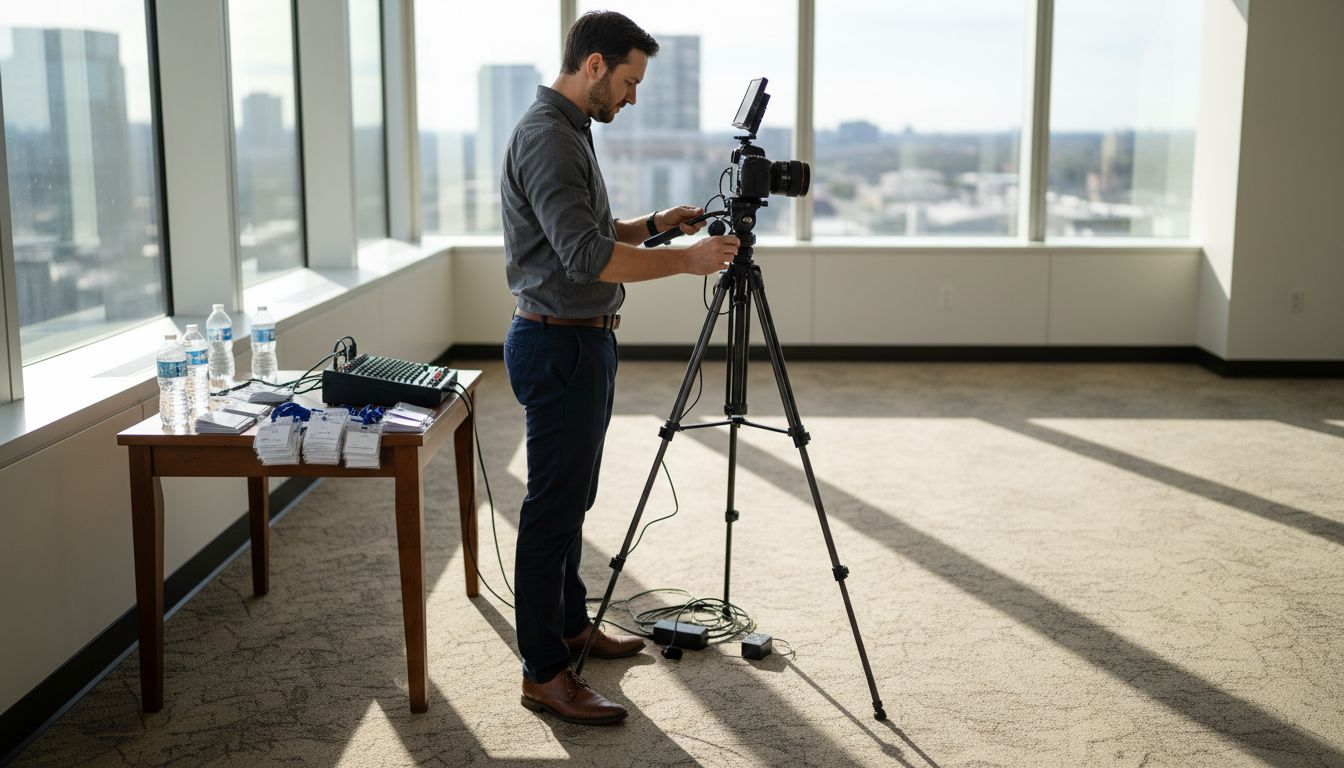
A corporate event video that draws a crowd but loses attention after the first few moments does little for your client’s message. For Swiss event planning professionals, real audience engagement means viewers are mentally invested, not just clicking play. Engagement differs fundamentally from popularity, relying on time spent watching and meaningful involvement rather than surface-level interactions. This article shares actionable strategies to help you create video content that genuinely connects with corporate audiences and drives measurable results.
Table of Contents
Key Takeaways
Point | Details |
Engagement Requires Depth | True engagement is about mental investment, not just view counts; it reflects how much content viewers consume and retain. |
Understanding Engagement Types | Different types of engagement—informational, consultative, participative, and celebratory—demand tailored video styles and approaches. |
Optimize Production Based on Audience | Prioritizing content relevance and authenticity over production quality yields better engagement outcomes. |
Measure Meaningful Metrics | Shift focus from vanity metrics to relative engagement metrics and feedback to effectively assess and improve video performance. |
Defining Audience Engagement With Video Content
Video engagement goes far beyond simple view counts. When your corporate event video generates 10,000 views but viewers abandon it after 15 seconds, you haven’t actually engaged your audience—you’ve just captured their cursor. Real engagement means your attendees are mentally invested in what they’re watching, staying with your content and absorbing your message.
Engagement differs fundamentally from popularity. A viral video might rack up millions of views with minimal actual attention from each viewer. Time spent watching represents a far more accurate measure of whether your event content truly resonates. When someone watches 80% of your 5-minute product launch video, that’s engagement. When they skip through it in 30 seconds, it isn’t, regardless of how many people clicked play. For Swiss event planners, this distinction matters because corporate clients measure success not by vanity metrics but by whether their message actually stuck with the audience.
Engagement is psychological, not just behavioral. The distinction between engagement and interaction deserves attention here. A viewer might like your event highlight reel on LinkedIn without ever watching past the first 10 seconds. They didn’t engage. Another viewer might watch your entire 12-minute corporate conference recap, pause to rewatch a key section, and later reference it in a team meeting. That’s engagement. Research clarifies that audience engagement represents a psychological state involving meaningful mental investment and cognitive involvement, extending well beyond the observable clicks, shares, and comments we typically track. Your event video engages when it creates that deeper cognitive and emotional connection with viewers.
For event professionals in Switzerland, understanding this definition shapes how you approach video strategy entirely. Instead of asking “How many people will watch this?” you start asking “Will they actually pay attention? Will they remember the key messages? Will they take action afterward?” That mindset shift transforms your entire approach to capturing corporate events, product launches, and promotional content. The metrics that matter become watch-through rates, audience retention curves, and whether viewers revisit content, not raw view counts.
Pro tip: When reviewing event footage from your production team, prioritize 4-minute edits over 8-minute versions for corporate audiences—viewers maintaining attention through 80% of a shorter video demonstrates stronger engagement than 40% completion on longer content.
Major Engagement Types in Corporate Events
Not all event engagement looks the same. A product launch creates different audience dynamics than an annual conference. Understanding the types of engagement that occur at corporate events allows you to design experiences that actually drive the outcomes your clients need. Each event type triggers distinct psychological and behavioral responses from attendees, and recognizing these patterns helps you craft video content that matches the audience’s mindset and expectations.
Informational engagement happens when your audience receives one-way communication. Think product demonstrations, keynote presentations, or company announcements. Attendees are learning and absorbing information, but they’re not expected to contribute ideas or interact beyond passive listening. This is where video shines for Swiss corporate events because a well-produced video can deliver consistent messaging to hundreds of people simultaneously. A promotional video about a new service rollout, for example, maintains message accuracy while allowing your client to reach their entire workforce in one sitting. However, informational engagement alone rarely creates lasting impact—attendees often forget details within days if they haven’t processed the content actively.
Consultative and participative engagement moves beyond one-way delivery. Consultative engagement seeks feedback. You’re asking attendees what they think, what concerns them, what solutions they’d prefer. Participative engagement goes further by making attendees active collaborators in the event experience. Event management strategies often incorporate collaborative involvement where attendees contribute ideas, solve problems together, or shape decisions. Breakout discussions, workshops, and interactive Q-and-A sessions represent this type. Video works here too, but differently. Instead of a 10-minute presentation, you might use a 3-minute video to introduce a problem, then give attendees 20 minutes to discuss solutions. The video becomes a conversation starter rather than the main event. Celebratory engagement occurs at milestone events like anniversaries, achievement celebrations, or team recognition programs. This engagement type builds emotional connection and organizational pride. Videos here should emphasize storytelling, highlight human moments, and reflect the organization’s values. Your team meeting video becomes more than information transfer—it becomes a moment where people feel part of something bigger.
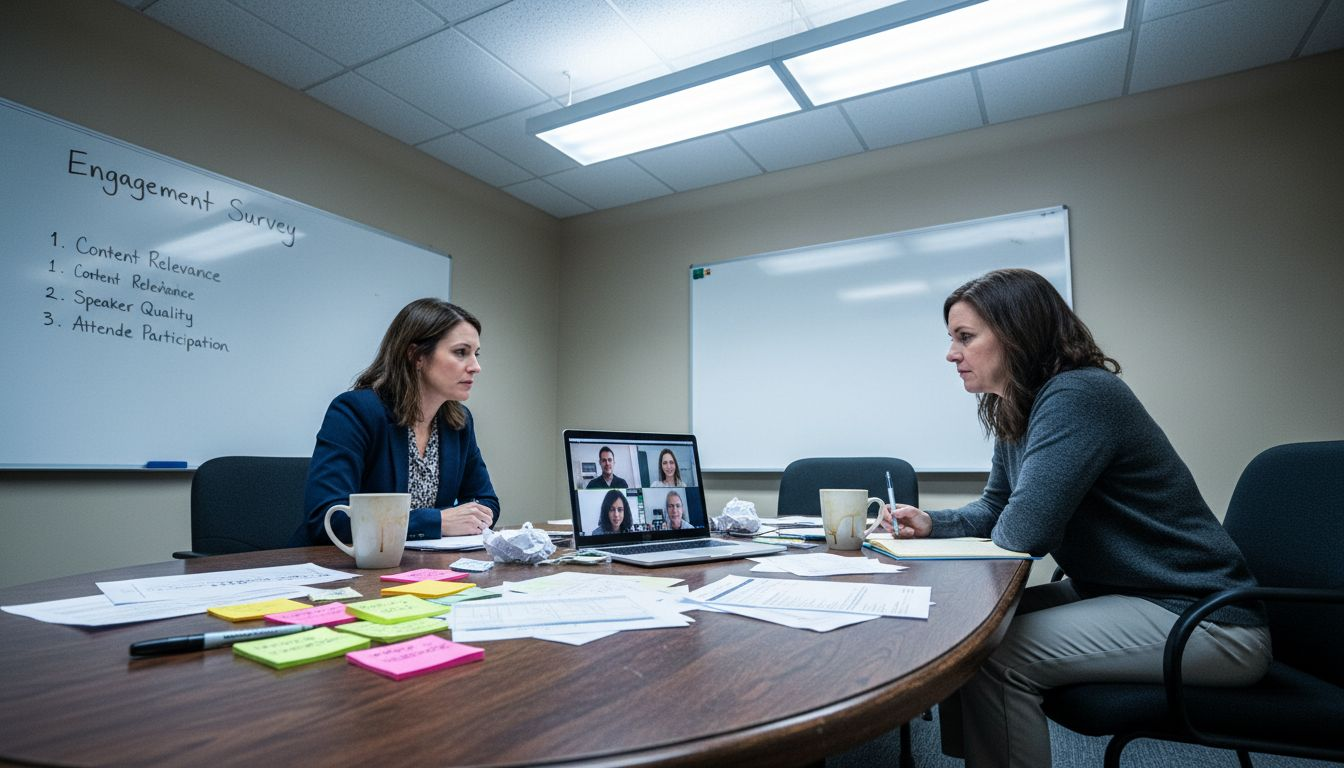
Understanding stakeholder engagement approaches helps event planners systematize their thinking. Each engagement type requires different video production approaches, pacing, length, and messaging strategy. A consultative event might need multiple short videos that prompt discussion. An informational event might benefit from one polished, comprehensive video. For your Swiss corporate clients, matching the right engagement type to their event goals transforms video from nice-to-have content into a strategic business tool that actually moves the needle on attendance, message retention, and follow-up action.
Here’s a comparison of the four main engagement types in corporate event videos and their ideal video approach:
Engagement Type | Audience Role | Effective Video Style | Key Impact |
Informational | Passive participant | Polished, concise explainer | Ensures consistent messaging |
Consultative | Feedback provider | Prompt-focused, short intro | Gathers audience insights |
Participative | Active collaborator | Discussion starter, interactive | Drives problem-solving |
Celebratory | Emotionally invested | Story-driven, highlights | Builds pride and connection |
Pro tip: When planning event videos, ask your client which engagement type dominates their event—informational, consultative, participative, or celebratory—then adjust your video length and style to match that audience mindset rather than creating generic corporate content that works for nothing.
Key Techniques for Maximizing Engagement
Knowing what engagement is doesn’t automatically tell you how to create it. The gap between understanding the concept and actually executing it in your event videos is where most Swiss marketing managers get stuck. You need concrete techniques that work for corporate audiences in real-world event settings. The good news is that engagement isn’t mysterious or dependent on luck. It follows patterns that you can control and optimize.
Start with content relevance and quality. Your video’s topic matters more than production polish. A poorly shot video about a problem your audience desperately cares about will outperform a cinematically beautiful video about something tangential to their needs. Sustained viewer attention depends on content quality and actual relevance to the audience, not on production value alone. When your Swiss client hosts a sales conference, attendees care about strategies that move deals forward. A 5-minute video addressing their biggest objection in a product conversation will keep them glued. That same 5 minutes spent on company history, no matter how beautifully shot, will lose them at minute two. Before you even think about cameras or edits, nail down what your audience actually wants to know.
Build authentic presence and create space for interaction. Corporate event attendees engage more deeply when they sense a real person behind the message, not a corporate automaton reading a script. Creating authentic instructor presence combined with opportunities for learner interaction significantly boosts engagement outcomes. This translates to corporate events as follows: feature actual employees talking about their experiences rather than voiceovers, include real examples from your client’s business, and structure your video to prompt discussion afterward. If you’re producing a video about customer success, show the actual customer, let them speak about their challenges and solutions, and end with a question that invites attendees to share their own experiences. The video becomes a conversation starter rather than a one-way broadcast. You might even incorporate guided questions on screen that attendees discuss in small groups immediately after viewing.
Optimize for your specific audience and channel. Different groups engage with video differently. A warehouse team might respond better to quick, practical videos they can implement immediately. Executive leadership might prefer strategic narratives showing market position and growth trajectory. Understanding audience preferences helps predict and promote videos with higher engagement across different contexts. Match your video length, pacing, and format to who’s watching and where they’re watching it. A 12-minute deep dive works for an on-demand learning portal. That same content squeezed into 4 minutes works better for a live event where attention competes with distractions. Shorter isn’t always better—relevance and format fit matter more than duration alone.
Pro tip: Before production starts, identify your specific audience segment, map what problem your video solves for them, and choose one engagement technique—either authentic presence, interactive elements, or strategic brevity—to focus on rather than trying to pack everything in.
Common Pitfalls in Video-Driven Events
Even well-intentioned event videos can miss their mark. You plan carefully, invest in production, and then watch as engagement numbers disappoint. The mistake isn’t usually about ambition or effort. It’s about overlooking specific pitfalls that derail video performance at corporate events. Understanding these common mistakes helps you spot them before they damage your client’s event impact.
Inconsistent video quality and technical problems sink engagement faster than almost anything else. When your livestream stutters, audio cuts out, or the video plays in poor resolution, attendees mentally check out within seconds. They don’t blame technical difficulties. They blame your brand. Even recorded videos shared after events suffer when audio levels are inconsistent, colors look washed out, or edits feel choppy. Technical debt compounds across multiple videos at large events. One poorly produced video damages audience expectations for the next one. This is where proper event videography techniques become critical. Beyond production quality, mishandling temporal flow and sequence organization in multi-video events creates confusion. When your client presents five videos throughout a conference but they don’t connect logically or tell a cohesive story, attendees struggle to see the through-line. Improper handling of temporal correlations in video sequences degrades both engagement and the overall message retention.
Misaligned video content and audience expectations represent another major trap. You produce a slick promotional video when your audience came to solve a practical problem. You create an emotional brand story when attendees wanted technical specifications. The disconnect between what you deliver and what the audience needed happens because the video planning didn’t start with actual audience research. Marketing managers sometimes assume corporate event attendees want the same messaging they’ve seen in digital ads. They don’t. Live event attendees expect content tailored specifically to that room, that moment, that challenge they’re facing right now. A generic promotional video feels tone-deaf in that context.
Overlooking data quality and analytics interpretation leaves you unable to measure what actually worked. Corporate event videos generate data about who watched, how long they watched, and whether they engaged. But misinterpretation of event data streams and noise in analytics systems can mislead you about what’s really driving engagement. You might conclude your 10-minute video works great based on total views, then miss that 60% of viewers left after 2 minutes. You might see engagement spikes but fail to understand whether they indicate genuine interest or just curiosity. Build robust tracking before your event, identify which metrics actually matter to your client, and resist the temptation to over-interpret incomplete data.
The table below summarizes common pitfalls in video-driven events and actions to prevent them:
Pitfall | Impact on Engagement | Recommended Prevention |
Technical issues | Rapid audience drop-off | Test equipment, standardize AV |
Unfocused video sequences | Message confusion, low recall | Outline clear story flow |
Poor audience-relevance | Reduced attention, low action | Research audience needs |
Weak data interpretation | Missed improvement opportunities | Track meaningful metrics only |
Pro tip: Conduct a technical test run with actual event venue equipment at least one week before the event, create a single coherent narrative across all event videos rather than treating each independently, and establish baseline engagement metrics before the event so you can accurately measure impact afterward.
Measuring and Improving Engagement Outcomes
You can’t improve what you don’t measure. This is the hard truth that catches many Swiss event planners off guard. They produce beautiful videos, execute flawless events, and then have no real data about whether the videos actually moved the needle. Measuring engagement outcomes requires specific metrics and a willingness to look beyond vanity numbers. The payoff is dramatic. Once you start measuring correctly, you can identify what works and replicate it across future events.
Move beyond view counts and adopt relative engagement metrics. View counts lie. A video with 500 views where 475 viewers watched the entire thing outperforms a video with 5,000 views where 80% clicked away in the first 30 seconds. Relative engagement metrics measure how much content viewers actually consume rather than just whether they clicked play. This metric is stable, predictable, and directly correlates with whether your message stuck with the audience. For your corporate clients, this means asking questions like “What percentage of our target audience watched past the 2-minute mark?” and “How does our 6-minute product demo perform against our 12-minute version in terms of completion rate?” These questions reveal actual engagement patterns. Calculate relative engagement by dividing total watch time by the total available watch time across all viewers. A video with 100 viewers spending an average of 4 minutes on a 5-minute video yields 80% relative engagement. That’s the number worth tracking.
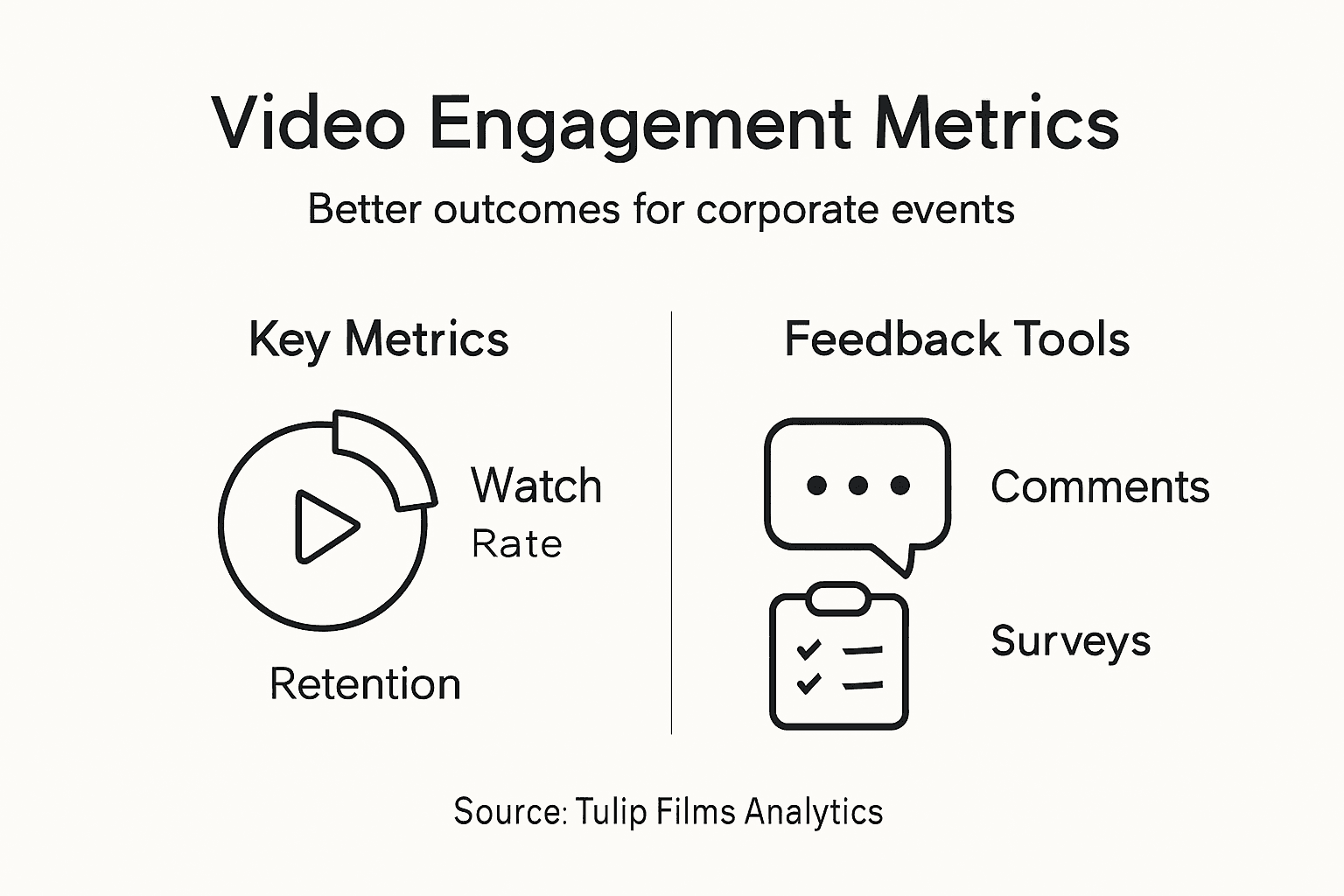
Implement feedback mechanisms and tailored interventions. Raw engagement data tells you what happened, but targeted feedback tells you how to improve. When you identify that 40% of viewers exit during a specific section, that’s useful. When you understand why they exit and provide interventions to address it, engagement jumps measurably. AI-supported feedback and nudges improve engagement and learning outcomes in video-driven contexts. For corporate events, this translates into concrete actions. If your event attendees comment on a video with confusion about a key feature, create a short follow-up video addressing that specific concern. If engagement drops during technical explanations, simplify the language or add visual graphics. Post-event surveys asking attendees what video content was most useful and which parts confused them provide the intelligence you need to optimize your next event.
Create a measurement dashboard specific to your client’s goals. Every corporate client has different priorities. Some care about message retention, measured by post-event quizzes. Others care about action taken, measured by sign-ups or downloads. Still others care about internal adoption, measured by employee video shares or discussions. Build a simple dashboard tracking the 3-4 metrics that actually matter to that specific client. Include watch-through rates, audience retention curves at key moments, and qualitative feedback from attendees. Share these results with your client within 48 hours of the event while the experience is fresh. This positions your video work as a strategic business tool, not just content decoration.
Pro tip: Set engagement benchmarks before your event by analyzing similar past events, then measure your current event against those benchmarks rather than against industry averages, since your specific audience and context will always differ from generic comparisons.
Elevate Your Event Impact With Expert Video Production
The article reveals a crucial challenge for Swiss event planners: transforming simple video views into true audience engagement. With key pain points like capturing meaningful attention, matching video styles to event goals, and avoiding common pitfalls in video-driven events, it is clear that producing content that resonates and drives action requires specialized skills. Concepts such as informational, consultative, participative, and celebratory engagement emphasize the need for tailored video approaches that connect emotionally and cognitively with viewers.
At Tulip Films, we understand that high-quality, relevant video content must go beyond aesthetics to create authentic presence and lasting impact. Our personalized approach ensures your corporate event videos are strategically designed to maximize watch-through rates and foster genuine audience involvement. Whether you need polished explainer videos or compelling story-driven content, our expertise addresses the unique engagement types your clients demand. Explore how our tailored audiovisual solutions can transform your corporate events and boost message retention effectively at Tulip Films.
Looking to connect your message with your audience in a meaningful way? Discover our Event Video Production services that focus on crafting videos aligned with your engagement objectives.
Take the next step in elevating your corporate events now by scheduling a free consultation with Tulip Films. Visit https://tulipfilms.ch and let us help you create videos that truly engage and inspire your audience.
Frequently Asked Questions
What is audience engagement with video content?
Audience engagement with video content refers to how mentally invested viewers are in the video. It goes beyond simple view counts to include metrics like watch time and retention rates, indicating whether the audience is absorbing the intended message.
How can I measure video engagement effectively?
To measure video engagement effectively, focus on relative engagement metrics, such as the percentage of viewers who watch beyond certain time markers, instead of just total view counts. Calculate relative engagement by dividing total watch time by the total available watch time across all viewers.
What types of engagement can occur during corporate events?
There are several types of engagement during corporate events, including informational engagement (one-way communication), consultative engagement (seeking feedback), participative engagement (active collaboration), and celebratory engagement (building emotional connection) with the audience.
What are some common pitfalls to avoid in video-driven events?
Common pitfalls include inconsistent video quality, misaligned content with audience expectations, and weak data interpretation. It’s important to ensure technical quality, align content with audience needs, and establish clear metrics for measuring engagement.
Recommended
