Creative Direction Video: Shaping Brand Storytelling


Marketing leaders know that transforming ideas into memorable brand stories takes more than creative flair. In the Swiss business landscape, standing out means delivering visuals that do more than decorate—they communicate value and inspire trust. Creative direction is the strategic foundation that guides every element, ensuring your video content connects with viewers and drives results. Discover how a systematic creative approach can elevate your messaging and set your brand apart.
Table of Contents
Key Takeaways
Point | Details |
Importance of Creative Direction | Creative direction is essential for cohesive brand narratives, integrating artistic concepts into strategic communication. |
Roles of Creative Directors | Creative directors lead visual strategy, manage teams, and translate complex ideas into impactful visual storytelling. |
Creative Workflow Stages | The creative video production process involves structured stages: research, ideation, concept development, production, and post-production. |
DIY vs. Professional Direction | Professional creative direction offers strategic insights and technical expertise, resulting in more impactful brand stories compared to DIY methods. |
Creative Direction Video Defined and Debunked
Creative direction represents the strategic backbone of visual storytelling, transforming raw artistic concepts into cohesive brand narratives. Creative direction is a systematic approach that bridges imagination with intentional communication, ensuring every visual element serves a precise strategic purpose.
At its core, creative direction involves synthesizing multiple artistic components into a unified vision that resonates with target audiences. This process goes beyond simple aesthetic choices, demanding deep understanding of brand identity, audience psychology, and narrative construction. Successful creative directors function as visual conductors, orchestrating design, messaging, and emotional tone to create compelling storytelling experiences that connect authentically with viewers.
The strategic framework of creative direction encompasses several critical elements: establishing clear visual guidelines, maintaining brand consistency across different media channels, and translating complex business objectives into engaging visual narratives. Professional creative directors must balance technical skill with creative intuition, understanding how color, composition, movement, and narrative rhythm combine to communicate brand essence effectively.
Pro Tip: Always develop a comprehensive creative brief that outlines your brand’s visual language, emotional tone, and core messaging before beginning any video production project.
Roles and Responsibilities in Creative Direction
Creative directors play a pivotal role in transforming visual concepts into compelling brand narratives, orchestrating complex creative processes that bridge artistic vision with strategic business objectives. They serve as the critical nexus between creative teams, stakeholders, and organizational goals, ensuring that every visual element communicates a cohesive and impactful message.

The multifaceted responsibilities of a creative director encompass several key domains. Strategic leadership involves developing comprehensive visual strategies that align with brand identity and market positioning. Team management requires guiding and inspiring creative professionals, from graphic designers and videographers to copywriters and art directors, fostering an environment of innovative collaboration. Additionally, creative directors translate complex ideas into tangible visual experiences that resonate with target audiences.
Technical expertise is equally crucial in this role. Creative directors must possess advanced skills in visual design, understand emerging technological trends, and maintain a deep comprehension of various media platforms. They are responsible for budget management, project timelines, client communications, and quality control. Their work demands a delicate balance between artistic creativity and pragmatic business considerations, ensuring that each project not only looks exceptional but also delivers measurable strategic outcomes.
Pro Tip: Develop a comprehensive portfolio showcasing your ability to transform abstract concepts into visually compelling narratives that demonstrate both creative innovation and strategic thinking.
Core Elements and Workflow Stages
Creative video production follows a structured approach that transforms initial concepts into compelling visual narratives. Creative workflow management provides a systematic framework for translating abstract ideas into tangible media experiences. This process demands precision, creativity, and strategic planning across multiple interconnected stages.
The workflow typically involves five critical stages of development. First, the research and discovery phase involves deep exploration of brand identity, target audience, and project objectives. Second, ideation generates innovative concepts through collaborative brainstorming and creative exploration. The third stage focuses on concept development, where initial ideas are refined and visualized through storyboards, mood boards, and preliminary designs. Fourth, production transforms approved concepts into actual video content, involving technical execution, filming, and initial editing. The final stage encompasses post-production refinement and quality evaluation, where creative teams polish the visual narrative and ensure alignment with original strategic goals.
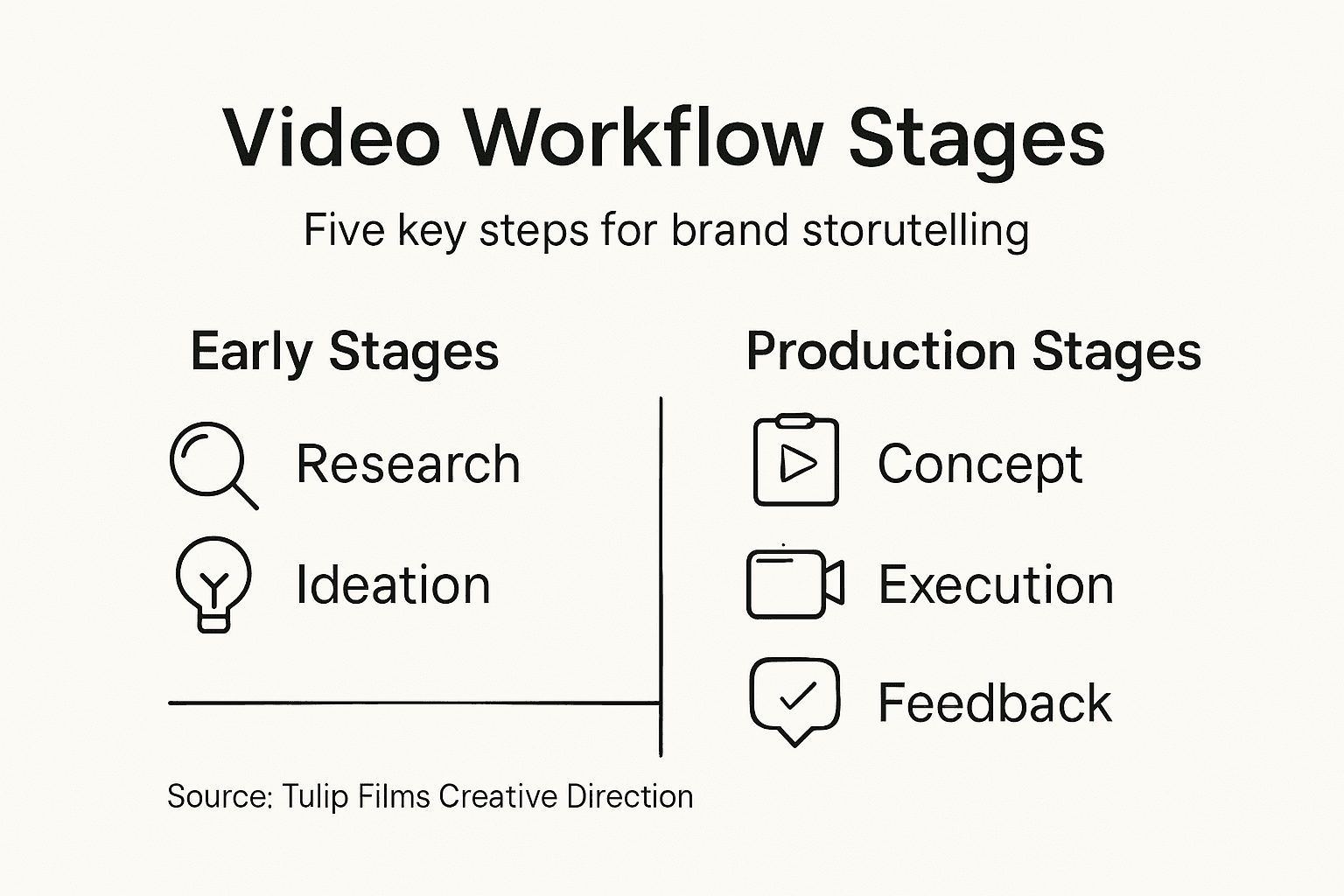
Successful creative direction requires meticulous attention to resource allocation, team coordination, and continuous feedback integration. Each workflow stage demands specific skills and collaborative approaches, balancing artistic vision with practical project management. Creative professionals must remain adaptable, using iterative processes that allow for rapid adjustments and creative problem-solving while maintaining the integrity of the original concept.
Here’s a summary of the five key creative video production workflow stages and their main focus:
Workflow Stage | Primary Focus | Typical Deliverables |
Research & Discovery | Understand brand and audience | Briefs, research documents |
Ideation | Generate innovative visual concepts | Brainstorms, idea lists |
Concept Development | Visualize and refine concepts | Storyboards, mood boards |
Production | Execute and capture content | Raw footage, initial edits |
Post-Production & Review | Polish and ensure narrative quality | Final edits, quality checks |
Pro Tip: Develop a comprehensive project brief that clearly defines objectives, audience expectations, and key performance indicators before beginning any creative video production.
Real-World Applications for Swiss Brands
Video storytelling has become a powerful strategic tool for Swiss brands seeking to differentiate themselves in a competitive marketplace. Content marketing strategies increasingly emphasize professional video approaches that connect authentically with target audiences. This evolution reflects a sophisticated understanding of how visual narratives can communicate complex brand messages more effectively than traditional marketing techniques.
Swiss industries ranging from finance and technology to hospitality and manufacturing are leveraging creative video direction to showcase their unique value propositions. Brand connection through video enables companies to humanize their messaging, demonstrating corporate values, innovation, and expertise through compelling storytelling. Successful applications include corporate documentaries highlighting company history, product demonstration videos that explain complex technological solutions, and testimonial-driven narratives that build trust and credibility.
The most effective Swiss brand videos go beyond simple promotional content, creating immersive experiences that resonate emotionally with viewers. They carefully balance precision and creativity, using high-quality production techniques that reflect Switzerland’s reputation for excellence. By integrating authentic storytelling with technical proficiency, these brands transform traditional marketing approaches into engaging, memorable visual communications that capture audience attention and drive meaningful engagement.
Pro Tip: Develop a video strategy that authentically represents your brand’s core values while providing genuine value to your target audience through informative, compelling storytelling.
Comparing DIY vs. Professional Creative Direction
Navigating the complex landscape of brand storytelling requires careful consideration of creative direction strategies. DIY versus professional approaches reveal significant differences in outcomes, with professional services delivering more sophisticated and strategically aligned results. While digital tools have democratized content creation, they cannot replace the nuanced expertise of seasoned creative professionals.
The core distinctions between DIY and professional creative direction extend beyond mere technical capabilities. Professional services bring strategic insights, ensuring brand consistency, technical excellence, and narrative depth that amateur efforts often lack. Choosing the right filming partner becomes critical in translating creative vision into compelling visual experiences. DIY approaches might save initial costs but frequently compromise brand perception through inconsistent quality, limited storytelling techniques, and potential technical limitations.
Professional creative direction offers comprehensive benefits that transcend simple video production. Experienced teams understand how to craft narratives that resonate emotionally, align with business objectives, and create lasting audience connections. They bring sophisticated technical skills, advanced storytelling techniques, access to high-end equipment, and the ability to adapt creative strategies to evolving market dynamics. While DIY methods can work for small, low-stakes projects, serious brands require the strategic depth and creative expertise that professional services provide.
The following table compares DIY and professional creative direction to highlight their impact on brand storytelling:
Aspect | DIY Approach | Professional Approach |
Brand Consistency | Often inconsistent | Maintained across all media |
Storytelling Depth | Basic or limited | Emotionally engaging, strategic |
Technical Expertise | Entry-level | Advanced, trend-aware |
Long-term Impact | May limit growth | Supports lasting brand value |
Pro Tip: Assess your project’s complexity and strategic importance before deciding between DIY and professional creative direction, recognizing that investment in quality often yields significantly better long-term brand outcomes.
Common Mistakes and How to Avoid Them
Creative video production is fraught with potential pitfalls that can derail even the most promising projects. Common video editing mistakes often stem from inadequate planning, poor narrative structure, and technical oversights that compromise the overall quality of the final product. Understanding these challenges is the first step toward creating more compelling and professional brand storytelling.
Pre-production planning represents a critical defense against potential errors. Technical mistakes in video production frequently arise from insufficient preparation, including weak storyboarding, inconsistent shot composition, and neglecting crucial technical details like lighting and sound quality. Brands must invest time in developing comprehensive creative briefs, conducting thorough location scouting, and creating detailed shot lists that provide clear guidance for the entire production team.
The most significant mistakes often relate to storytelling and emotional engagement. Many brands fall into the trap of prioritizing technical perfection over narrative impact, creating videos that are technically sound but emotionally flat. Successful creative direction requires a delicate balance between technical excellence and compelling storytelling. This means crafting narratives with clear hooks, maintaining dynamic pacing, ensuring visual consistency, and creating an emotional arc that resonates with the target audience. Professional creative directors understand that technical execution serves the story, not the other way around.
Pro Tip: Create a comprehensive pre-production checklist that covers technical requirements, narrative structure, and emotional engagement to minimize potential mistakes and maximize your video’s impact.
Elevate Your Brand Storytelling with Expert Creative Direction
Struggling to turn your brand’s vision into a cohesive and emotionally engaging video? The challenge lies in blending strategic creative direction with impeccable production to ensure every frame speaks your brand’s language. At Tulip Films, we recognize that maintaining brand consistency and crafting deep narrative connections are essential for standing out in today’s competitive Swiss market. Our personalized approach combines artistic intuition with strategic planning, so your story captures attention and resonates deeply.
Whether you need a corporate video, promotional ad, or an immersive storytelling piece, our professional team guides you through every stage from research and ideation to polished post-production. See how seamless creative workflow management transforms your ideas into compelling audiovisual experiences on our main website.
Discover the power of professional creative direction—avoid common pitfalls of DIY projects and invest in quality that supports lasting brand value. Ready to harness strategic, emotional storytelling that drives meaningful audience engagement?
Start your journey with a free consultation and experience firsthand how Tulip Films crafts videos tailored to your vision. Visit Tulip Films now and transform your brand’s story into a visual masterpiece.
Frequently Asked Questions
What is creative direction in video production?
Creative direction in video production is the strategic framework that transforms artistic concepts into cohesive brand narratives, aligning visual elements with brand identity and audience expectations for effective storytelling.
What are the key responsibilities of a creative director?
Creative directors are responsible for developing visual strategies, managing creative teams, translating complex ideas into visual narratives, and ensuring brand consistency while balancing artistic creativity and business objectives.
What are the main stages of the creative video production workflow?
The main stages of the creative video production workflow include research and discovery, ideation, concept development, production, and post-production and review, each focusing on different aspects of creating a compelling visual narrative.
How can brands effectively utilize creative video storytelling?
Brands can effectively utilize creative video storytelling by crafting immersive narratives that reflect their core values, demonstrating innovation, and engaging target audiences through well-planned video strategies that prioritize emotional connection.
Recommended
