Role of Motion Graphics in Swiss Brand Storytelling
- Pieter Nijssen

- Feb 18
- 8 min read
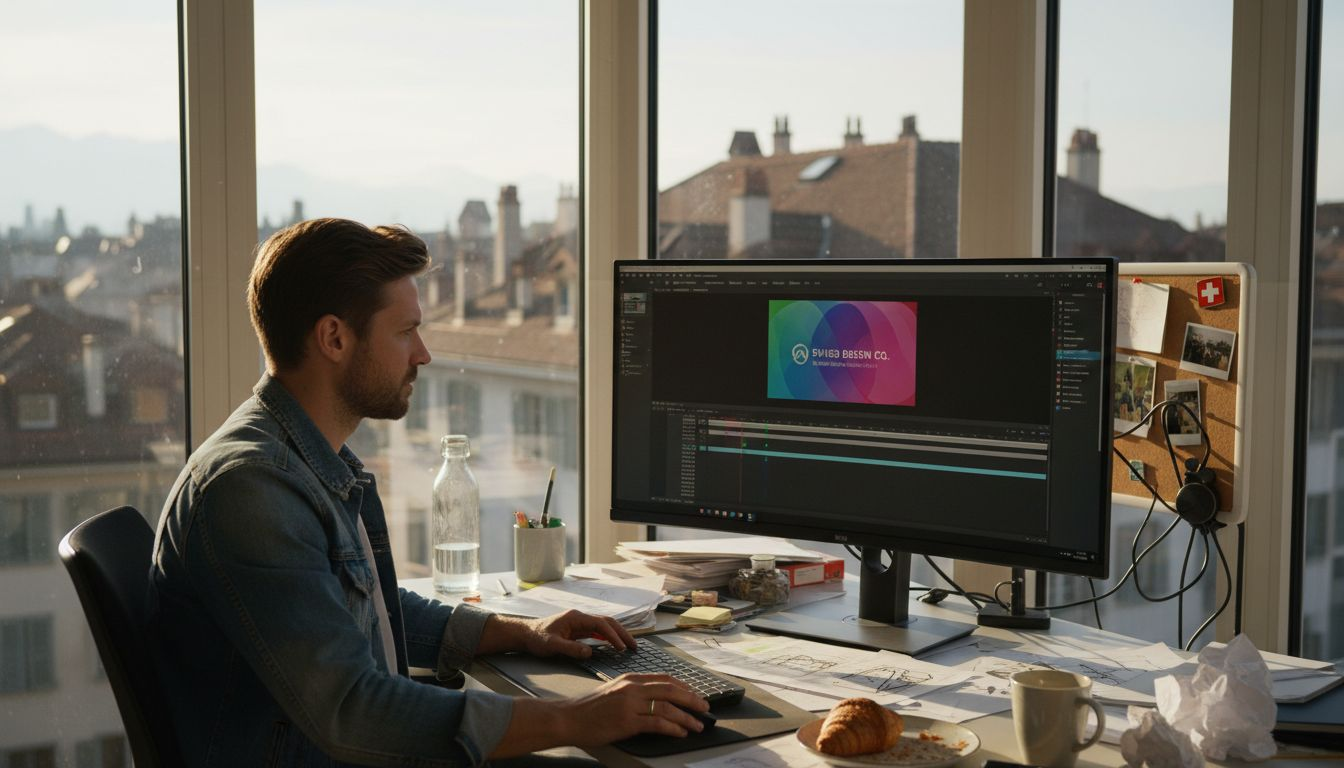
Swiss marketing managers and Geneva event organizers often find traditional visuals falling short when it comes to capturing attention in high-stakes presentations. With corporate audiences expecting clarity and creativity, static graphics rarely leave a lasting impression. Motion graphics blend animation, graphic design, and storytelling to communicate ideas with energy and precision, offering Swiss brands a way to engage viewers while honoring their standards for excellence in design and communication.
Table of Contents
Key Takeaways
Point | Details |
Understanding Motion Graphics | Motion graphics blend animation and graphic design to create engaging visual stories that effectively communicate information. |
Common Misconceptions | There is confusion between motion graphics and traditional animation; the former focuses on conveying information while the latter tells character-driven stories. |
Corporate Applications in Switzerland | Swiss companies use motion graphics to simplify complex narratives, enhance brand identity, and improve communication across various sectors. |
Integration with Live Action | Combining motion graphics with live-action footage enhances storytelling and engagement, ensuring a cohesive visual identity for brands. |
Motion graphics defined and misconceptions
Motion graphics represent a dynamic visual storytelling technique that goes far beyond traditional static imagery. Motion design encompasses a complex blend of animation and graphic design that transforms static elements into fluid, engaging narratives.
At its core, motion graphics involve creating the illusion of movement through digital techniques. These visual compositions combine graphic design principles with animation technologies to produce compelling visual experiences. Unlike traditional animation, motion graphics often focus on communicating information, conveying complex concepts through movement and transformation.
Several common misconceptions surround the field of motion graphics:
Animation Equivalence: Many assume motion graphics are identical to animation, but they serve different purposes
Technical Complexity: People often believe motion graphics require advanced programming skills
Limited Application: Some think motion graphics are only useful in commercial advertising
Technical Dimensions of motion graphics include:
The following table compares motion graphics and traditional animation in terms of their core focus, common uses, and skill requirements:
Aspect | Motion Graphics | Traditional Animation |
Main Purpose | Communicate information visually | Tell character-driven stories |
Typical Usage | Corporate videos, explainer content | Films, cartoons, entertainment |
Skill Requirements | Design principles and basic animation | Advanced animation and drawing skills |
Information Delivery | Visual data and concepts | Emotional and narrative storytelling |
Graphic design integration
Digital animation techniques
Multimedia communication strategies
Temporal visual storytelling
Motion graphics transform complex information into visually digestible narratives that capture audience attention more effectively than static presentations.
Pro tip: Master motion graphics by understanding both design principles and basic animation techniques, which will help you create more compelling visual stories.
Major types and production techniques
Motion graphics encompass a diverse range of visual design techniques and production styles, each offering unique creative possibilities for storytellers and designers. The field has evolved dramatically with technological advancements, enabling increasingly sophisticated visual communication strategies.
Two primary categories dominate motion graphic production: 2D and 3D animation. Two-dimensional motion graphics typically involve manipulating graphic elements across a flat plane, while three-dimensional techniques introduce depth, perspective, and more complex spatial relationships. These approaches can be combined to create multi-layered visual experiences that capture audience attention.
Key types of motion graphics include:
Kinetic Typography: Text-based animations that bring words to life
Title Sequences: Dynamic introductory graphics for films and television
Logo Animations: Transformative brand identity presentations
Infographic Animations: Data visualization through moving graphic elements
Interactive Graphics: Animated interfaces for digital platforms
Production techniques involve sophisticated digital workflows:
Conceptualization and storyboarding
Asset creation in design software
Animation development
Sound and effect integration
Final rendering and optimization
Modern motion graphics blur traditional boundaries between graphic design, animation, and digital storytelling, creating immersive visual experiences.
Technical Software Ecosystem for motion graphics production includes:
Adobe After Effects
Cinema 4D
Blender
Adobe Photoshop
Adobe Illustrator
Pro tip: Master multiple software platforms and continuously experiment with different animation techniques to develop a versatile motion graphics skill set.
Key uses in Swiss corporate videos
Swiss corporations leverage motion graphics as a powerful communication tool, transforming complex corporate narratives into compelling visual stories. These dynamic visual techniques enable businesses to communicate sophisticated ideas with remarkable clarity and precision, reflecting Switzerland’s reputation for excellence in design and communication.
Motion graphics play a critical role in various types of corporate video content, serving multiple strategic purposes for Swiss brands. From explaining intricate technical processes to showcasing brand identity, these visual techniques provide a versatile medium for corporate storytelling that transcends traditional communication methods.
Key applications of motion graphics in Swiss corporate videos include:
Explainer Videos: Breaking down complex products and services
Product Demonstrations: Highlighting technical features and benefits
Corporate Identity Presentations: Communicating brand values and mission
Training and Educational Content: Simplifying technical information
Marketing and Promotional Materials: Creating engaging digital campaigns
The strategic uses of motion graphics align perfectly with Swiss business communication principles:
Emphasizing precision and clarity
Presenting information efficiently
Maintaining professional aesthetic standards
Engaging international audiences
Showcasing technological innovation
Motion graphics represent the intersection of Swiss design philosophy and digital storytelling, transforming corporate communication into an art form.
Companies across various sectors utilize motion graphics to achieve specific communication objectives:
Here’s a quick summary of major Swiss corporate sectors and how they benefit from motion graphics in their video content:
Sector | Motion Graphics Benefit | Example Application |
Finance | Visualize investment ideas | Animated explainer videos |
Technology | Showcase product innovation | Demo product features |
Healthcare | Present medical advances | Animated medical research |
Manufacturing | Simplify processes | Visualize production steps |
Research | Communicate scientific concepts | Science storytelling videos |
Financial institutions explaining investment strategies
Technology firms demonstrating product innovations
Healthcare organizations presenting medical research
Manufacturing companies showcasing production processes
Research institutions communicating complex scientific concepts
Pro tip: Develop motion graphics that balance technical accuracy with creative storytelling to effectively communicate your brand’s unique value proposition.
Integration with live action and branding
Motion graphics have revolutionized brand storytelling by seamlessly blending animated elements with live-action footage, creating dynamic visual narratives that capture audience attention. This innovative approach allows Swiss brands to communicate complex messages with unprecedented creativity and precision.

The integration of motion graphics and live action represents a sophisticated visual strategy that goes beyond traditional video production. By overlaying graphical elements onto real-world imagery, brands can highlight key information, create engaging transitions, and reinforce their visual identity in ways that pure live-action or static graphics cannot achieve.
Key techniques for integrating motion graphics with live action include:
Data Visualization: Animating statistical information over live footage
Explanatory Overlays: Adding contextual graphics to enhance understanding
Brand Element Highlighting: Emphasizing logos and brand markers
Narrative Transitions: Creating smooth visual connections between scenes
Interactive Information Layers: Adding dynamic information to static shots
Strategic integration approaches for Swiss brands:
Maintain visual consistency with brand guidelines
Use minimal, precise graphic elements
Ensure seamless technical execution
Balance information with aesthetic appeal
Create multi-platform adaptable content
Motion graphics transform live action from passive viewing into an interactive storytelling experience, bridging visual communication and brand messaging.
Companies leverage this technique across various contexts:
Technology firms explaining complex product features
Financial institutions visualizing investment concepts
Healthcare organizations demonstrating medical processes
Manufacturing companies showcasing production innovations
Research institutions communicating scientific discoveries
Pro tip: Develop motion graphics that complement, not compete with, your live-action footage by maintaining a consistent visual language and brand aesthetic.
Costs, risks, and common pitfalls
Motion graphics projects require careful financial and creative planning, as production costs can vary significantly based on complexity and scope. Swiss brands must navigate a complex landscape of technical challenges, creative demands, and budgetary constraints to successfully implement motion graphic strategies.
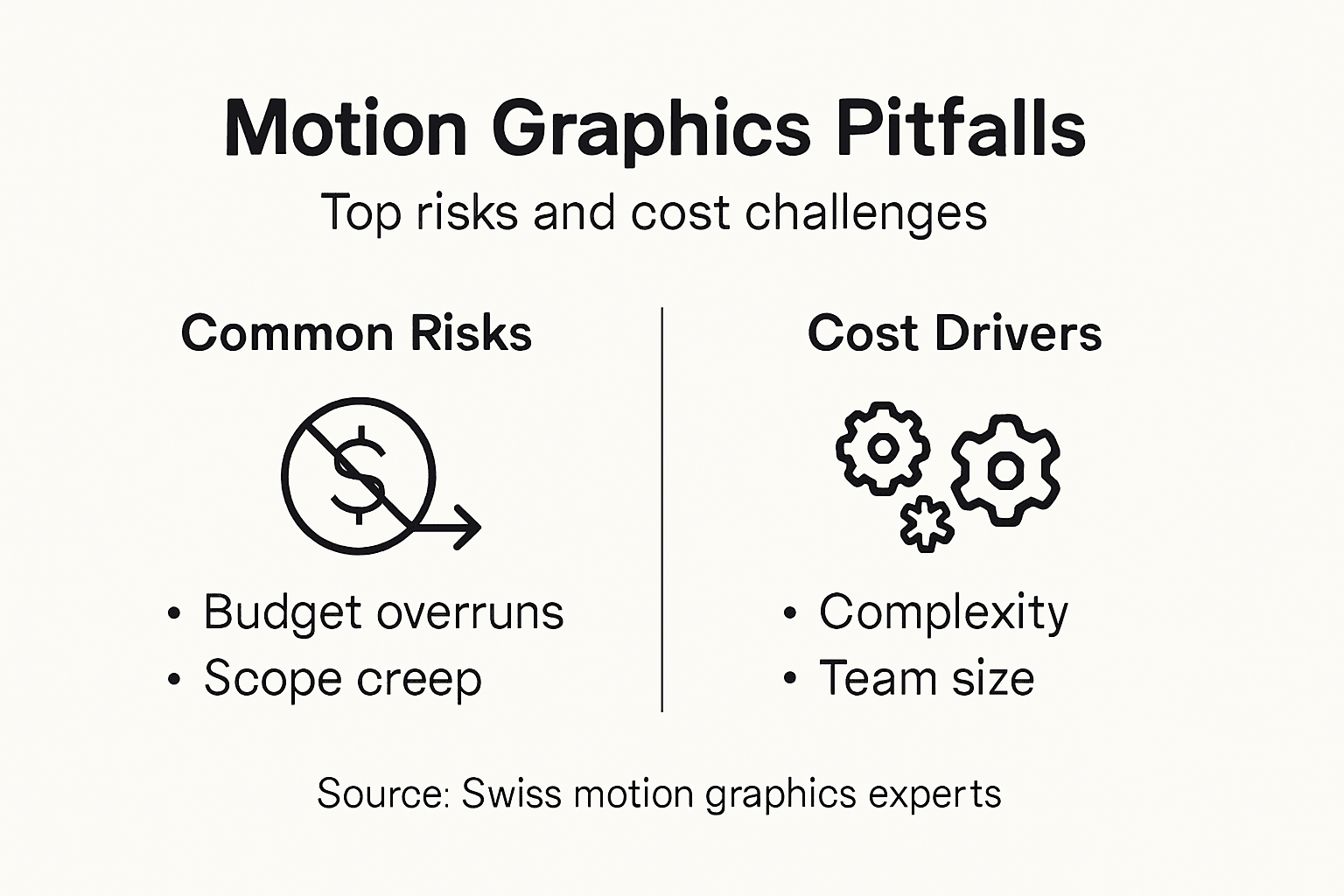
The financial investment in motion graphics involves multiple critical components, including specialized software, skilled personnel, and extensive production time. Sophisticated projects may require substantial resources, with costs escalating quickly based on the intricacy of design, animation complexity, and technical requirements.
Key financial and creative risks include:
Budget Overruns: Unexpected complexity increasing project costs
Technical Limitations: Rendering and compositing challenges
Creative Misalignment: Ineffective brand representation
Timeline Extensions: Prolonged production phases
Skill Gap: Insufficient technical or design expertise
Common pitfalls that brands must anticipate:
Underestimating project complexity
Lacking clear creative direction
Overlooking audience engagement strategies
Ignoring brand consistency requirements
Failing to integrate technical standards
Motion graphics projects demand a delicate balance between creative vision, technical execution, and strategic communication.
Risk mitigation strategies for Swiss brands:
Establish comprehensive project briefs
Collaborate closely with experienced motion graphic designers
Allocate realistic budgets and timelines
Conduct thorough technical and creative reviews
Maintain flexibility in project development
Pro tip: Create detailed project specifications and maintain open communication channels to minimize risks and control motion graphics production costs.
Elevate Your Swiss Brand Storytelling with Expert Motion Graphics
The article highlights the challenge Swiss businesses face in transforming complex information and sophisticated corporate narratives into clear and engaging visual stories. Whether it’s explaining technical products, showcasing brand identity, or engaging international audiences, motion graphics require a balance of precision, creativity, and design expertise. Key pain points include maintaining brand consistency, managing production complexity, and effectively capturing audience attention through dynamic visual communication.
At Tulip Films, we understand these challenges and specialize in delivering high-quality audiovisual content that blends motion graphics seamlessly into your corporate storytelling. Our personalized approach ensures your visual content communicates your brand values with clarity and impact. By leveraging advanced animation and design techniques, we help simplify your message while maintaining Swiss standards of precision and professionalism. Explore our portfolio and discover how we tailor engaging videos for Swiss companies that need clarity in communication and creative storytelling.
Clear corporate identity presentations that reflect your brand mission
Engaging explainer videos breaking down complex concepts
Seamless integration of animation with live footage to enhance storytelling
Discover how our motion graphics expertise empowers your brand and captivates your audience. Get started now with a free consultation at Tulip Films and see how we turn your concepts into compelling visual narratives.
Ready to transform your corporate videos with motion graphics that speak your brand’s language Find out more about our bespoke video production services and start crafting stories that engage and inspire. Reach out today through Tulip Films and experience a tailored, efficient, and creative approach to your next project.
Frequently Asked Questions
What are the main benefits of using motion graphics in brand storytelling?
Motion graphics enhance brand storytelling by presenting complex information visually, engaging audiences more effectively than static content, and creating a dynamic narrative that reflects brand values.
How can motion graphics improve corporate video content?
Motion graphics can simplify intricate concepts, make technical processes more accessible, and create visually appealing promotional materials that capture attention and communicate the brand’s message clearly.
What are the key types of motion graphics that can be used in branding?
The key types include kinetic typography, logo animations, infographic animations, title sequences, and interactive graphics, each serving different purposes in enhancing brand storytelling.
What are common challenges faced in motion graphics production for brands?
Common challenges include budget overruns, technical limitations, the need for clear creative direction, ensuring brand consistency, and managing project timelines effectively.
Recommended
