Personalized Video: Transforming Swiss Marketing


Many Swiss marketing managers and Geneva event organizers feel overwhelmed by the buzz around personalized video, yet the concept is far more accessible and practical than most realize. With advances in artificial intelligence and automation, customized video content tailored to individual viewers is no longer out of reach for Swiss corporate teams. Understanding what truly makes a video personalized cuts through common myths, giving your brand a direct path to higher engagement and more authentic storytelling with your customers.
Table of Contents
Key Takeaways
Point | Details |
Personalized Video is Content-Specific | It involves creating tailored video content for individual viewers, enhancing engagement significantly compared to generic messaging. |
Accessibility of Technology | Advances in AI have made personalized video production more feasible and budget-friendly, allowing for straightforward customization even without extensive technical expertise. |
Multiple Use Cases | Personalized video is effective across various channels, from sales outreach to event reminders, proving beneficial for both cold outreach and customer engagement. |
Importance of Data Quality | Clean and organized data is critical for successful personalization; errors can undermine the impact of your video campaigns. |
Personalized Video Defined and Debunked
Personalized video is far simpler than most marketing managers think, yet it’s surrounded by confusion and exaggerated claims. At its core, personalized video is video content customized specifically for individual viewers. Rather than broadcasting the same message to thousands of people, you create variations that speak directly to segments of your audience. Someone watching might see their name embedded in the video, reference their specific interests, or see content tailored to their company or industry. This isn’t magic. It’s targeted storytelling with video as the medium.
The technology behind personalized video has become far more accessible in recent years, partly due to advances in AI and automation. What once required expensive post-production work and weeks of editing now happens quickly and at scale. However, this accessibility has also created serious misconceptions. Many believe personalized videos must be synthetic or AI-generated deepfakes to work. That’s wrong. Honest, straightforward personalization works better. A video featuring your prospect’s name, company logo, or industry-specific footage delivered through your sales process outperforms generic content consistently. The defining characteristics of personalized videos690039_EN.pdf) center on customization and viewer-specific content embedding rather than synthetic manipulation, which clarifies a major source of confusion in the marketing world.
Another common myth holds that personalized video requires massive budgets and technical expertise. Corporate firms in Switzerland often assume that creating personalized content means hiring specialized teams or purchasing expensive proprietary software. The reality is more flexible. You can start with simple personalization like custom intros featuring a prospect’s name, then layer in additional elements as your strategy develops. Creating bespoke video content that connects with Swiss audiences doesn’t require gimmicks or AI manipulation. What matters most is relevance and authenticity. Your message should feel intended specifically for that viewer, because it was.
A third misconception suggests that personalized video works only for cold outreach or sales sequences. While sales teams absolutely benefit from it, personalized video excels across multiple channels. Event organizers in Geneva use personalized videos to confirm attendee information before events, enhance attendee experiences during registration, and follow up afterward with customized highlights. Marketing managers deploy personalized videos across email campaigns, landing pages, and social media for higher engagement rates. The distinction between authentic personalized videos and manipulated content matters increasingly as audiences become more discerning. Your personalized video strategy should emphasize genuine customization and transparency, not artificial enhancement.
Pro tip: Start your personalized video strategy with one simple element like a prospect’s name or company in the opening, measure the engagement difference against your standard video, then expand from there once you see the lift in response rates.
Main Types and Customization Features
Personalized video doesn’t exist as a one-size-fits-all solution. Instead, it breaks down into distinct types based on how the customization happens and what data drives it. Understanding these categories helps you choose the right approach for your specific campaign. Some personalized videos use content segmentation, where you create different versions of the same video and serve each version to different audience segments. A real estate marketing manager might show one video to young families highlighting schools and parks nearby, while showing affluent professionals a different version emphasizing luxury finishes and smart home technology. Other approaches use dynamic insertion, where a single video template receives customized elements like names, company logos, or specific metrics inserted in real-time. This method works efficiently because you produce once and deploy many variations quickly.
The technical foundation of personalized video rests on several customization features that determine how adaptive your content becomes. Keyframe selection and shot-based summarization techniques enable systems to identify and highlight the most relevant moments in longer content for each viewer. User preference integration tracks what resonates with specific audience members, allowing the video to adapt not just names or logos but actual content flow and emphasis. Source data matters significantly. Your personalization might draw from CRM records, website behavior, email engagement history, or past purchase activity. Swiss corporate firms often integrate their existing customer data systems with personalized video platforms, ensuring consistency across the entire customer journey. The specificity of your data source directly affects how precise your personalization becomes. A corporate recruiter using only job title information can customize differently than one with detailed career history and skill assessments.
For event organizers, temporal personalization offers another powerful option. Instead of personalizing based on who someone is, you personalize based on when they engage. An attendee watching your Geneva conference video the day before arrival sees different content than someone watching a month later. Early viewers might see logistics and logistics and travel tips, while late viewers see networking highlights and session recaps. Advanced implementations combine multiple customization layers simultaneously. Multi-subject frameworks with attention mechanisms allow marketers to reference multiple elements within a single video, creating experiences that feel tailored across several dimensions at once. A prospect might see their company mentioned, their industry pain point addressed, and their geographic region referenced all in one continuous narrative.
The practical reality for most Swiss marketing managers is simpler than this technology suggests. Start with one customization layer. Add their name or company in the opening shot. Measure the response lift. Once you validate that this basic personalization improves engagement, layer in a second element like industry-specific case studies or location-based testimonials. Build complexity gradually rather than attempting sophisticated multi-dimensional personalization from day one.
Here’s a breakdown of the main personalized video types and their best use cases:
Personalization Type | How It Works | Ideal Use Case |
Content Segmentation | Different videos for audience segments | Real estate, retail offers |
Dynamic Insertion | Names/logos added in real-time | Sales outreach, onboarding |
Temporal Personalization | Content varies by watch date | Event reminders, promotions |
Multi-Subject Frameworks | References multiple viewer details | B2B campaigns, finance |
Pro tip: Audit your existing customer data first and identify your highest-confidence information sources, then design your personalization strategy around the data you already have clean and accessible rather than waiting for perfect data.
How Personalized Video Production Works
Personalized video production follows a straightforward workflow that combines data, templates, and automation to create individual variations at scale. The process starts with data collection and organization. Your team gathers information about each viewer from your CRM, website analytics, email platform, or past interactions. A Swiss corporate firm running a sales campaign might compile prospect names, company sizes, industry sectors, and previous engagement metrics. Event organizers in Geneva collect attendee registration data including names, companies, roles, and session preferences. This data forms the foundation for everything that follows. Without clean, organized data, personalization becomes generic.
Once you have your data structured, you move into the template creation phase. This is where video production happens traditionally. You work with a producer to film core content, build graphics, and plan where customization will occur. Think of it as creating a video with designated placeholder zones. A sales video might have a space at the beginning for a prospect’s name and company logo. An event recap video could have sections where attendee photos or specific session highlights appear. The template establishes the visual framework and messaging structure. Automated annotation systems integrated into video production workflows can identify key moments and compile them into personalized sequences, capturing specific visitor experiences or interactions worth highlighting. Your template should balance customization points with consistent branding. Too many customization zones create visual chaos. Too few make personalization feel superficial.

The automation and rendering stage transforms your template into individual videos. Specialized software processes your data and inserts each person’s unique information into the template in real-time. Names appear in graphics. Company logos scale correctly. Industry-specific case studies populate dynamically. Text-guided personalization frameworks with diffusion models enable more sophisticated personalization by leveraging attention control mechanisms and multi-subject composition, allowing producers to reference multiple customized elements simultaneously while maintaining visual coherence. The system generates thousands of individual videos from a single template in hours rather than weeks. Rendering quality depends on your software platform and the complexity of your customization. Higher quality platforms handle more dynamic elements smoothly, while basic platforms work best with simpler personalization like name insertion and logo placement.
Finally comes delivery and optimization. Videos get packaged and distributed through your chosen channels: email links, landing pages, video messaging platforms, or direct downloads. You track engagement metrics for each personalization variant to understand what resonates. Did viewers with certain company sizes engage longer? Did specific industries respond better to particular messaging? This feedback loop informs your next campaign’s template design and customization strategy.
Pro tip: Start with your template test run by generating five to ten sample videos with real data before committing to full production, catching errors in variable formatting and visual placement before rendering your complete batch.
Swiss Brand Storytelling and Real-World Cases
Swiss brands have long understood something that many competitors still miss: authenticity sells better than features. The Swiss precision, reliability, and quality reputation didn’t build itself through product specifications alone. It emerged from consistent storytelling that connects product excellence to deeper human values. When a Swiss watchmaker describes generations of craftsmanship, they’re not just explaining how a watch works. They’re inviting customers into a narrative about dedication, heritage, and the meticulous care that transforms raw materials into something extraordinary. Personalized video amplifies this storytelling approach by tailoring these narratives to individual viewers. Instead of broadcasting the same heritage story to everyone, you customize it to resonate with each person’s specific context.
Consider how a Geneva based luxury goods company might deploy personalized video storytelling. Rather than sending identical brand origin videos to all prospects, they create variations. A prospect from an old Swiss family sees emphasis on multigenerational trust and family legacy. A younger entrepreneur sees innovation and disruption within tradition. A corporate gift buyer sees craftsmanship perfect for client appreciation. Each person receives the same core story about brand heritage, but the specific frame and emphasis shift to match their worldview. This approach works because it acknowledges that storytelling isn’t one-directional broadcasting. Humanizing a brand through storytelling creates stronger emotional connections by sharing authentic narratives that reflect company values while building trust with audiences. The personalized video layer ensures that emotional connection lands specifically with that individual.
Finance sector brands operating in Switzerland use personalized video storytelling differently. Banks and wealth management firms must overcome skepticism and demonstrate genuine understanding of client situations. A personalized video from your private banker acknowledging your specific financial history, goals, and concerns feels dramatically more genuine than generic financial advice. A corporate firm’s CFO receives a video addressing their cash flow challenges and growth strategy. A retiree receives content about wealth preservation and legacy planning. Each person hears the same bank philosophy about trust and stability, but through the lens of their particular financial reality. Event organizers in Geneva similarly use personalized storytelling by creating recap videos that highlight individual attendees’ experiences, featuring their photos, the specific sessions they attended, and testimonials from people they met. These personalized event stories convert attendees into repeat participants far more effectively than generic event summaries.
The technical execution matters less than the strategic insight. Your storytelling framework should identify the core brand narrative you want to communicate. Then determine two to three variables that shift how that narrative resonates with different segments. Craft your video template around this flexible storytelling approach. When you combine authentic brand storytelling with personalized delivery, you create videos that feel intentional rather than automated, genuine rather than generic, and personally relevant rather than universally indifferent.
Pro tip: Start by identifying your brand’s single most powerful authentic story, then brainstorm three to five variables that would make this story resonate differently with key audience segments before building any personalized video template.
Benefits, Costs, and Common Pitfalls
Personalized video delivers measurable benefits when executed properly, but those gains require understanding both the investment involved and the mistakes that derail implementation. Start with the benefits that matter most to your business. Engagement rates jump significantly when viewers see content tailored to them. A prospect watching a video featuring their company name and industry-specific challenges pays attention differently than someone watching generic content. Response rates typically increase between 40 and 70 percent compared to standard video campaigns, depending on how sophisticated your personalization becomes. Conversion rates improve because personalized messaging addresses specific pain points. Your sales team closes more deals when prospects feel understood rather than targeted. Customer retention strengthens through event recaps and follow-up content that acknowledges individual attendee experiences. Event organizers in Geneva find that personalized recap videos featuring attendee names and photos drive higher repeat registration rates than generic event summaries.
Now for the costs. Initial setup requires investment in video production, platform licensing, and data integration. A professional personalized video campaign typically costs 30 to 50 percent more than standard video production because you’re creating templates with customization infrastructure built in. Platform subscription costs range from several hundred to several thousand Swiss francs monthly depending on video volume and customization complexity. Data management demands attention and resources. Clean CRM data is essential for quality personalization. If your data is messy, incomplete, or outdated, your personalized videos underperform because the customization creates visual or messaging inconsistencies. Time investment in template design and testing adds up. You cannot simply film a video and expect personalization to work automatically. Strategic planning about what customizes and how it customizes requires thoughtful collaboration between your marketing team and production partners.
Common pitfalls sabotage many personalized video initiatives. Over-personalization attempts to customize so many elements that the video feels fragmented and loses coherence. Limit yourself to two or three customization points per video. Data quality failures result in embarrassing errors like misspelled names, wrong company affiliations, or inappropriate industry references. One corporate manager received a personalized video addressing her company’s “disappointing growth metrics” when the data actually referenced a different company. Data privacy risks and over-reliance on automation create challenges when organizations fail to implement proper consent frameworks and ethical oversight. Generic customization where you add names but keep all messaging identical wastes the personalization opportunity. True personalization requires that the content itself shifts, not just the display of someone’s name. Inadequate testing before launching full campaigns means errors reach your entire audience. Test with real data, review outputs, and fix variable mapping before going live.
Compare the challenges and solutions in personalized video implementation:
Challenge | Typical Cause | Mitigation Strategy |
Over-personalization | Excessive customization | Limit to 2–3 elements per video |
Data Quality Issues | Messy input data | Clean and verify records beforehand |
Privacy Compliance | Incomplete consent process | Acquire explicit, documented consent |
Generic Customization | Only variable is viewer name | Tailor actual video message |
Pro tip: Calculate your expected ROI by comparing engagement lift against total campaign cost before committing to personalized video, ensuring the improvement in response rates justifies the additional production investment for your specific use case.
Data Privacy Laws for Personalized Videos
Personalized video operates in a complex regulatory environment that demands your attention. Switzerland exists within the European Union’s sphere of influence, and your personalized video campaigns must comply with multiple layers of privacy law regardless of where your audience sits. The foundation is the General Data Protection Regulation, or GDPR, which applies to any organization processing personal data of European Union residents. When you build a personalized video campaign featuring someone’s name, company affiliation, location, or industry, you are processing personal data. The GDPR doesn’t prohibit this. It requires that you do it lawfully, transparently, and with proper safeguards. GDPR principles including lawful processing and consent requirements establish that personal data processing must have a valid legal basis. For marketing purposes, your strongest legal basis is typically explicit consent. This means your prospect must affirmatively agree to receive personalized video content using their data before you send it.
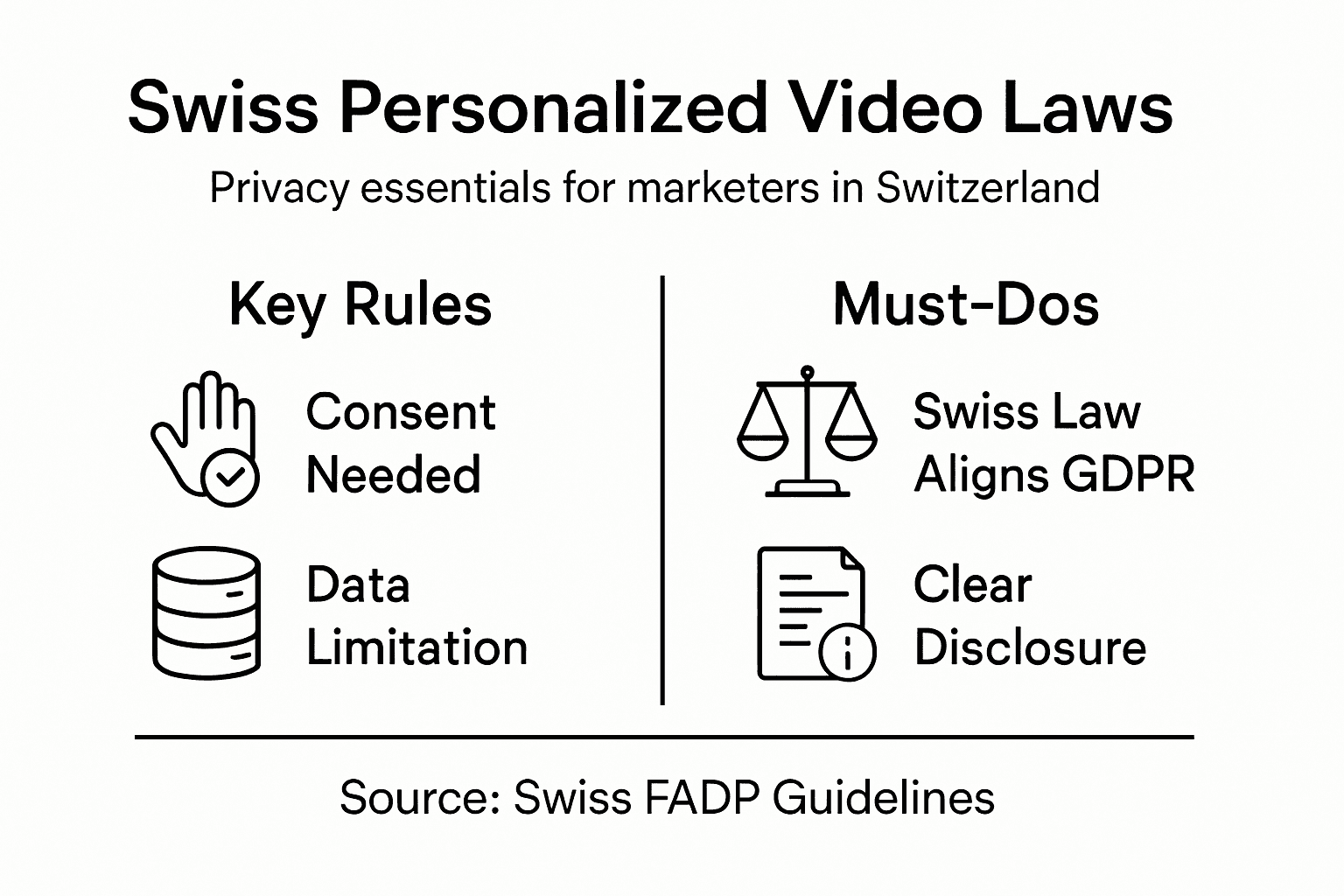
Swiss federal privacy law, the Federal Act on Data Protection, aligns closely with GDPR but applies specifically to Swiss organizations and Swiss data subjects. If you’re a marketing manager at a Swiss corporate firm, you must comply with both frameworks when your campaigns involve European prospects or Swiss residents. The practical implication is straightforward: treat GDPR as your baseline compliance requirement. If you comply with GDPR, Swiss law compliance generally follows. Data minimization matters significantly. Only collect and use data that directly serves your personalized video purpose. If you’re personalizing a sales video with someone’s name and company, you don’t need their birthdate, employment history, or family information. The principle of purpose limitation requires that you use data only for the purpose disclosed when you collected it. If someone provides their information for a conference registration, you cannot use that data for a sales video campaign without separate, explicit permission.
Specific challenges emerge around video-specific privacy concerns. Managing sensitive information in video content requires careful transparency and cross-border compliance considerations because video files can contain facial recognition data, audio identifiers, and background information revealing protected characteristics. When your event organizer captures attendee videos, you’re recording biometric information even if unintentionally. Storage matters. Where do you store your personalized video files? If data transfers occur across borders, GDPR requires specific protections. Data breaches demand notification within 72 hours under GDPR. Most Swiss companies underestimate this obligation. If your personalized video platform experiences a breach exposing thousands of prospect records, you must notify affected individuals regardless of whether harm occurred. Retention periods matter equally. How long do you keep personalized video files and the data embedded within them? GDPR requires deletion when data is no longer necessary for your stated purpose. Six months after a campaign ends, delete the data unless you have a documented legal basis for retention.
Pro tip: Document your data processing activities in a Data Processing Impact Assessment before launching any personalized video campaign, clearly identifying your legal basis, retention periods, and security measures to demonstrate GDPR compliance if regulators inquire.
Unlock the Power of Personalized Video for Your Swiss Brand
The challenge many Swiss marketing managers face today is cutting through generic messaging with truly authentic and targeted storytelling. This article highlights how personalized video transforms engagement by embedding viewer-specific details and crafting narratives that resonate deeply. If you struggle with data quality, high production costs, or simply want to elevate your brand storytelling with meaningful customization, there is a clear path forward.
At Tulip Films, we specialize in exactly that. We combine high-quality audiovisual craftsmanship with personalized approaches tailored to your audience needs and data insights. Whether you want to add dynamic name and company inserts, regional storytelling nuances, or event-specific personalized recaps, our professional team makes it seamless. Start by exploring how our bespoke video content solutions can bring authenticity and precision to your communications. See how our expertise in corporate videos and engaging event coverage helps convert attention into lasting connections.
Take the first step to transform your marketing results now. Visit Tulip Films to plan your free consultation and discover how personalized video can deliver stronger engagement, higher conversions, and genuine brand loyalty with Swiss quality and efficiency.
Frequently Asked Questions
What is personalized video?
Personalized video is video content specifically customized for individual viewers. It involves creating variations that cater to specific audience segments, such as embedding the viewer’s name, interests, or company details into the video.
How do I start a personalized video strategy?
Begin by incorporating a simple element like a viewer’s name or company in the opening shot. Measure engagement compared to standard videos and gradually introduce more customization based on the response rates.
What are the benefits of using personalized video in marketing?
Personalized videos lead to significantly higher engagement and conversion rates. They can also improve customer retention by providing tailored content that resonates with viewers on a personal level.
What common mistakes should I avoid when creating personalized videos?
Avoid over-personalization that can make the video feel fragmented. Ensure data quality to prevent errors like misspelled names, and aim to customize actual video content, not just overlay viewer names. Testing your videos before launching is crucial to catch any errors.
Recommended
