Image Rights in Switzerland: What You Need to Know

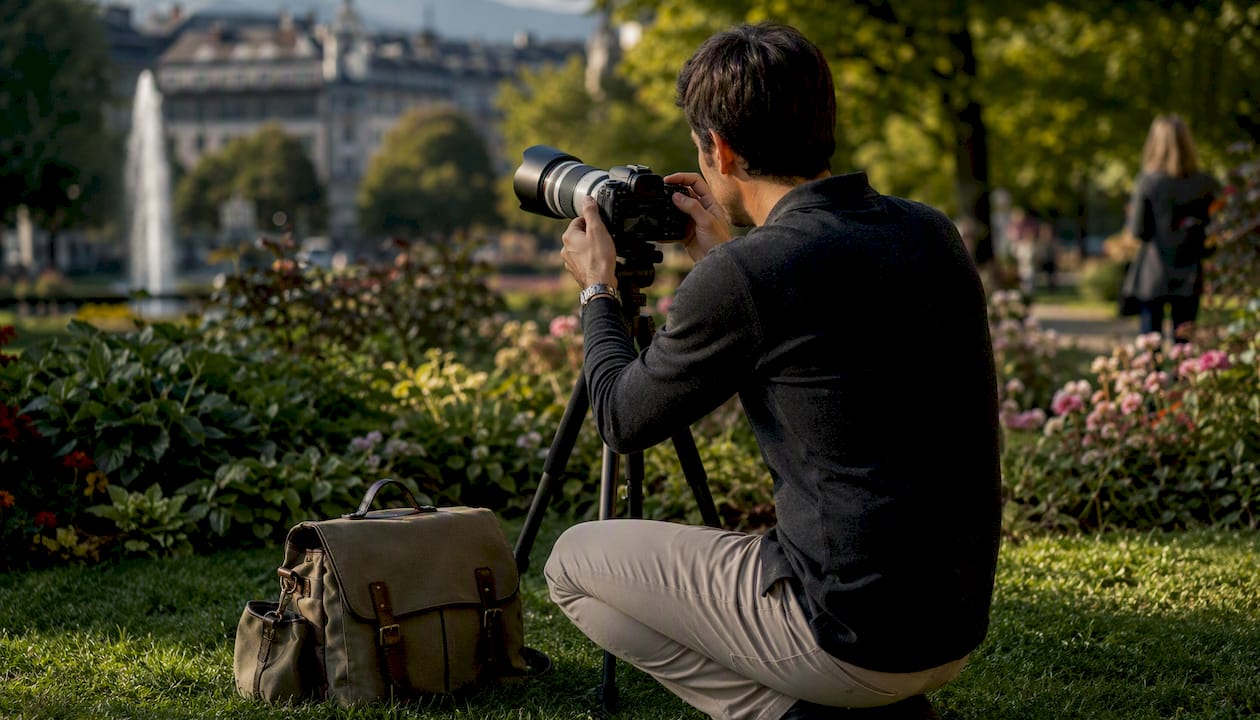
Yes, the right to your own image applies in Switzerland. If you are identifiable in a photo or video, publication normally requires your consent under Art. 28 of the Swiss Civil Code (ZGB). This rule covers both private individuals and public figures, and it extends to digital publication on social media, websites, and corporate materials.
If someone has already published your image without permission, take these three steps immediately:
Preserve the evidence. Screenshot the post, note the URL, and record the date and time before the content disappears.
Send a written takedown request to the publisher or platform, citing your personality rights under Art. 28 ZGB.
Contact the platform’s abuse or privacy team if the publisher does not respond within a reasonable time, typically a few days.
Organizations planning corporate event video production in Switzerland need to build consent workflows into every shoot, not just hope that a crowd shot qualifies as incidental.
Key Takeaways
In Switzerland, the right to your own image is grounded in Art. 28 ZGB and the DSG: identifiable persons control publication of their images, consent is the primary justification, and the burden of proof rests on the publisher.
Point | Details |
Consent is the default | Any identifiable person in a photo or video must generally consent before publication under Art. 28 ZGB. |
Valid consent has four elements | Consent must be voluntary, informed, specific to the intended use, and revocable for future uses. |
Exceptions are narrow | Journalism, public figures in their public role, and truly incidental passersby are the main exceptions; public space alone is not enough. |
Act fast after unlawful publication | Screenshot, send a written takedown citing Art. 28 ZGB, and report to the platform the same day. |
Tulipfilms | Tulipfilms integrates separate release forms, shot lists, and consent records into every Swiss event and corporate video production. |
Table of Contents
When does the right to your own image apply in Switzerland?
The legal trigger is identifiability. A person does not need to be named for the protection to kick in. If someone who knows you can recognize you from the image, you are identifiable, and the photo counts as personal data under the Swiss Federal Act on Data Protection (DSG/FADP). The EDÖB guidance on photos makes this explicit: once a person is identifiable, data-protection principles apply alongside personality rights.
Context matters as much as clarity. A blurry face in the background of a wide crowd shot is different from a close-up of someone at a conference. The relevant questions are: Is this person the focal point? Could someone who knows them recognize them? Is the setting private or intimate?
A few specific scenarios worth knowing:
Public spaces with incidental passersby. A person walking through the background of a street photo is generally not protected, but only when they are truly incidental and not identifiable. The EDÖB stresses this must be judged case by case, not assumed.
Event photos where someone is the center of attention. A speaker at a corporate conference, a performer on stage, or an athlete at a competition is clearly identifiable and focal. Consent is required.
Intimate or private contexts. Photos taken in someone’s home, a medical setting, or any space where a person has a reasonable expectation of privacy receive the strongest protection.
Group photos. There is no fixed head-count rule that removes protection. Even in group photos, individuals may be identifiable and require consent. The CCdigitallaw analysis confirms that processing identifiable photos must meet DSG principles of lawfulness, purpose limitation, and proportionality regardless of group size.
Art. 28 ZGB protects every person against unlawful violations of their personality. Publication of an image without consent is treated as such a violation unless a legal justification applies.
Deceased persons are a special case. Personality rights end at death and are not inheritable as such. However, close relatives may assert their own personality rights if a publication is degrading or violates their sense of dignity (Pietätschutz). The protection is narrower but not zero.
Is consent always required? Exceptions and their limits
Consent is the primary and safest justification for publishing someone’s image. SRF’s legal explainer is direct on this point: the burden of proof in any dispute rests on the publisher, not the person depicted. If you cannot show valid consent or a recognized exception, you are exposed.
The exceptions exist but are genuinely narrow:
Journalism and public-interest reporting. Covering a public demonstration, a court proceeding, or a newsworthy event can justify publishing images of participants without individual consent, but only to the extent necessary for the report. Using the same photos for advertising later is not covered.
Public figures in their public role. A politician speaking at a press conference, a CEO at a shareholder meeting, or an athlete competing in a public event can be photographed in that capacity. The moment the image shifts to their private life, the exception evaporates.
Statutory authorizations. Certain laws permit image use in specific contexts, such as law enforcement or court proceedings.
Truly incidental passersby. A person who happens to walk through the frame of a wide architectural shot, unrecognizable and not the subject, is generally outside the protection. But this is not a blanket public-space exemption.
The Swiss Federal Supreme Court (Bundesgericht) has confirmed in its case law that contractual consents can bind publication rights, but courts scrutinize the voluntariness and specificity of those consents carefully, especially when dignity or intimacy is at stake. A consent buried in a general event registration form, for example, is unlikely to survive that scrutiny.
The practical rule: if you are unsure whether an exception applies, get consent. The cost of a signed release is trivial compared to the cost of an injunction or damages claim.
A common mistake is assuming that a public space automatically permits publication. SRF’s reporting specifically flags this misconception: the focal point and identifiability of the person are the deciding factors, not the location.
What makes consent legally valid in Switzerland?
Swiss law does not require a notarized document, but it does require that consent be voluntary, informed, specific, and revocable. Each element carries real weight.
Voluntary means the person was not pressured. For employees, students, or anyone in a hierarchical relationship, organizations must take extra steps to demonstrate voluntariness: a separate form, time to consider, and a written assurance that declining has no professional consequences.
Informed means the person knew what they were consenting to: which images, which media channels, for what purpose, and for how long.
Specific means the consent covers the actual intended use. A consent for an internal newsletter does not cover an external marketing campaign. If the use changes, you need a new or expanded consent.
Revocable means the person can withdraw consent for future uses at any time. Past publications are not automatically undone, but you must stop new uses after a valid withdrawal.
The University of Basel fact sheet on image releases sets out the practical elements a valid consent must contain to be legally defensible. A short model release for corporate and event use should include at minimum:
Scope: description of the images or footage covered (event name, date, type of content)
Media channels: explicit list (website, social media platforms by name, print, internal communications)
Duration and purpose: how long the consent applies and for what specific use
Withdrawal procedure: how the person can revoke consent and to whom they should direct that request
Signature block: name, date, and signature (or digital equivalent)
Pro Tip: Always keep image releases as separate, standalone documents. The University of Basel guidance specifically warns against embedding consent in service contracts, employment agreements, or event registration forms. Bundled consent is vulnerable to challenge because it is harder to show the person understood exactly what they agreed to.
For minors, the rules tighten further. Children are generally considered capable of making this judgment (urteilsfähig) around age 14, but practitioners should treat anyone under that threshold as requiring parental or guardian consent. When in doubt, get both the child’s assent and the parent’s signature. Vertragshilfe that minors’ consent depends on their capacity to judge, and that the right ends at death and is not inheritable.
Copyright vs. personality rights: two separate regimes
Owning the copyright to a photograph does not give you the right to publish it. These are two distinct legal regimes, and confusing them is one of the most common mistakes in Swiss image law.
Copyright belongs to the photographer (or their employer, in some work-for-hire situations). It covers the economic and moral rights in the creative work itself: reproduction, distribution, licensing, and attribution. The photographer controls who can copy or sell the image.
Personality rights belong to the person depicted. Under Art. 28 ZGB, the subject controls whether an identifiable image of them can be published at all, regardless of who took the photo.
The practical split looks like this:
A photographer can license their image to a magazine (copyright). The magazine still needs the subject’s consent to publish it (personality rights).
A company that commissions a corporate headshot owns or licenses the copyright. The employee depicted can still withdraw consent for future uses.
A wedding photographer holds copyright over every frame. The couple’s guests who appear in those frames retain their own personality rights.
When both regimes overlap, you need two separate clearances: a license from the rights holder and a release from the identifiable person. Neither substitutes for the other.
If your image was published without permission: what to do
Act quickly. The longer unauthorized content stays online, the harder it becomes to contain its spread.
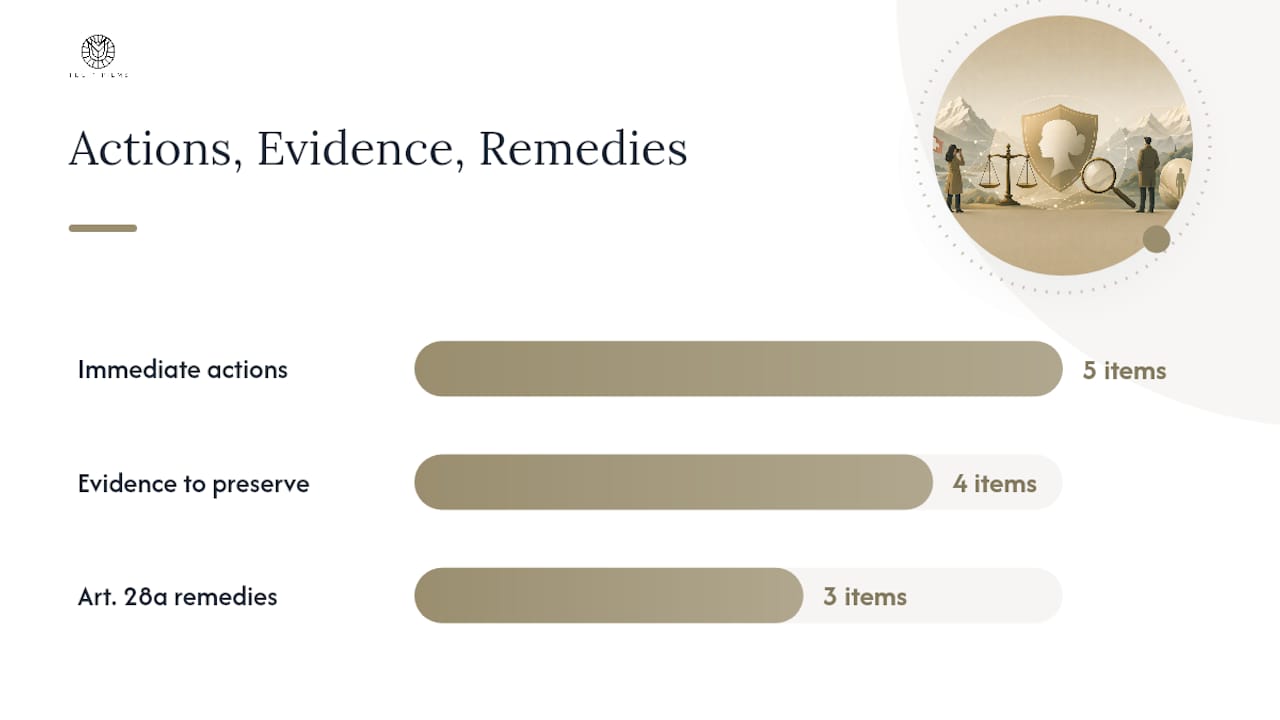
Step-by-step immediate actions:
Screenshot everything. Capture the full page, the URL, the date, and any engagement metrics visible. Use a tool like the Wayback Machine or a browser extension that timestamps captures.
Download or note the metadata of the original image if you have access to it (EXIF data, upload timestamps).
Send a written takedown request to the publisher. State your name, identify the specific image, cite Art. 28 ZGB, and set a clear deadline (five to seven business days is standard).
Report to the platform simultaneously. Major platforms have privacy or intellectual-property reporting tools. File the report the same day as the takedown request.
Document every contact. Keep copies of all emails, timestamps, and any responses or non-responses.
Evidence to preserve for a court or platform complaint:
Screenshots with visible URLs and timestamps
Original files or links showing the image in context
Any witnesses who can confirm the publication
Records of your takedown request and the publisher’s response (or silence)
Art. 28a ZGB gives courts the power to order three distinct remedies: an injunction stopping further publication, a declaratory judgment establishing the violation, and a claim for damages or Genugtuung (satisfaction for non-material harm). For urgent situations, provisional measures under Art. 261 ZPO can be sought within days.
If the violation is severe, particularly if it involves intimate images published without consent, criminal liability under Art. 179quater of the Swiss Criminal Code (StGB) may also apply. The EDÖB is the administrative contact for complaints involving DSG violations, which run parallel to civil claims when identifiable photos are processed unlawfully.
On burden of proof: in civil proceedings, the publisher must demonstrate that a valid justification existed. You do not need to prove the absence of consent; they need to prove its presence.
Practical compliance checklist for photographers and event organizers
Getting consent right before a shoot is far cheaper than fixing a problem afterward. Here is what responsible parties should have in place.
Before the event or shoot:
Post clear signage at venue entrances stating that photography and video recording will take place and how images will be used.
Brief all staff and photographers on which areas or individuals require targeted releases.
Prepare purpose-specific release forms for speakers, performers, and any person who will be prominently featured.
List every media channel explicitly on the release: website, LinkedIn, Instagram, internal newsletter, press releases.
On shoot day:
Set up a consent station near registration where attendees can sign releases and ask questions.
Build a shot list that minimizes singled-out candid shots of non-consenting attendees.
Assign one person to maintain a documented chain of custody for signed releases.
Flag any attendee who has declined consent so photographers can avoid featuring them.
After the shoot:
Retain signed releases for as long as the images are in active use, plus a reasonable buffer period.
If the intended use expands (for example, from an internal recap to an external campaign), obtain a new or expanded consent before proceeding.
Store releases in a secure, searchable system so you can respond quickly to a withdrawal request or a legal inquiry.
Pro Tip: For corporate shoots involving employees, use a separate image release form entirely distinct from the employment contract. The WEKA guidance on employee photography highlights that power imbalances in the workplace can undermine voluntariness. A standalone form, distributed with time to consider and a clear opt-out path, is the only way to demonstrate genuine consent.
For event video specifically, the corporate event coverage guide for Swiss businesses covers how to structure consent workflows from pre-event planning through post-production delivery.
Why consent workflows matter more than most organizations realize
Most organizations treat image consent as a box to check. That is the wrong frame entirely.
Swiss courts do not ask whether you had a form. They ask whether the person genuinely understood what they agreed to, whether they had a real choice, and whether the actual use matched what was described. A release that lists “social media” without naming the platforms, or that was handed to an employee alongside their contract, will not hold up when challenged.
The deeper issue is that the DSG and Art. 28 ZGB work together. A photo of an identifiable person is personal data. Publishing it is processing that data. That means every publication decision carries both a personality-rights question and a data-protection question simultaneously. Organizations that handle only one of those two tracks are half-compliant at best.
There is also a practical asymmetry worth noting: the burden of proof in disputes sits with the publisher. You do not get to argue that consent was probably given. You need to show it was given, in writing, for the specific use at issue. That changes how you should think about record-keeping. Consent documentation is not administrative overhead. It is your only defense.
Legally compliant event and corporate video production with Tulipfilms
Swiss businesses commissioning video content need a production partner who treats consent as part of the workflow, not an afterthought. Tulipfilms builds separate, purpose-specific release processes into every corporate and event production: clear shot lists, on-site consent stations, documented chains of custody for signed releases, and a structured approach to withdrawal requests.
[

For organizations that want footage they can actually use across all planned channels without legal exposure, Tulipfilms handles the compliance groundwork from pre-production planning through final delivery. See the event videography services page for scope and approach, or check production pricing to plan your next project.
Sources
This article is general information, not a substitute for advice from a qualified lawyer. Consult a qualified legal professional about your own circumstances before acting on anything here.
Recommended
