Visual Communication: Powering Brand Engagement


Capturing your audience’s attention in a crowded digital space can feel like a daily challenge. For Swiss marketing managers, cutting through the noise demands more than clever slogans or generic imagery. Visual communication transforms complex ideas into clear, memorable narratives that connect both emotionally and intellectually. This article explores how intentional visual strategies in video campaigns elevate brand engagement, providing actionable insights tailored to Swiss corporate standards of quality and precision.
Table of Contents
Key Takeaways
Point | Details |
Visual Communication is Powerful | It transforms complex messages into engaging narratives that connect with audiences emotionally and intellectually. |
Core Principles Matter | Clarity, contrast, balance, and hierarchy are essential for effective visual communication, influencing how messages are perceived and engaged with. |
Audience Understanding is Crucial | Conduct audience research and testing to tailor visual strategies that resonate with specific demographics and cultural nuances. |
Avoid Common Mistakes | Simplify designs to prevent cognitive overload and maintain consistency to ensure professionalism and clarity in visual content. |
Defining Visual Communication in Marketing
Visual communication represents a strategic approach that transforms complex marketing messages into compelling visual narratives. At its core, visual communication involves using imagery, graphics, color, and design to transmit information that connects emotionally and intellectually with target audiences. Strategic visual design goes beyond simple aesthetic presentation, functioning as a sophisticated language that speaks directly to consumers’ perceptions and experiences.
In marketing contexts, visual communication encompasses multiple elements that work synergistically to capture attention and communicate brand identity. These elements include graphic design, photography, video content, infographics, illustrations, and typography. Each visual component serves a specific purpose - from creating immediate emotional resonance to explaining complex concepts quickly and memorably. The goal is not just to inform but to persuade, engaging viewers through carefully crafted visual experiences that resonate with their underlying motivations and aspirations.
Marketing professionals understand that visual communication operates on both conscious and subconscious levels. Color psychology, composition, motion design, and visual hierarchy all play crucial roles in guiding viewer perception. Images and graphics can communicate brand values, trigger emotional responses, and create lasting impressions far more rapidly than text alone. By strategically leveraging visual elements, companies can create powerful narratives that transcend language barriers and connect with global audiences.
Pro tip: When developing visual communication strategies, always conduct audience research to understand the specific visual preferences and cultural nuances of your target demographic.
Core Types and Key Principles Explained
Visual communication encompasses several core types that marketers leverage to create compelling narratives and engage audiences. Diverse communication modes include still images, moving graphics, multimedia presentations, and graphic design elements. These types range from traditional print graphics to complex digital animations, each serving unique communicative purposes. The most prevalent types include photographic imagery, infographics, video content, illustrations, motion graphics, and interactive visual experiences that blend multiple media formats.
The effectiveness of visual communication hinges on several key principles that guide design and strategic implementation. Clarity stands as the foundational principle, ensuring that visual messages are immediately comprehensible. Visual design principles like contrast, balance, and hierarchy help creators structure information in ways that naturally guide viewer attention. Contrast creates visual interest by juxtaposing different elements, while balance ensures that design components feel harmonious and aesthetically pleasing. Hierarchy helps prioritize information, directing viewers’ eyes to the most critical aspects of the communication.
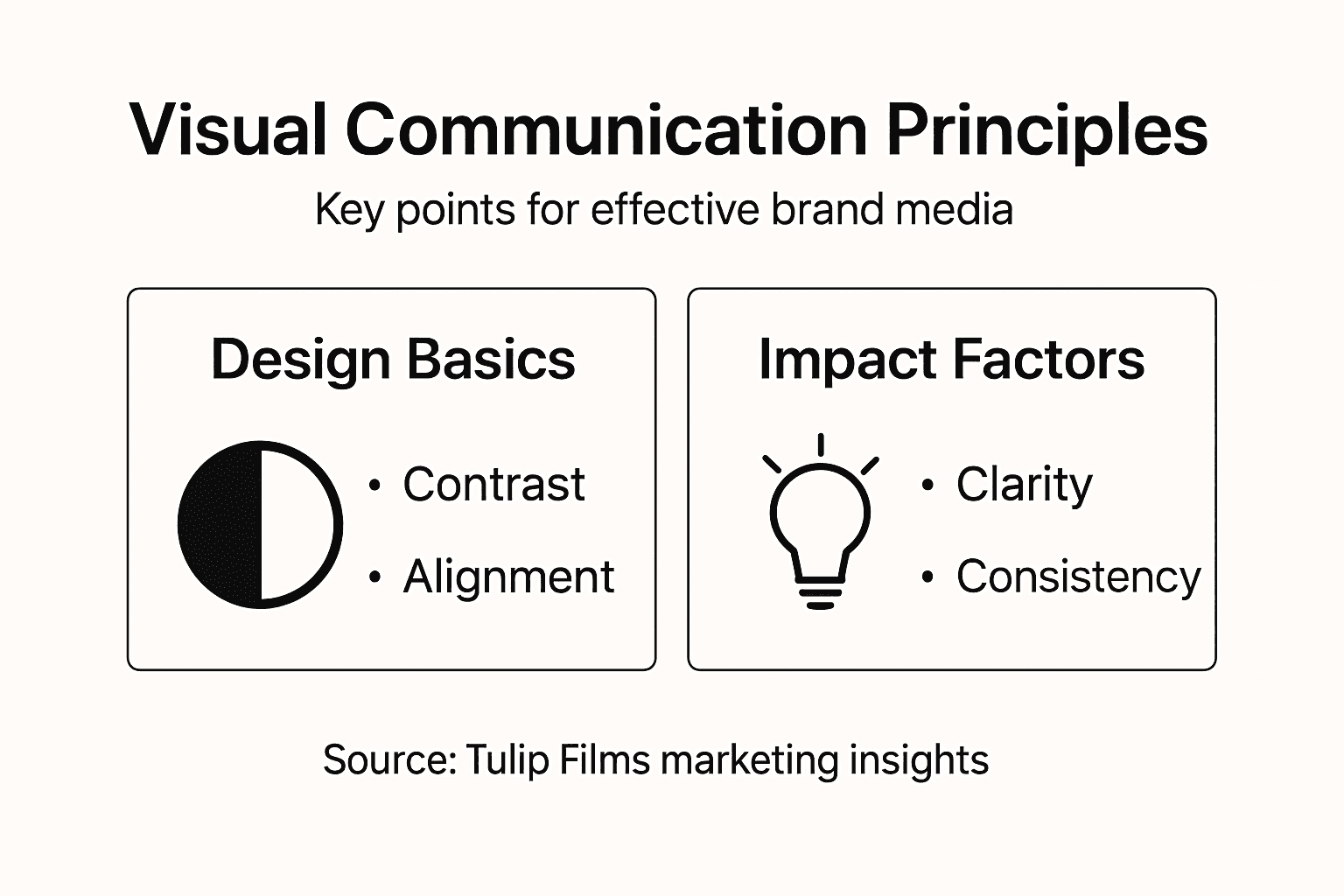
Beyond aesthetic considerations, successful visual communication integrates technological understanding with human perception. Modern marketing requires designers to recognize how different visual elements interact with cognitive processes. Color psychology, spatial relationships, motion design, and symbolic representation all play crucial roles in transforming simple graphics into powerful communication tools. By understanding these intricate relationships, marketers can create visual experiences that not only capture attention but also facilitate deeper emotional and intellectual engagement with brand messages.
Pro tip: Conduct regular audience testing to validate the effectiveness of your visual communication strategies, using metrics like comprehension rate, emotional response, and message retention.
Here’s a summary of core visual communication types and their primary marketing roles:
Type | Unique Function | Best Use Case |
Photographic Imagery | Emotional connection | Brand storytelling |
Infographics | Quick data explanation | Complex information |
Video Content | Dynamic engagement | Product demonstrations |
Illustrations | Conceptual visualization | Idea presentation |
Motion Graphics | Enhanced attention | Ad campaigns |
Interactive Visuals | Active viewer participation | Digital platforms |
Essential Elements of Effective Visual Media
Effective visual media requires a strategic combination of fundamental design elements that work together to capture and communicate messages powerfully. These essential components include color, form, movement, typography, imagery, and compositional structure. Each element serves a specific purpose in guiding viewer perception and emotional response, transforming simple graphics into compelling communication tools that resonate with target audiences.
Color represents one of the most potent visual communication elements, carrying deep psychological and cultural significance. Different colors evoke specific emotional responses and can symbolize complex concepts without using words. Blues might communicate trust and professionalism, while reds can suggest energy and passion. Beyond emotional impact, color creates visual hierarchy, directs attention, and helps organize information in ways that enhance viewer comprehension. Strategic color selection can dramatically improve message clarity and audience engagement.

Composition and layout play equally critical roles in visual media effectiveness. Graphic design principles like balance, alignment, proximity, and white space determine how viewers process visual information. Designers must understand how to create visual paths that guide the audience’s eye naturally through the content, ensuring key messages are communicated efficiently. Effective composition transforms complex information into clear, digestible visual experiences that communicate ideas quickly and memorably.
Pro tip: Always test your visual media designs with representative audience members to validate their emotional impact and comprehension before final implementation.
Compare key principles for effective visual communication across business outcomes:
Principle | Impact on Perception | Impact on Engagement |
Clarity | Clear message delivery | Higher audience retention |
Contrast | Enhanced visual interest | Focused attention |
Balance | Professional impression | Increased trustworthiness |
Hierarchy | Priority of information | Guided user journey |
Video Communication Strategies for Swiss Brands
Swiss brand communication strategies require a nuanced approach that leverages video as a powerful storytelling medium. Effective video content for Swiss brands must authentically represent core national values of precision, innovation, and quality. This means creating visual narratives that go beyond simple product demonstrations, instead weaving compelling stories that highlight the unique craftsmanship and technological expertise inherent in Swiss corporate culture.
The most successful video strategies for Swiss brands focus on storytelling that emphasizes brand heritage and technical excellence. This might involve showcasing behind-the-scenes production processes, highlighting the meticulous attention to detail that defines Swiss manufacturing, or creating documentaries that explore the human stories behind innovative products. Videos should communicate not just what a product does, but the philosophy and expertise that make it exceptional. Color palettes, cinematography, and narrative structure must reflect the clean, precise aesthetic associated with Swiss design.
Digital platforms offer unprecedented opportunities for targeted video communication. Swiss brands can leverage different video formats - from short social media clips to longer documentary-style content - to reach specific audience segments. Brand connection strategies require understanding how different platforms and video lengths impact viewer engagement. Corporate videos should balance professional polish with genuine emotional resonance, using high-quality production that demonstrates technical mastery while simultaneously creating human connection.
Pro tip: Develop a consistent visual language across your video content that reflects your brand’s unique Swiss identity, ensuring every production reinforces your core brand values.
Common Mistakes and How to Avoid Them
Visual communication errors can significantly undermine marketing effectiveness, making it crucial to recognize and address common pitfalls. Many brands inadvertently create visual content that confuses or overwhelms their audience, ultimately reducing message clarity and engagement. Understanding these mistakes allows marketers to develop more strategic and impactful visual communication approaches that truly resonate with their target demographic.
One of the most prevalent mistakes involves overcrowding visual content with excessive information and design elements. Cognitive overload happens when designers include too many competing visual signals, preventing viewers from quickly understanding the core message. This often manifests in text-heavy slides, complex graphics with multiple focal points, and color schemes that distract rather than guide attention. Successful visual communication requires ruthless editing, focusing on simplicity and ensuring each visual element serves a specific communicative purpose.
Slide design principles emphasize the importance of maintaining consistent formatting and thoughtful visual hierarchies. Inconsistent typography, inappropriate color contrasts, and poorly sized elements can make visual content appear unprofessional and difficult to comprehend. Swiss brands, known for precision and clean design, must be especially vigilant about maintaining a cohesive visual language that reflects their commitment to quality. This means developing clear design guidelines, using complementary color palettes, and ensuring that every visual element contributes to a unified brand narrative.
Pro tip: Conduct regular audience testing and gather feedback on your visual communication materials to identify potential comprehension barriers before finalizing your design.
Elevate Your Brand Through Strategic Visual Communication
In today’s competitive market, the challenge lies in crafting visual content that captures attention and builds an authentic connection with your audience. This article highlights how clarity, emotional resonance, and a consistent visual language are essential to avoid overwhelming viewers and to engage them deeply. Swiss brands especially benefit from visual strategies that reflect precision and quality, aligning perfectly with the values Tulip Films embodies in every project.
At Tulip Films, we specialize in transforming your brand’s story into powerful video narratives that respect the principles of visual communication discussed here. Our personalized approach ensures that your videos leverage color psychology, composition, and motion design to boost engagement and brand loyalty. Whether your need is for corporate videos, promotional ads, or event coverage, our rapid delivery and expert production create the clarity and emotional impact your message requires. Discover how we can support your visual storytelling goals on our website and see examples of our work tailored to Swiss brands like yours.
Looking to enhance your brand’s visual strategy with expert video production?
Explore the possibilities with Tulip Films today and turn your brand’s unique story into compelling visual content that captivates and converts. Plan your free consultation now and take the first step toward meaningful and effective audience engagement.
Frequently Asked Questions
What is visual communication in marketing?
Visual communication in marketing is the strategic use of imagery, graphics, color, and design to convey complex messages in a compelling manner, aiming to connect emotionally and intellectually with target audiences.
How does color psychology influence visual communication?
Color psychology plays a significant role in visual communication by evoking specific emotional responses. Different colors can symbolize concepts and significantly enhance message clarity and viewer engagement.
What are some core types of visual communication used in marketing?
Core types include photographic imagery, infographics, video content, illustrations, motion graphics, and interactive visuals, each serving unique functions in conveying marketing messages effectively.
What are common mistakes to avoid in visual communication?
Common mistakes include overcrowding visuals with excessive information, inconsistent formatting, and poor visual hierarchy, which can confuse the audience and undermine message clarity.
Recommended
