What is Documentary Style Filming? Understanding Its Impact

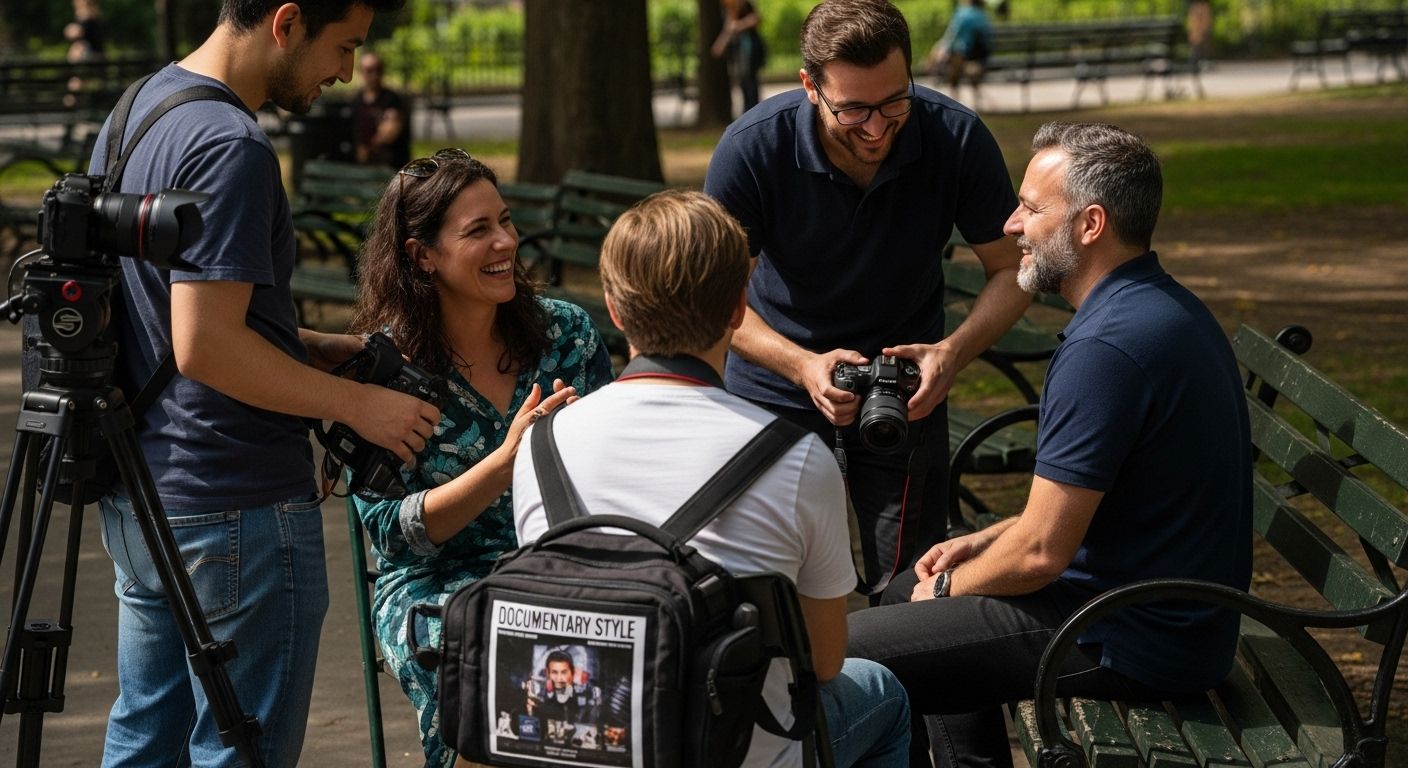
Documentary style filming grabs real life as it happens, not as a script says it should. Over 68 percent of viewers say they trust documentary films more than fictional shows. That sounds obvious since documentaries show what is real, but most people are surprised by just how much work and creativity goes into making something look totally unplanned. The magic happens in the balance between staying invisible and shaping a story that feels more personal than any fiction could.
Table of Contents
Quick Summary
Takeaway | Explanation |
Documentaries capture authentic human experiences. | They prioritize raw moments to reveal deeper truths about subjects and interactions. |
Filmmakers balance ethics with storytelling. | Respect for subjects’ dignity is crucial while crafting narratives with depth and authenticity. |
Visual aesthetics significantly impact storytelling. | Cinematographers use composition and lighting to enhance viewer engagement and emotional resonance. |
Documentaries function as powerful educational tools. | They provide nuanced perspectives and promote empathy, challenging traditional learning frameworks. |
Social impact stems from authentic narratives. | Documentaries amplify marginalized voices and inspire dialogue around pressing societal issues. |
Defining Documentary Style Filming: Key Characteristics
Documentary style filming represents a profound storytelling approach that captures authentic human experiences through unscripted, observational visual narratives. Unlike traditional filmmaking, this technique prioritizes raw, genuine moments that reveal deeper truths about subjects, environments, and human interactions.
To help clarify the core qualities of documentary style filming, the following table organizes its key characteristics as described in the article:
Characteristic | Description |
Authentic Experience | Prioritizes real, unscripted human moments over scripted or staged events |
Genuine Emotional Landscapes | Preserves true emotional reactions and natural interactions |
Unscripted Narrative Arcs | Narratives unfold organically without pre-written dialogue or strict control |
Ethical Storytelling Standards | Maintains integrity and respect for subjects, safeguarding dignity and privacy |
Minimal Artificial Manipulation | Avoids excessive staging, special effects, or post-production alterations |
Intimate Perspective | Provides viewers with personal, unfiltered insight into subjects’ lives |
Observational Visual Techniques | Employs handheld cameras, natural lighting, and ambient sound to create an immersive viewing experience |
Philosophical Foundations of Documentary Filmmaking
At its core, documentary style filming emerges from a commitment to presenting reality without artificial manipulation. Pioneered by filmmakers like Robert Flaherty, this approach seeks to document lived experiences with minimal intervention. The fundamental philosophy involves creating a truthful representation that provides viewers with an intimate, unfiltered perspective.
Key philosophical principles include:
Capturing authentic human experiences
Preserving genuine emotional landscapes
Presenting unscripted narrative arcs
Maintaining ethical storytelling standards
Technical and Narrative Approaches
Documentary style filming employs specific techniques that distinguish it from conventional filmmaking.
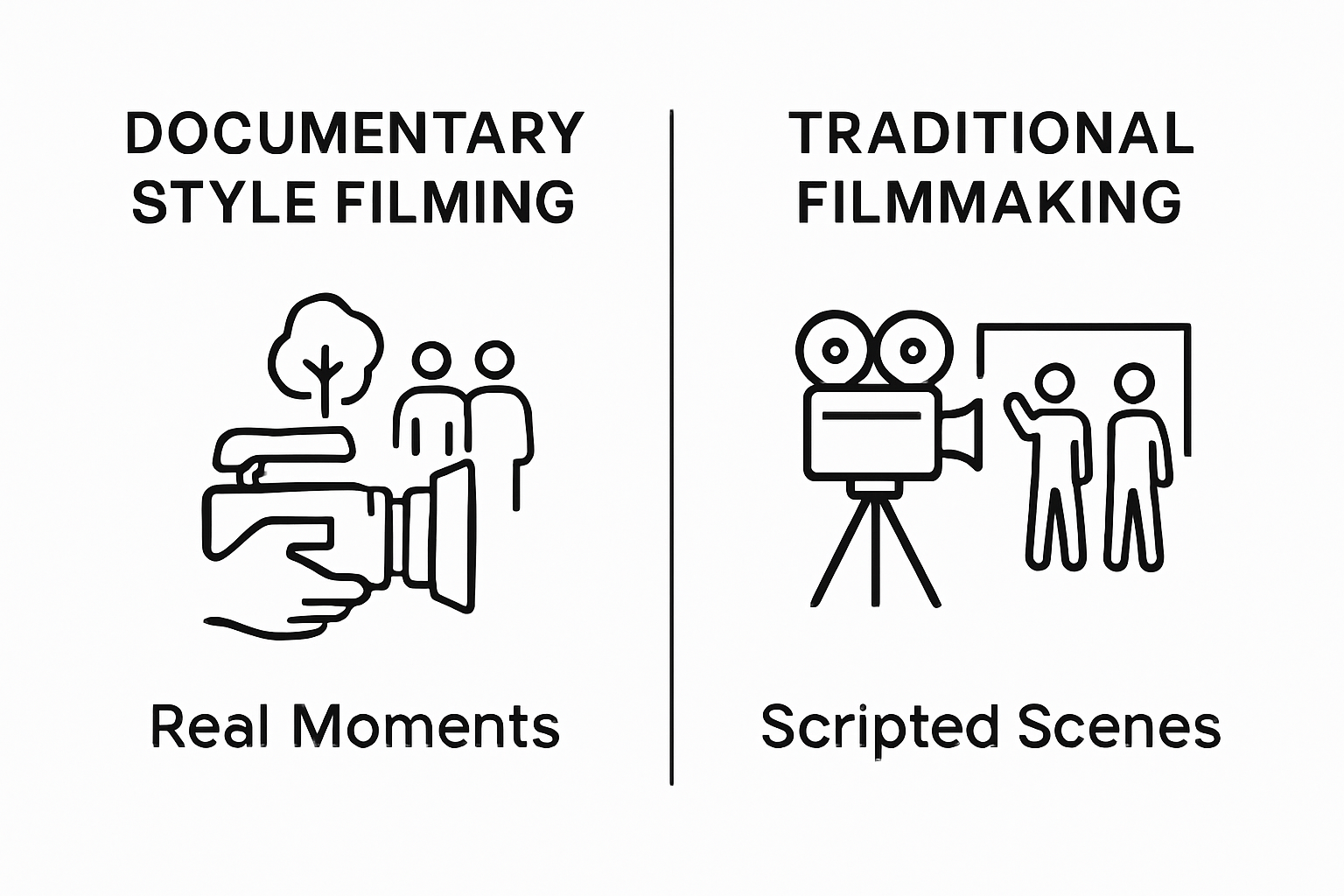
Cinematographers often utilize handheld cameras, natural lighting, and ambient sound to create an immersive, organic viewing experience.
According to Documentary Organization of Canada, this approach requires exceptional technical skill and an intuitive understanding of storytelling dynamics.
Filmmakers capture subjects in their natural environments, allowing narratives to unfold organically. Whether exploring social issues, personal journeys, or cultural phenomena, documentary style filming transforms raw footage into compelling visual stories that challenge, inform, and provoke audience reflection.
Ethical Considerations and Artistic Integrity
Beyond technical execution, documentary style filming carries significant ethical responsibilities. Filmmakers must balance storytelling objectives with respect for their subjects’ dignity and privacy. This delicate negotiation requires profound empathy, careful narrative framing, and a commitment to representing complex human experiences with nuance and authenticity.
The most powerful documentaries transcend mere observation, offering viewers transformative insights into diverse human experiences, societal dynamics, and untold stories that expand our collective understanding of the world.
The Importance of Documentary Style Filming in Media
Documentary style filming serves as a critical medium for storytelling, social commentary, and knowledge dissemination across multiple platforms. By transforming complex narratives into visually compelling experiences, these films bridge gaps between diverse human experiences and audience understanding.
Educational and Social Impact
Documentaries function as powerful educational tools that extend far beyond traditional learning frameworks. According to MIT’s Communication Studies, these visual narratives engage audiences by connecting emotional storytelling with substantive information. They create immersive learning environments that challenge preconceived notions and encourage critical thinking.
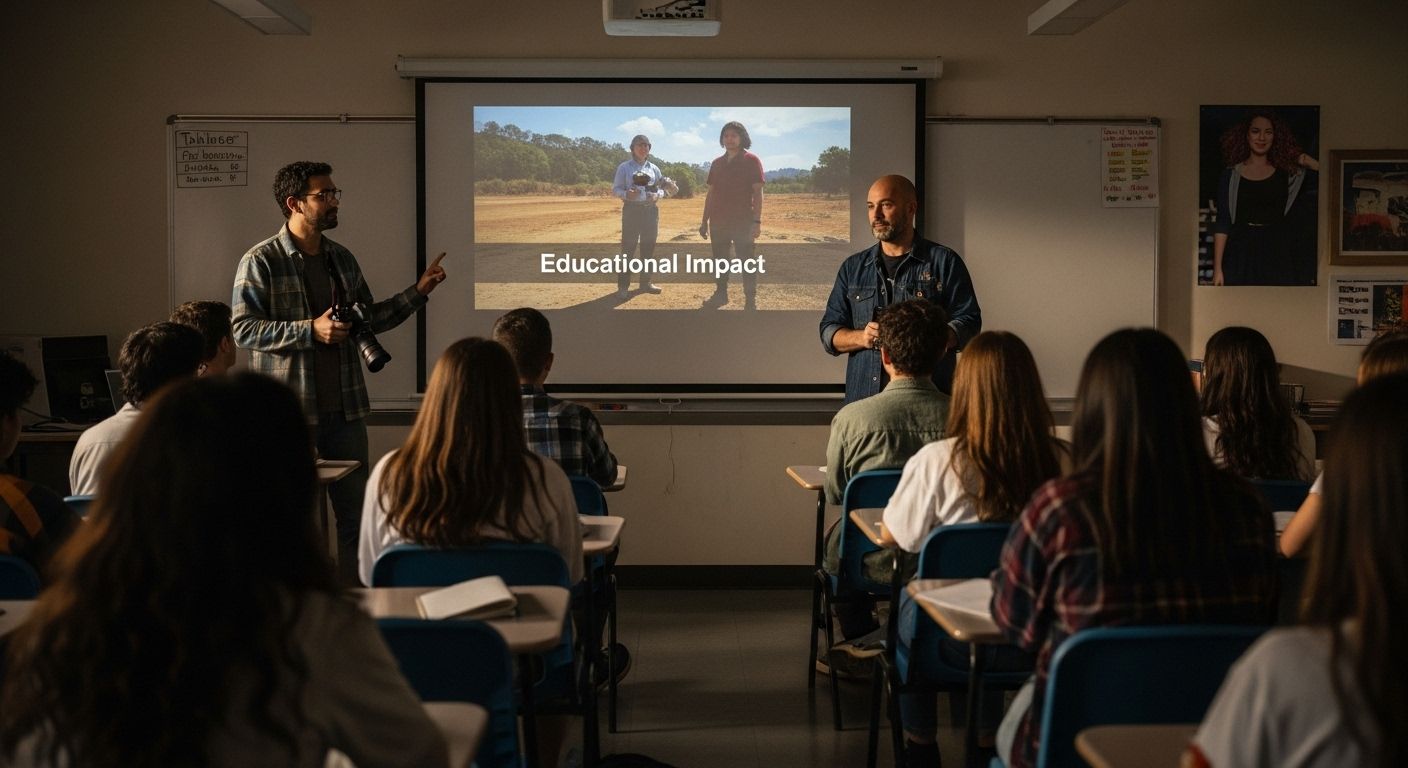
Primary educational contributions include:
Providing nuanced perspectives on complex social issues
Facilitating cross-cultural understanding
Promoting empathy through authentic storytelling
Presenting alternative viewpoints with depth and context
Media Landscape and Narrative Power
In an era saturated with superficial content, documentary style filming offers profound depth and authenticity. Discover more about visual storytelling techniques that transform raw experiences into compelling narratives. These films serve multiple critical functions in media ecosystems:
Exposing hidden societal challenges
Amplifying marginalized voices
Challenging mainstream narratives
Preserving historical and cultural memories
Technological and Artistic Evolution
Modern documentary filmmaking represents a sophisticated intersection of technological innovation and artistic vision. Contemporary documentarians leverage advanced recording technologies, sophisticated editing techniques, and nuanced narrative structures to create immersive storytelling experiences.
Through meticulous research, ethical representation, and creative visual storytelling, documentary films continue to play a transformative role in expanding human understanding, challenging societal norms, and presenting complex global narratives with unprecedented intimacy and authenticity.
The Artistic Elements that Shape Documentary Filming
Documentary filmmaking transcends mere recording, representing a complex artistic process where visual storytelling, technical skill, and creative interpretation converge to reveal profound human narratives. Each artistic choice transforms raw footage into a meaningful, emotionally resonant experience.
Composition and Visual Aesthetics
Visual composition in documentary filmmaking is a deliberate art form that guides viewer perception and emotional engagement. Cinematographers carefully select framing, lighting, and camera movements to create visual narratives that communicate deeper meanings beyond surface-level observations. According to the International Documentary Association, these technical choices serve as critical storytelling mechanisms.
Key visual composition principles include:
Creating visual depth through strategic camera angles
Using natural lighting to enhance emotional authenticity
Employing subtle camera movements to guide narrative focus
Balancing aesthetic beauty with documentary integrity
Narrative Structure and Emotional Architecture
Beyond visual techniques, documentary filmmaking demands sophisticated narrative construction. Learn more about narrative techniques in visual storytelling that transform raw experiences into compelling stories. Filmmakers carefully curate interviews, archival footage, and observational sequences to craft coherent, emotionally impactful narratives that resonate with audiences.
Narrative design strategies encompass:
Maintaining chronological or thematic narrative arcs
Balancing objective reporting with subjective perspectives
Creating emotional progression through strategic editing
Allowing subjects’ authentic voices to emerge
Sound Design and Emotional Texture
Sound represents a profound yet often overlooked artistic element in documentary filmmaking. Carefully selected musical scores, ambient sounds, and strategic silences create emotional landscapes that complement visual storytelling. Skilled sound designers use audio elements to enhance narrative tension, provide contextual depth, and guide viewer emotional responses.
The most remarkable documentaries emerge from a delicate balance between technical precision, artistic vision, and genuine human storytelling. By integrating sophisticated artistic elements, documentary filmmakers transform ordinary moments into extraordinary narratives that challenge, illuminate, and inspire audiences.
How Documentary Style Filming Engages Audiences
Documentary style filming transcends traditional storytelling by creating profound emotional connections that transform passive viewers into active participants. Through sophisticated narrative techniques, these films invite audiences into intimate, authentic experiences that challenge perceptions and provoke deep reflection.
Emotional Resonance and Psychological Engagement
Research from ResearchGate demonstrates how documentary filmmaking cultivates extraordinary audience engagement through authentic storytelling. By presenting real human experiences with nuanced complexity, these films trigger powerful psychological mechanisms of empathy, curiosity, and emotional investment.
Key psychological engagement strategies include:
Creating immersive narrative experiences
Presenting multidimensional human stories
Challenging preconceived audience perspectives
Generating emotional and intellectual dialogue
Narrative Techniques for Audience Connection
Documentary filmmakers employ sophisticated storytelling techniques to transform raw footage into compelling narratives. Explore advanced storytelling methods that bridge personal experiences with broader social contexts. These techniques strategically guide audience emotional journeys through carefully constructed visual and narrative elements.
Audience connection techniques encompass:
Utilizing personal testimonials
Developing narrative tension
Creating relatable character arcs
Presenting complex issues through human stories
Cognitive and Emotional Impact
Documentary style filming operates at the intersection of information and emotion, creating powerful learning experiences that transcend traditional educational formats. By presenting complex subjects through personal narratives, these films enable audiences to process challenging information through emotional understanding.
The most effective documentaries do more than inform they transform. They invite viewers to see the world through different perspectives, challenge existing beliefs, and develop deeper empathy for diverse human experiences. Through meticulous storytelling and artistic vision, documentary filmmakers create profound bridges of understanding that connect individuals across cultural, social, and personal boundaries.
Real-World Applications of Documentary Style Filming
Documentary style filming extends far beyond entertainment, serving as a powerful tool for education, social change, scientific communication, and professional storytelling. By transforming complex narratives into accessible visual experiences, these films bridge knowledge gaps across multiple disciplines and professional domains.
To illustrate how documentary style filmmaking impacts both education and social progress, the table below compares its applications in educational/scientific communication, professional storytelling, and social advocacy:
Application Area | Purpose/Benefit | Example Focus |
Educational & Scientific Communication | Enhance understanding of complex topics, make learning accessible | Visualizing scientific research, historical context |
Professional & Organizational Storytelling | Communicate values, missions, and cultures within businesses and organizations | Employee narratives, social responsibility |
Social Impact & Advocacy | Amplify marginalized voices, inspire collective action, foster public engagement | Documenting social movements, advocacy campaigns |
Educational and Scientific Communication
According to the Journal of Chemical Education, documentary style filming provides innovative approaches to communicating complex information. In scientific and academic contexts, these films translate intricate concepts into engaging visual narratives that enhance understanding and spark curiosity.
Key educational applications include:
Explaining sophisticated scientific research
Providing immersive historical context
Demonstrating technical processes visually
Creating accessible learning experiences
Professional and Organizational Storytelling
Businesses and organizations increasingly leverage documentary style filming to communicate their missions, challenges, and achievements. Learn more about professional visual storytelling that transforms institutional narratives into compelling visual experiences. These films offer nuanced insights into organizational cultures, human experiences, and transformative journeys.
Professional storytelling strategies encompass:
Capturing corporate social responsibility initiatives
Presenting employee experience narratives
Showcasing innovative problem-solving approaches
Humanizing institutional objectives
Social Impact and Advocacy
Documentary style filming emerges as a profound instrument for social change, amplifying marginalized voices and drawing global attention to critical issues. By presenting authentic human experiences, these films challenge systemic narratives, inspire collective action, and generate meaningful dialogues around complex social challenges.
The most impactful documentaries transcend mere observation. They serve as catalysts for understanding, compassion, and transformative social engagement. Through carefully crafted visual storytelling, documentary filmmakers create powerful bridges between individual experiences and broader societal contexts, inviting viewers to see the world through more empathetic and nuanced perspectives.
Bring Authentic Stories to Life with Tulip Films
Are you looking to create videos that truly resonate with your audience? The article highlights how documentary style filming captures authentic human experiences, builds emotional connections, and brings greater impact to storytelling. Many businesses and organizations struggle to convey genuine messages with depth and integrity. This need for authentic, observational narratives can make all the difference in building trust and sparking engagement.

Choose a partner who understands the power of real stories and the art of meaningful visual storytelling. At Tulip Films, we combine ethical documentary techniques with modern production skills to help Swiss businesses, nonprofits, and professionals communicate purpose with clarity and emotion. Explore how our video portfolio brings complex narratives to life, or read more about our approach to branding and storytelling. Ready to inspire and connect on a deeper level? Reach out now through Tulip Films to plan your free consultation and start telling your authentic story today.
Frequently Asked Questions
What is documentary style filming?
Documentary style filming is a storytelling approach that captures authentic human experiences through unscripted and observational visual narratives, focusing on presenting reality without artificial manipulation.
What are the key characteristics of documentary style filming?
Key characteristics include capturing genuine moments, preserving emotional landscapes, presenting unscripted narratives, and adhering to ethical storytelling standards.
How does documentary style filming engage audiences?
This style of filming fosters emotional connections by presenting real human experiences that provoke empathy, curiosity, and critical reflection, making viewers active participants in the narrative.
What role does sound design play in documentary filmmaking?
Sound design in documentary films creates emotional landscapes through music, ambient sounds, and strategic silence, enhancing the narrative’s emotional impact and supporting the storytelling elements.
Recommended
