Why Visual Content Matters for Swiss Brands


Every marketing manager in Geneva knows the moment when a presentation falls flat because slides feel dense and uninspired. In an environment where competition for attention grows daily, understanding how to use visual content as a primary communication tool is now vital for connecting with discerning Swiss audiences. This overview offers clear guidance on incorporating visual content strategies that transform messages into memorable, engaging experiences.
Table of Contents
Key Takeaways
Point | Details |
Visual Content as a Strategic Tool | Visual content acts as a critical communication strategy for brands, effective in conveying complex messages and triggering emotional responses. |
Impact on Audience Engagement | Engaging visuals enhance audience comprehension and retention, ultimately influencing perceptions and interactions with the brand. |
Quality over Quantity | High-quality visuals build trust and enhance brand reputation, while poor-quality images can damage credibility and reduce audience engagement. |
Cultural Sensitivity Matters | For Swiss brands, visuals must be culturally nuanced and universally appealing to resonate with a diverse audience effectively. |
Defining Visual Content and Its Role
Visual content represents a powerful communication strategy that goes far beyond simple imagery. Comprehensive research in digital marketing reveals that visual elements now function as primary communication tools, transforming how brands connect with their audiences.
At its core, visual content encompasses a diverse range of media formats including:
Photographs and images
Infographics
Videos and animations
Interactive graphics
Live stream presentations
Data visualization charts
Graphic design elements
These visual formats serve multiple strategic purposes for Swiss brands. They don’t merely decorate communication - they actively convey complex messages, capture audience attention, and trigger emotional responses more effectively than text alone. Strategic visual design helps organizations simplify product understanding and build compelling brand narratives.
The psychological impact of visual content cannot be overstated. Humans process visual information approximately 60,000 times faster than text, making graphics and videos critical tools for rapid communication. For Swiss brands competing in a global marketplace, this means visual content is not just a nice-to-have - it’s an essential strategy for cutting through information noise and creating meaningful connections.
Pro tip: Invest in high-quality, professionally produced visual content that authentically represents your brand’s unique identity and values.
Types of Visual Content for Swiss Marketing
Sophisticated visual content strategies offer Swiss brands powerful tools for engaging diverse audiences across multiple communication channels. Understanding the nuanced landscape of visual media enables marketing teams to craft compelling narratives that resonate with both local and international consumers.
The primary types of visual content for Swiss marketing include:
Infographics: Complex data presented in visually appealing, digestible formats
Videos: Promotional content, product demonstrations, testimonials
Branded Images: Professional photography representing company culture
Interactive Graphics: Engaging digital experiences that encourage audience participation
User-Generated Content: Authentic visual stories from customers
Product Demonstrations: Visual explanations of product features and benefits
Behind-the-Scenes Content: Humanizing brand perspectives
Marketing professionals must strategically select visual content types that align with specific communication goals. The Swiss market demands precision, clarity, and cultural sensitivity in visual communication, requiring brands to thoughtfully curate their visual storytelling approach.
Specifically for Swiss audiences, visual content must transcend linguistic barriers by leveraging universal design principles and compelling imagery that speaks directly to viewer emotions and rational decision-making processes. Multilingual and multicultural visual strategies become critical in a market characterized by linguistic diversity and sophisticated consumer expectations.

Pro tip: Invest in professional visual production that authentically represents your brand’s unique Swiss identity and cultural nuances.
Here’s how different visual content types uniquely benefit Swiss marketing:
Visual Content Type | Strategic Benefit | Typical Business Result |
Infographics | Simplify complex data | Improved consumer understanding |
Videos | Build emotional connection | Higher engagement rates |
Branded Images | Reinforce brand identity | Enhanced recall and trust |
Interactive Graphics | Encourage participation | Increased audience retention |
User-Generated Content | Promote authenticity | Stronger community loyalty |
Product Demonstrations | Showcase features clearly | Boosted conversion rates |
Behind-the-Scenes | Humanize the brand | Greater transparency perception |
The Impact of Visuals on Audience Engagement
Visual content has transformed from a supplementary communication tool to a critical engagement strategy that directly influences audience perception and interaction. Research in academic presentations demonstrates how meticulously designed visual elements can dramatically enhance audience comprehension and maintain sustained attention.
The key mechanisms of visual engagement include:
Emotional Triggering: Visual stimuli that evoke immediate emotional responses
Cognitive Processing: Graphics that simplify complex information
Attention Retention: Dynamic visuals that prevent cognitive drift
Memory Encoding: Images that create lasting impressional memories
Narrative Acceleration: Visuals that compress storytelling timelines
Cultural Resonance: Graphics that speak to specific audience experiences
For Swiss brands, understanding these engagement dynamics means recognizing that visuals are not merely decorative elements but strategic communication instruments. Each visual representation carries the potential to communicate brand values, explain complex concepts, and create meaningful connections with target audiences.
Beyond aesthetic appeal, effective visual content operates at the intersection of psychology and communication. It transforms passive viewers into active participants, breaking through information overload by delivering compelling, instantly digestible narratives that connect on both intellectual and emotional levels.
Pro tip: Develop a consistent visual language that authentically represents your brand’s unique personality and strategic objectives.
Building Trust and Brand Recall Through Visuals
Visual content research reveals how strategic imagery profoundly influences consumer perception and brand trust. The human brain processes visual information dramatically faster than text, creating instantaneous emotional and cognitive connections that can make or break brand relationships.
Key strategies for building trust through visual content include:
Consistency: Maintaining uniform visual language across platforms
Authenticity: Using genuine, unfiltered visual representations
Emotional Resonance: Creating visuals that trigger positive feelings
Transparency: Showing behind-the-scenes brand experiences
Cultural Sensitivity: Designing graphics that respect local nuances
Narrative Coherence: Telling compelling visual stories
Neuroscience behind brand recall demonstrates that 90% of information transmitted to the brain is visual. This means every color, shape, and image becomes a potential neural shortcut for brand recognition, with repeated visual elements reducing cognitive effort and building subconscious trust.
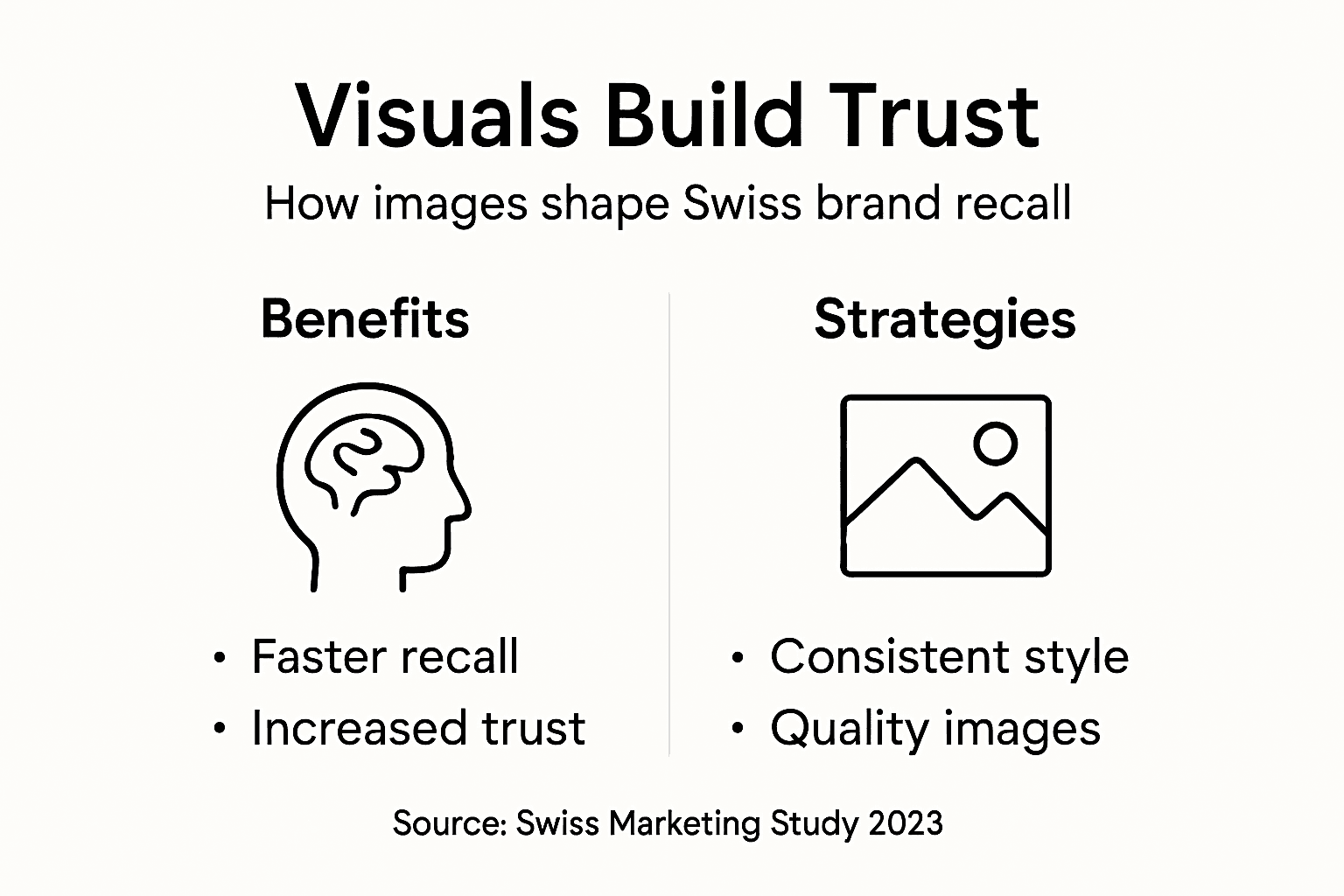
For Swiss brands specifically, this translates into a critical imperative: visual content must be meticulously crafted to reflect precision, quality, and cultural sophistication. Each visual asset becomes a strategic communication tool that goes beyond aesthetic appeal, functioning as a direct channel for building consumer confidence and emotional connection.
Pro tip: Develop a visual identity manual that codifies your brand’s visual language, ensuring consistency and immediate recognizability across all communication channels.
Risks of Poor-Quality or Generic Visuals
Visual representation research reveals the profound consequences of substandard visual content. Poor-quality visuals are not merely aesthetic failures but strategic communication risks that can dramatically undermine brand credibility and audience perception.
Specifically, poor visual content introduces critical risks such as:
Misinterpretation: Confusing or unclear visual messaging
Credibility Erosion: Diminished audience trust
Brand Perception Damage: Negative associations with unprofessional imagery
Engagement Reduction: Lower audience interaction rates
Communication Breakdown: Inability to effectively convey intended messages
Competitive Disadvantage: Falling behind visually sophisticated competitors
Content quality studies demonstrate that low-resolution images, generic stock photos, and inconsistent branding can increase audience bounce rates by significant margins. These visual missteps transform potential engagement opportunities into missed connections, with viewers quickly dismissing content that fails to meet their sophisticated visual expectations.
For Swiss brands, where precision and quality are cultural expectations, generic or poorly executed visuals represent more than a design problem—they signal potential organizational weakness. Every visual asset becomes a direct reflection of brand standards, making professional, thoughtful visual content a non-negotiable communication strategy.
Pro tip: Invest in professional visual production that meticulously aligns with your brand’s quality standards and communication objectives.
A comparison of high-quality versus poor-quality visuals for Swiss brands:
Quality Level | Impact on Brand Trust | Effect on Engagement |
High-Quality Visuals | Strengthens brand reputation | Drives sustained interaction |
Poor-Quality Visuals | Damages brand credibility | Reduces audience attention |
Elevate Your Swiss Brand with Powerful Visual Storytelling
The article highlights the critical challenge Swiss brands face in creating high-quality visual content that builds trust, drives engagement, and delivers clear, culturally sensitive messaging. At Tulip Films, we understand that generic or poor-quality visuals risk eroding brand credibility and missing emotional connections with your audience. Our expertise in crafting personalized and professionally produced videos directly addresses these pain points by translating your brand’s unique identity into captivating audiovisual experiences.
With a focus on rapid delivery and tailored storytelling, Tulip Films helps you leverage the full power of visual content to simplify complex messages and foster lasting consumer trust. Discover how our corporate videos and other video productions are designed to capture attention, emotionally engage your target market, and elevate your brand presence within Switzerland and beyond.
Unlock the potential of bespoke visual communication and start connecting with your audience today.
Experience the difference strategic visuals make with Tulip Films.
Capture your brand’s story with visuals that matter.

Ready to transform your visual content approach? Visit Tulip Films to schedule your free consultation now and begin crafting videos that build trust and boost engagement across all your platforms.
Frequently Asked Questions
What is visual content and why is it important for brands?
Visual content includes various media formats like images, videos, and infographics that help brands communicate complex messages more effectively than text alone. It plays a crucial role in capturing audience attention and fostering emotional connections, making it essential for modern marketing strategies.
How does visual content impact audience engagement?
Visual content enhances audience engagement by simplifying complex information, maintaining attention, and evoking emotional responses. The strategic use of visuals transforms passive viewers into active participants, leading to deeper connections with the brand.
What are some effective types of visual content for marketing?
Effective types of visual content for marketing include infographics, videos, interactive graphics, user-generated content, and branded images. Each type serves specific strategic purposes like simplifying data or showcasing products to resonate with diverse audiences.
How can poor-quality visuals affect a brand’s perception?
Poor-quality visuals can lead to misinterpretation, diminished trust, and negative brand associations. They can reduce audience engagement and create a competitive disadvantage, which is particularly detrimental in markets that value precision and quality.
Recommended
