Master video production process for Swiss businesses

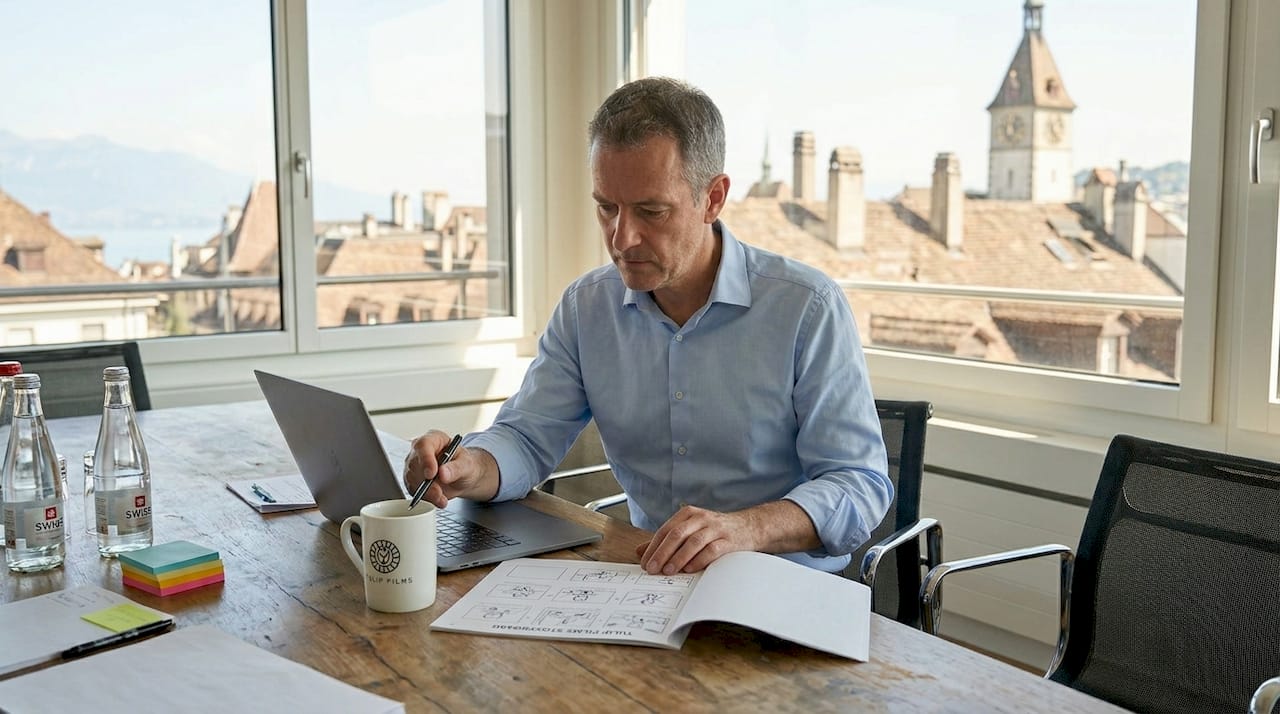
Swiss businesses struggle to create video content that truly captures their brand identity and engages their audience effectively. Without a clear roadmap, video projects often run over budget, miss deadlines, or fail to deliver the expected impact. This comprehensive guide walks you through every stage of the video production process in 2025, from initial planning to final delivery, ensuring your corporate videos strengthen your brand and drive measurable results for Swiss marketing and promotional teams.
Table of Contents
Key Takeaways
Point | Details |
Clear objectives | Define crystal clear objectives and document them to guide every production decision and ensure alignment with your broader marketing strategy. |
Precise audience targeting | Develop detailed audience personas that reflect Swiss regions and languages and tailor messaging accordingly to maximize engagement. |
Cross functional team roles | Assemble a cross functional team with clearly defined roles to balance creative direction and technical logistics. |
Script and storyboard planning | Create a detailed script and storyboard to communicate the final vision before shooting. |
Budget and contingency planning | Build a realistic timeline and budget with a contingency fund to absorb revisions and unexpected delays. |
Preparing for your video project: essentials and planning
Effective pre-production planning dramatically increases video project success rates. Before you pick up a camera, you need a rock-solid foundation that aligns your video goals with your broader marketing strategy. Swiss businesses that invest time in thorough preparation consistently deliver higher-quality videos on tighter timelines.
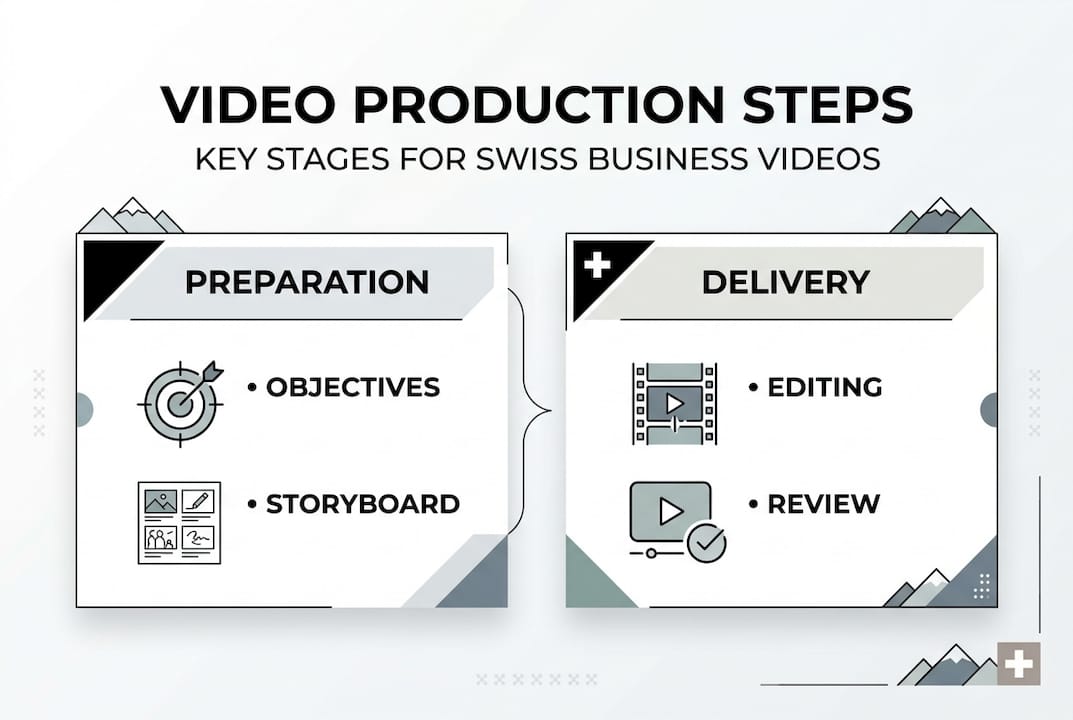
Start by defining crystal-clear objectives. Ask yourself what specific action you want viewers to take after watching. Do you want to increase brand awareness among Swiss SMEs, generate leads for a new service, or educate customers about a complex product? Your objective shapes every subsequent decision, from script tone to distribution channels. Document these goals in writing and share them with everyone involved in the project.
Identify your target audience with surgical precision. Swiss marketing teams often serve diverse demographics across multiple language regions. Create detailed audience personas that include age ranges, professional roles, pain points, and preferred content consumption habits. Understanding whether you’re speaking to C-suite executives in Zurich or technical managers in Geneva fundamentally changes your messaging approach and visual style.
Assemble a cross-functional team that brings together creative vision and technical expertise. Your core group should include a project lead who manages timelines, a creative director who shapes the narrative, a technical producer who handles equipment and logistics, and marketing stakeholders who ensure brand alignment. For smaller Swiss businesses, one person might wear multiple hats, but clearly define each role’s responsibilities to avoid confusion during production.
Gather or rent appropriate video equipment based on your project scope and budget. Professional corporate videos typically require a quality camera capable of 4K recording, professional lighting kits with adjustable color temperature, external microphones for clear audio capture, and stabilization equipment like tripods or gimbals. Swiss rental houses in Lausanne, Geneva, and Zurich offer flexible packages that let you access premium gear without massive capital investment.
Develop a detailed script and storyboard that visualizes your final product. The script should include dialogue, voiceover narration, on-screen text, and scene descriptions. Storyboards don’t need artistic perfection but should clearly communicate camera angles, subject positioning, and visual transitions. This documentation becomes your blueprint during filming and helps everyone understand the creative vision before you invest in production.
Create a realistic timeline and budget that accounts for Swiss business constraints. Factor in approval cycles, location availability, seasonal considerations, and potential weather delays for outdoor shoots. Build in buffer time for revisions and unexpected challenges. Your budget should itemize equipment rental, team compensation, location fees, post-production costs, and a contingency fund of at least 10% for unforeseen expenses.
Pro Tip: Schedule a pre-production meeting where your entire team reviews the script, storyboard, and shot list together. This collaborative session surfaces potential issues and creative improvements before you commit resources to filming, saving significant time and money during production.
Developing a comprehensive video content strategy ensures your individual video projects contribute to long-term brand building rather than existing as isolated efforts.
Planning element | Time investment | Impact on success |
Objective definition | 2-4 hours | Critical foundation |
Audience research | 4-8 hours | Shapes all creative decisions |
Script development | 8-16 hours | Determines message clarity |
Storyboard creation | 4-8 hours | Visualizes final product |
Budget planning | 3-6 hours | Prevents cost overruns |
Timeline development | 2-4 hours | Keeps project on track |
Executing the shoot: step-by-step video production workflow
A structured shooting workflow improves efficiency and output quality. The production phase transforms your careful planning into actual footage, and maintaining discipline during filming prevents expensive reshoots and post-production headaches.
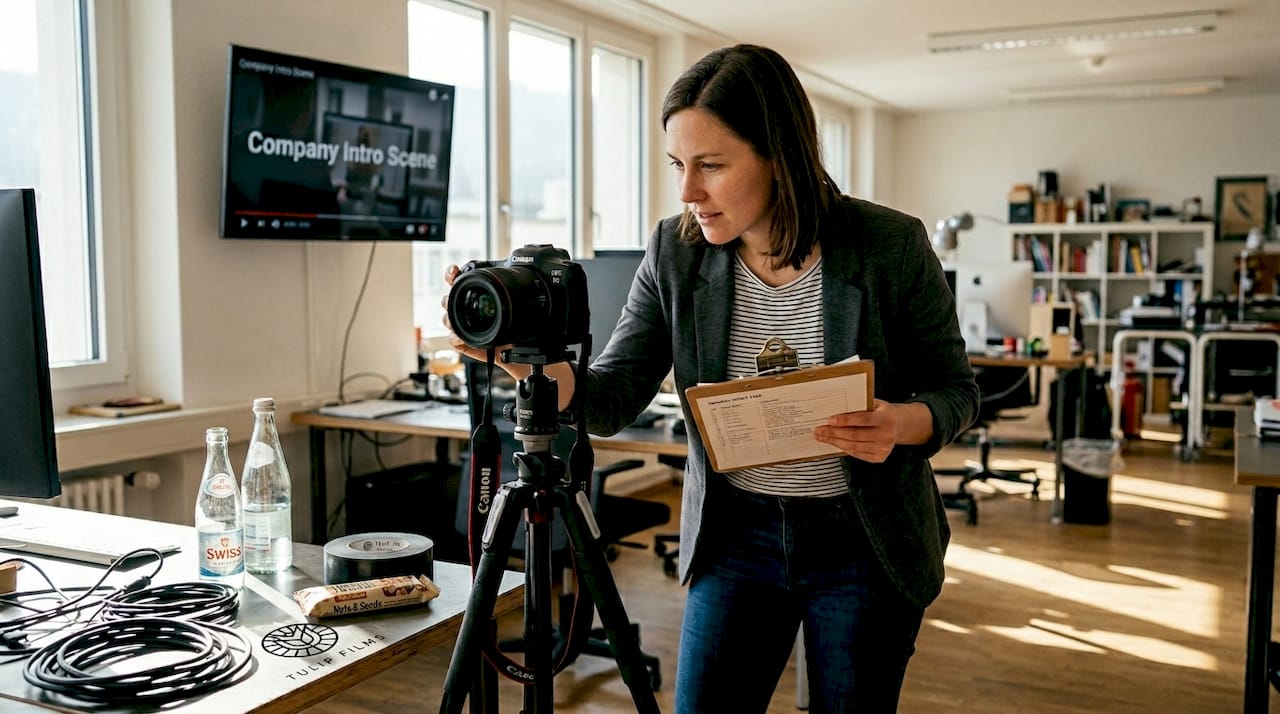
Secure locations and permissions early. Swiss businesses filming in corporate offices need written approval from building management. Public spaces in cities like Lausanne or Geneva may require permits from municipal authorities. Arrive at least one hour before your scheduled shoot time to set up equipment, test lighting, and address any unexpected location challenges.
Follow your shooting script systematically. Work through your shot list methodically rather than jumping around randomly. This approach maintains continuity and ensures you don’t miss critical footage. However, stay flexible when creative inspiration strikes or when location conditions suggest better alternatives to your original plan.
Implement professional lighting techniques. Three-point lighting remains the foundation for corporate video, using a key light for primary illumination, a fill light to soften shadows, and a back light to separate subjects from backgrounds. Adjust color temperature to match your location’s ambient lighting, typically 5600K for daylight and 3200K for indoor tungsten fixtures.
Prioritize high-quality audio capture. Poor audio destroys even the most beautiful visuals. Use lavalier microphones for interviews and dialogue, shotgun mics for general scene audio, and always record room tone for 30 seconds to help with post-production editing. Monitor audio levels continuously through headphones, aiming for peaks around negative 12 dB to negative 6 dB.
Maintain efficient teamwork through clear communication. Establish hand signals for quiet sets, use walkie-talkies for larger productions, and conduct brief team huddles between major setup changes. Designate one person as the communication hub to prevent conflicting directions that confuse talent and crew.
Review footage daily to catch issues immediately. At the end of each shooting day, review all footage on a proper monitor, not just on your camera’s small screen. Check focus, exposure, audio sync, and overall shot composition. This quality control catches problems while you still have access to locations and talent for potential reshoots.
Pro Tip: Create a detailed shot checklist that you physically check off as you complete each setup. This simple analog system prevents the common mistake of forgetting a critical shot that you’ll desperately need during editing.
Swiss businesses benefit from understanding the complete corporate video shooting guide to ensure their production days run smoothly and professionally.
Post-production: editing, review, and final delivery
Thorough post-production boosts brand consistency and viewer impact. The editing phase transforms raw footage into a polished video that communicates your message effectively and reflects your brand identity.
Use professional editing software that matches your technical skill level and project requirements. Adobe Premiere Pro offers comprehensive features for complex corporate projects, DaVinci Resolve provides powerful color grading capabilities with a free version, and Final Cut Pro delivers optimized performance on Mac systems. Import all footage, organize clips by scene or topic, and create a rough assembly that follows your script structure before refining individual edits.
Add suitable graphics, animations, and effects that enhance your message without overwhelming viewers. Lower thirds introduce speakers professionally, animated logos reinforce brand identity, and subtle transitions maintain visual flow between scenes. Swiss businesses should ensure all text elements appear in appropriate languages for their target markets, with clean typography that remains readable on mobile devices.
Implement comprehensive sound design that elevates your video beyond basic audio. Clean up dialogue by removing background noise and normalizing volume levels. Add music that matches your brand tone, ensuring you have proper licensing for commercial use. Layer in sound effects sparingly to emphasize key moments without creating auditory clutter. Your final audio mix should balance dialogue, music, and effects so viewers can clearly understand spoken content.
Conduct a structured review process that gathers feedback from relevant stakeholders without descending into endless revision cycles. Share a first draft with your core team, collect specific, actionable feedback, and implement changes in a second draft. Limit subsequent revisions to critical issues rather than subjective preferences. Document all feedback and decisions to maintain clear accountability and prevent revisiting settled questions.
Compare editing tools and workflows to optimize your specific production needs and budget constraints.
Software | Best for | Price range | Learning curve |
Adobe Premiere Pro | Professional corporate videos | $20-55/month subscription | Moderate to steep |
DaVinci Resolve | Color grading and effects | Free to $295 one-time | Moderate |
Final Cut Pro | Mac-based editing | $299 one-time | Moderate |
iMovie | Simple projects and beginners | Free with Mac | Easy |
Prepare multiple final formats optimized for different distribution channels. Export a high-resolution master file for archival purposes, compressed versions for web hosting and social media platforms, and specialized formats for presentation software or broadcast if needed. Consider creating vertical versions for Instagram Stories and TikTok, square formats for Facebook feeds, and standard widescreen for YouTube and LinkedIn.
Key export specifications for Swiss business videos:
Web and social media: MP4 format, H.264 codec, 1920x1080 resolution, 5-10 Mbps bitrate
Presentation integration: MOV or MP4 format, H.264 codec, matching your slide dimensions
Broadcast quality: ProRes 422 codec, 1920x1080 or 3840x2160 resolution, high bitrate
Mobile optimization: MP4 format, H.264 codec, adaptive bitrate for varying connection speeds
Understanding comprehensive video marketing strategies 2025 helps you plan distribution channels before finalizing your edit, ensuring technical specifications match platform requirements.
Common challenges and verification to ensure project success
Verification phases prevent costly reworks and enhance client satisfaction. Even well-planned video projects encounter obstacles, and recognizing common pitfalls helps Swiss businesses maintain momentum and quality.
Delays frequently stem from unclear objectives or poor communication between stakeholders. Establish explicit approval authority at the project start so you know exactly who makes final decisions. Set firm deadlines for feedback rounds and stick to them. When timeline pressure builds, focus on completing core objectives rather than pursuing perfect but non-essential enhancements.
Technical problems like inadequate lighting or poor audio quality require early detection and immediate correction. Conduct technical tests before your main shoot day, especially when working with new equipment or unfamiliar locations. Review footage continuously during production rather than discovering issues during editing when reshoots become expensive and logistically challenging. Maintain backup equipment for critical components like cameras, microphones, and recording media.
Creative disagreements emerge when stakeholders have different visions for the final product. Resolve conflicts through structured feedback sessions that reference your original objectives and target audience research. Ground debates in data rather than personal preferences. When opinions genuinely split, test both approaches with a small audience sample and let viewer response guide your decision.
Verification includes systematic quality assurance checks that confirm your video meets technical standards and marketing objectives. Review color consistency across all scenes, ensure audio levels remain balanced throughout, check that all text appears correctly spelled and timed appropriately, and confirm that calls to action display clearly and link to correct destinations. Test your video on multiple devices and platforms to catch formatting issues before public release.
Use test screenings within your organization to gather authentic user insights before launch. Show your video to employees who weren’t involved in production and match your target audience profile. Ask specific questions about message clarity, emotional response, and intended actions rather than general opinions. This feedback often reveals assumptions you made during production that don’t translate to fresh viewers.
Prepare contingency plans that address predictable obstacles effectively:
Talent cancellations: Maintain a backup list of potential on-camera participants
Equipment failures: Rent or borrow backup gear for critical shoots
Weather disruptions: Identify indoor alternatives for outdoor scenes
Budget overruns: Prioritize must-have elements over nice-to-have additions
Approval delays: Build buffer time into your timeline for revision cycles
Pro Tip: Create a final verification checklist that covers technical quality, brand alignment, legal compliance, and platform specifications. Having one person systematically work through this checklist before declaring the project complete prevents embarrassing oversights.
“The difference between amateur and professional video production isn’t just technical skill. It’s the discipline to verify every detail before release, ensuring the final product genuinely serves business objectives rather than just looking impressive.”
Staying current with video trends in business helps Swiss organizations anticipate evolving audience expectations and platform requirements throughout the verification process.
Explore professional video production services with Tulip Films
Mastering the complete video production process requires significant time, expertise, and resources that many Swiss businesses struggle to maintain in-house. Tulip Films offers comprehensive video production services that handle every phase from initial concept through final delivery, letting you focus on your core business while we create compelling videos that strengthen your brand identity.
[
Our portfolio of corporate videos demonstrates our expertise across diverse industries and video styles, from executive interviews to product demonstrations and company culture showcases. We understand the unique requirements of Swiss businesses operating in multilingual markets and deliver videos that resonate with your specific audience.
Transparent video production pricing in Lausanne and Geneva eliminates budget uncertainty and helps you plan video initiatives with confidence. Our localized services mean faster response times, better understanding of Swiss business culture, and seamless coordination with your team. Explore our complete range of creative video production services in Switzerland to discover how we can transform your video marketing strategy.
Frequently asked questions
What is the average timeline for a corporate video production project?
Typical corporate video projects require four to eight weeks from initial concept to final delivery, though complex productions may extend longer. This timeline includes pre-production planning and scripting, filming days, post-production editing and revisions, and stakeholder review cycles. Swiss businesses should account for multilingual requirements and approval processes that may add time to standard workflows.
How can businesses ensure their video aligns with brand identity?
Start with a comprehensive brand brief that documents visual guidelines, messaging tone, and core values before production begins. Involve marketing teams early in script development and creative decisions to maintain consistency. Use brand-approved color palettes, typography, and logo treatments throughout the video, and conduct alignment reviews at key milestones rather than waiting until final delivery.
What are common cost factors for video production in Switzerland?
Production costs vary based on video length, equipment requirements, team size, and post-production complexity. Swiss-specific factors include location fees for premium venues, talent compensation at local market rates, and multilingual editing for different language regions. Budget between CHF 3,000 for simple projects and CHF 25,000+ for comprehensive corporate videos with extensive production values.
Which video formats are best for digital marketing in 2025?
MP4 files using H.264 codec remain the standard for web and social media platforms due to broad compatibility and efficient compression. Vertical video formats perform exceptionally well on mobile-first channels like Instagram Reels and TikTok, while traditional widescreen maintains dominance on YouTube and LinkedIn. Export multiple aspect ratios from your master edit to optimize performance across different platforms without compromising visual quality.
Recommended
