Role of Narration in Videos: Impact on Audience Engagement


Most American viewers judge a video within the first ten seconds, making narration a game-changing element for success. In today’s media-driven world, narration gives every brand or creator the power to connect, explain, and inspire beyond the visuals alone. Understanding how different narration styles shape perception and engagement can turn ordinary content into an unforgettable story that speaks to both hearts and minds.
Table of Contents
Key Takeaways
Point | Details |
Importance of Narration | Narration is crucial for conveying stories and enhancing emotional connections in video production. |
Narration Techniques | Various types of narration, like first-person and observational, help tailor the storytelling approach to audience engagement. |
Avoiding Common Mistakes | Producers should be mindful of tone, pacing, and emotional arcs to prevent disconnection with viewers. |
Strategic Brand Narration | Effective brand narratives leverage emotional resonance and authenticity to connect deeply with audiences. |
Defining Narration in Video Production
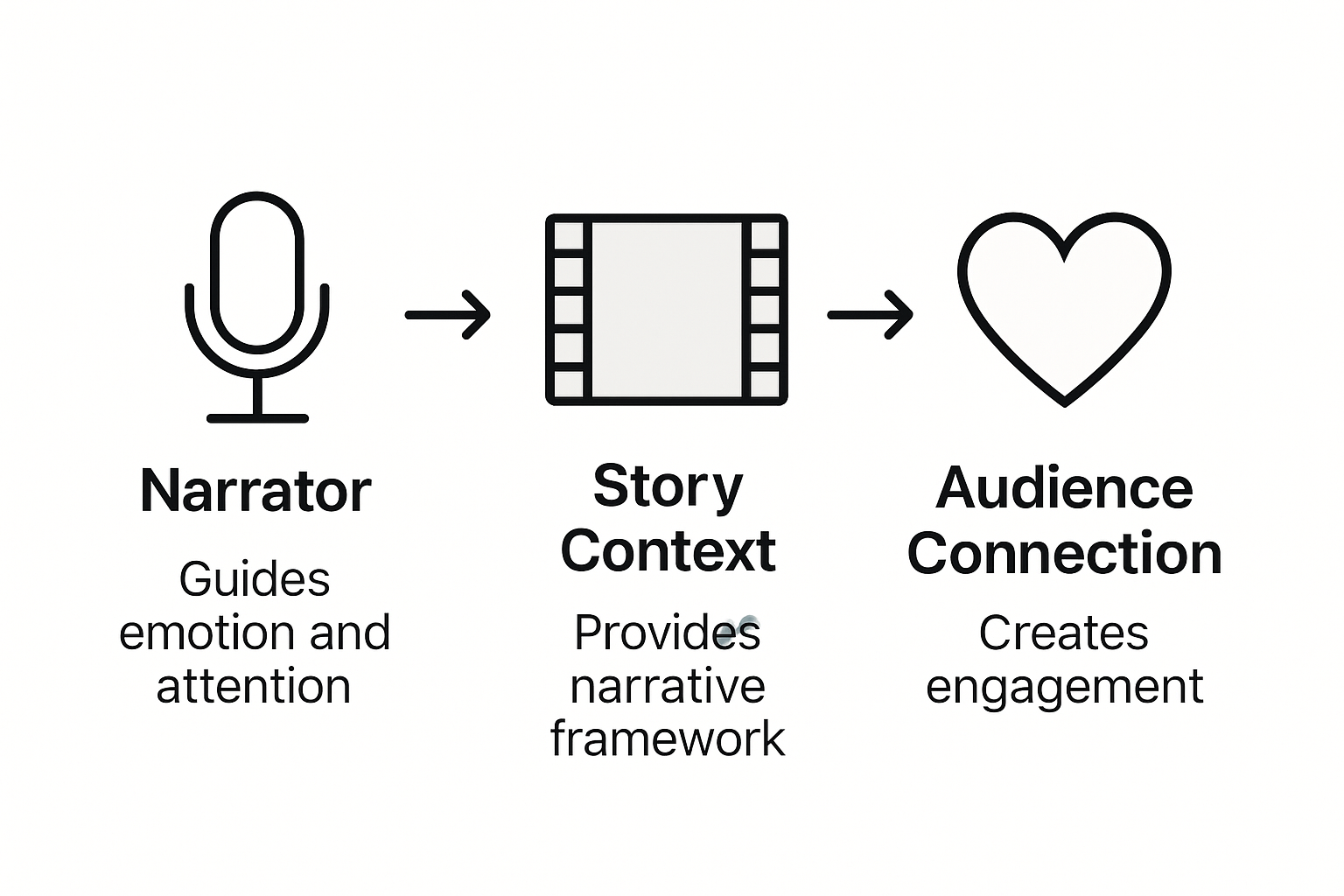
Narration serves as the storytelling backbone in video production, providing critical context and emotional depth to visual content. Narration involves a written or spoken commentary used to convey a story to an audience, transforming raw visual elements into meaningful communication experiences.
In professional video production, narration goes beyond simple voiceover work. Narrative techniques function as strategic communication tools that guide viewers through complex information, create emotional connections, and help audiences understand intricate visual stories. Video editing leverages narration to provide additional context and enhance viewer engagement, making it a powerful storytelling mechanism.
Effective narration requires careful consideration of several key elements:
Voice tone and emotional resonance
Precise scripting aligned with visual content
Timing and rhythm of spoken commentary
Strategic information delivery
Authentic connection with audience expectations
Professional video producers understand that narration is not merely about describing what viewers see, but about creating a compelling narrative arc that transforms visual information into an immersive storytelling experience. By integrating thoughtful narration, videos can transcend simple documentation and become powerful communication tools that resonate deeply with their intended audience.
Types of Narration and Their Purposes
Video production encompasses diverse documentary narration styles that serve unique storytelling purposes and audience engagement strategies. These narrative approaches transform raw visual content into compelling communication experiences, each with distinct characteristics and emotional impacts.
Narrative Perspectives play a crucial role in shaping viewer interpretation. Voice-over narration can be categorized into multiple dynamic formats, including diegetic and non-diegetic approaches, first-person and third-person perspectives, and omniscient versus limited knowledge narratives. Understanding these variations helps video producers craft more nuanced and engaging storytelling experiences.
Key types of narration include:
First-Person Narration: Intimate, personal storytelling from a direct participant’s perspective
Third-Person Narration: Objective, external commentary providing broader context
Presenter-Led Narration: Expert-driven narrative with authoritative insights
Observational Narration: Minimalist approach allowing visuals to drive the story
Each narrative style offers unique advantages, enabling video producers to match their storytelling approach precisely with project goals, audience expectations, and emotional resonance. The strategic selection of narration type can transform a simple video into a memorable, impactful communication tool that connects deeply with viewers.
Storytelling Techniques That Elevate Videos
Effective video storytelling transcends simple visual presentation, requiring sophisticated narrative techniques that deeply engage viewers. Research on visual narration detection emphasizes the critical importance of precisely aligning spoken content with visual elements to enhance learning outcomes and viewer retention, transforming passive viewing into an immersive experience.
Video producers can leverage several strategic storytelling techniques to create compelling narratives:
Emotional Arc Development: Crafting a narrative that guides viewers through emotional transitions
Contextual Framing: Providing clear narrative context that helps viewers understand complex information
Character-Driven Storytelling: Using relatable human experiences to create connection
Temporal Manipulation: Strategically controlling pacing and narrative timeline
Exploring the nuanced approaches to video storytelling reveals that successful narratives are not about presenting information, but about creating meaningful connections. Professional storytellers understand that each visual element and narrative choice must serve a specific purpose, whether that’s educating, inspiring, or evoking emotional responses.
The most powerful storytelling techniques blend technical precision with authentic human experience. By carefully orchestrating visual elements, narrative perspective, and emotional resonance, video producers can transform ordinary content into extraordinary communication tools that resonate deeply with audiences, turning passive viewers into active participants in the storytelling journey.

Enhancing Brand Connection Through Narration
Digital storytelling enables brands to create and share narratives that foster emotional engagement and personal connection with audiences, transforming traditional marketing approaches into compelling communication experiences. Narration serves as a powerful bridge between brands and their target audiences, allowing companies to communicate complex messages with authenticity and emotional resonance.
Brands can leverage several strategic narration techniques to deepen audience connections:
Authentic Storytelling: Sharing genuine brand experiences and values
Emotional Resonance: Creating narratives that trigger meaningful emotional responses
Personal Perspective: Using relatable human stories to illustrate brand identity
Cultural Relevance: Crafting narratives that reflect audience experiences and aspirations
Exploring innovative narrative strategies in brand communication reveals that successful brands understand narration goes beyond simple information delivery. Techniques like whiteboard animation, often accompanied by strategic narration, can communicate messages in a personal and engaging manner, helping brands establish deeper connections with their audience.
The most effective brand narratives blend technical precision with genuine human storytelling. By carefully selecting narrative voices, perspectives, and emotional trajectories, brands can transform ordinary communication into memorable experiences that resonate deeply, turning passive viewers into active brand advocates who feel personally connected to the company’s mission and values.
Common Narration Mistakes to Avoid
Narration can quickly derail video effectiveness when producers fail to understand fundamental storytelling principles. Understanding the role of video storytelling reveals that seemingly minor narrative choices can significantly impact audience engagement and perception.
Professional video creators must be vigilant about avoiding these critical narration pitfalls:
Inauthentic Tone: Using a voice that sounds disconnected from the brand’s personality
Overexplanation: Providing excessive detail that overwhelms viewers
Monotonous Delivery: Maintaining a flat, unengaging vocal performance
Misaligned Pacing: Creating narrative rhythms that conflict with visual content
Lack of Emotional Arc: Failing to create a compelling emotional journey
The most destructive narration mistakes stem from a fundamental misunderstanding of audience connection. Successful narration requires a delicate balance between informative content and emotional resonance. By carefully crafting narrative approaches that feel natural, authentic, and purposeful, video producers can transform potential communication barriers into powerful storytelling opportunities that genuinely connect with viewers.
Precision in narration is an art form that demands continuous refinement. Video producers must constantly evaluate their narrative choices, understanding that each vocal inflection, word selection, and storytelling approach carries the potential to either engage or alienate their audience. The most effective narrators develop an intuitive sense of how to modulate their approach, creating narratives that feel simultaneously professional and profoundly human.
Elevate Audience Engagement with Masterful Narration in Your Videos
The article highlights the critical role narration plays in shaping emotional resonance and audience connection. Many creators struggle with challenges like finding the right tone, pacing, and authentic storytelling to avoid monotonous delivery or misaligned pacing. These pain points can dilute your message and weaken brand connection despite strong visuals. At Tulip Films, we specialize in crafting personalized audiovisual narratives that combine expert narration techniques and visual precision to ensure your story captivates and engages.
Our Swiss-based team understands that narration is more than just voiceover. It is about creating an emotional arc and authentic context that aligns perfectly with your brand’s identity. Whether you need compelling corporate videos, promotional ads, or event coverage, we guarantee narratives that resonate deeply. Explore how our bespoke approach can transform your videos into powerful communication tools at Tulip Films.
Looking for professional storytelling that balances information and authenticity?
Discover the impact of expert narration with our tailored video production solutions. Visit Tulip Films today to plan your free consultation and start crafting stories that truly connect. Learn more about our approach to understanding client needs and delivering rapid, high-quality audiovisual content designed for your success.
Frequently Asked Questions
What is the role of narration in video production?
Narration serves as the storytelling backbone in video production, providing context and emotional depth, transforming raw visuals into meaningful experiences.
How can effective narration boost audience engagement?
Effective narration creates emotional connections, guides viewers through complex information, and enhances understanding, making videos more engaging.
What are common types of narration used in videos?
Common types of narration include first-person, third-person, presenter-led, and observational narration, each serving distinct storytelling purposes.
What mistakes should be avoided in video narration?
Common mistakes include using an inauthentic tone, overexplaining content, delivering monotonously, misaligning pacing with visuals, and lacking an emotional arc.
Recommended
