Sports video production guide: boost engagement in 2026

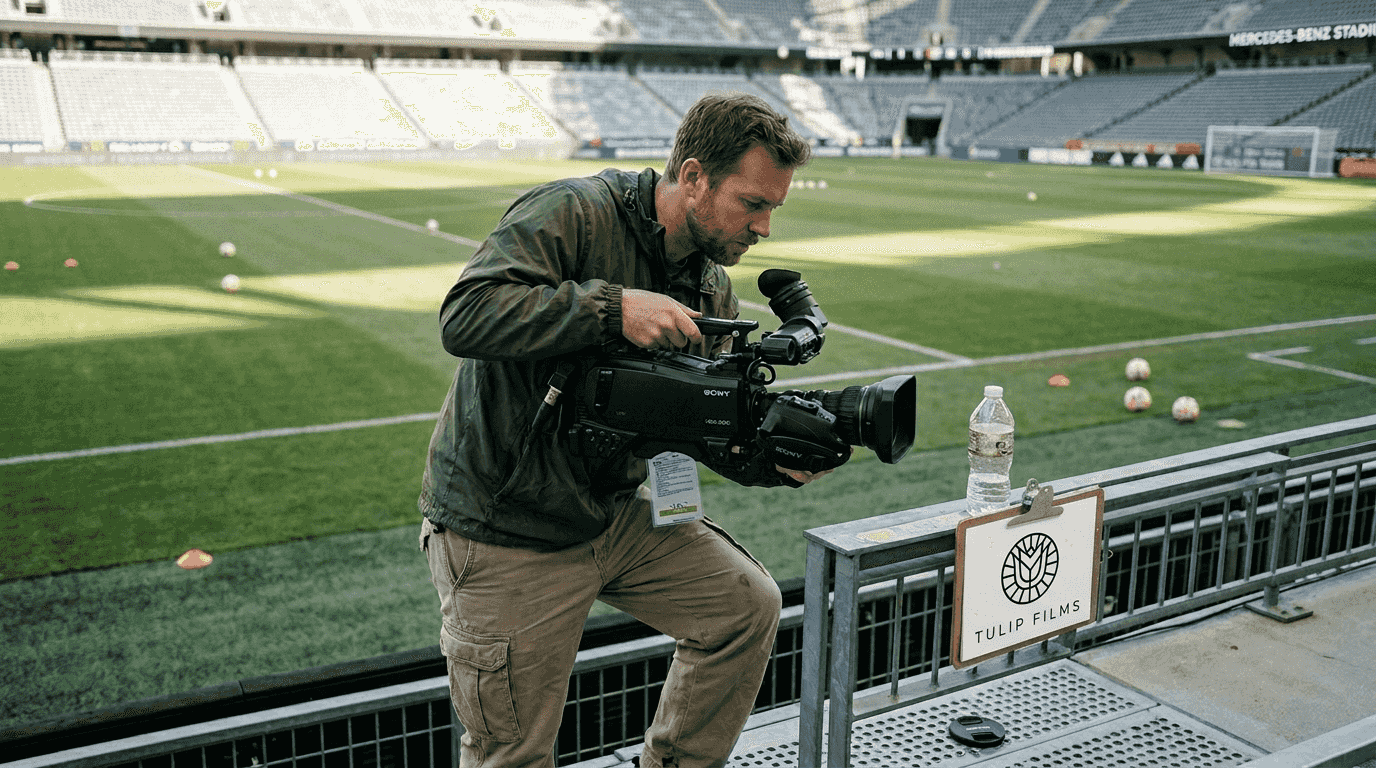
Sports organizations in Switzerland face a clear choice: invest in high-quality video production or risk losing fan engagement to competitors who do. The NFL’s rights deal worth $11 billion proves video content drives massive value, and this principle applies to teams at every level. Whether you manage a local club or a regional league, understanding sports video production fundamentals helps you capture compelling footage, edit dynamic highlights, and distribute content that resonates with fans and sponsors. This guide breaks down the essential techniques, equipment considerations, and workflow strategies that transform raw game footage into engaging promotional assets.
Table of Contents
Key takeaways
Point | Details |
Engagement boost | High-quality sports videos increase audience engagement and brand visibility by 20 to 30 percent |
Editing focus | Dynamic editing highlights key plays with rhythmic cuts and energy that capture the excitement of live action |
File management | Large footage files require cloud storage solutions combined with automated transfer workflows and reliable backups |
Capture strategy | Multiple camera angles and skilled operators ensure no critical game moment is missed during fast-paced action |
Professional value | Partnering with experienced production teams elevates fan connection and maximizes promotional impact |
Understanding sports video production fundamentals
Sports video production encompasses the entire process of filming, editing, and distributing visual content that showcases athletic performance and competitive events. Sports video editing involves selecting and assembling footage to highlight key plays, players, and pivotal moments that define a game or season. This process requires technical skill and creative judgment to transform hours of raw footage into compelling narratives that engage viewers.
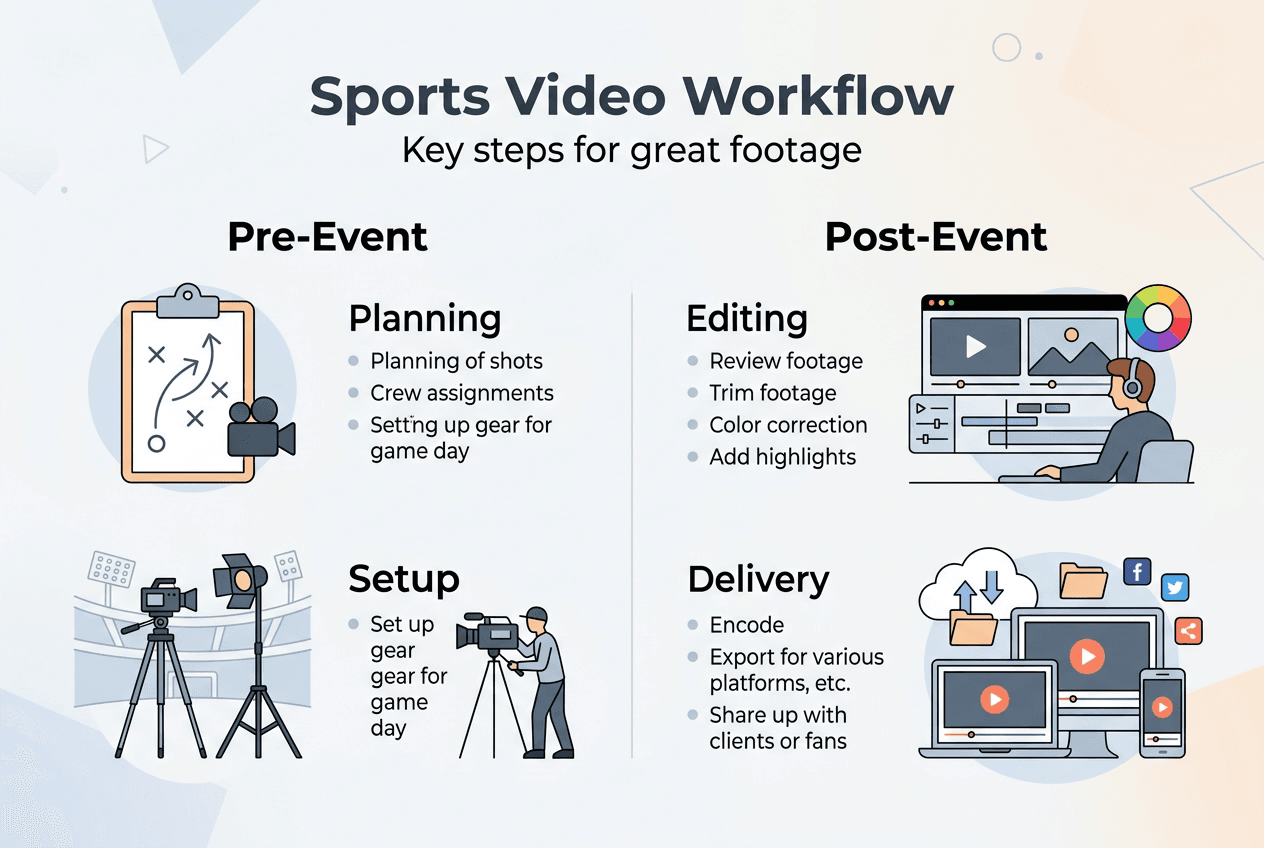
The production workflow starts with pre-event planning where you determine camera positions, shot lists, and coverage priorities based on the sport and venue. During filming, operators capture multiple angles of the action using professional cameras with fast autofocus and high frame rates. Post-production editing then combines the best footage, adds graphics and music, and creates a polished final product ready for distribution across digital platforms.
Editing shapes highlight reels by establishing rhythm through precise cuts timed to the action and music. You select impactful moments like game-winning goals, spectacular saves, or emotional celebrations that resonate with fans. The editing pace mirrors the energy of the sport itself, using quick cuts for fast action and slower sequences for dramatic buildup. This approach keeps viewers engaged and encourages social sharing.
For Swiss sports organizations, understanding sports videography means recognizing how visual storytelling strengthens your brand identity and fan loyalty. Quality production requires investment in equipment, skilled personnel, and efficient workflows. Key components include:
Professional cameras with interchangeable lenses and high-speed recording capabilities
Stabilization equipment like gimbals or tripods for smooth footage
Audio recording gear to capture crowd atmosphere and commentary
Editing software with color grading and motion graphics tools
Distribution platforms optimized for various social media formats
The right equipment and techniques ensure your videos stand out in crowded digital spaces where fans consume sports content daily. Organizations that master these fundamentals gain competitive advantages in fan engagement and sponsor attraction.
Handling the challenges of sports footage management
Sports video files present significant technical challenges due to their size and complexity. High-definition footage can reach hundreds of gigabytes, creating bottlenecks in storage, transfer, and collaboration workflows. A single game filmed with multiple 4K cameras generates massive data volumes that strain traditional file management systems.
Common pain points include slow file transfers that delay editing timelines, insufficient local storage that forces constant data juggling, and collaboration difficulties when multiple team members need access to the same footage. These issues compound when working with remote editors or distributing content to various platforms simultaneously. Without proper systems, you risk missing publication windows or delivering suboptimal quality.
Storage solutions vary in cost, performance, and accessibility. Local hard drives offer fast access but limited capacity and no remote collaboration. Cloud storage provides flexibility and sharing capabilities but depends on internet speed. Hybrid approaches combine local speed with cloud backup and accessibility.
Storage Type | Capacity | Access Speed | Collaboration | Best For |
Local SSD | 2 to 8 TB | Very Fast | Limited | Active editing projects |
Network Storage | 10 to 50 TB | Fast | Good | Team workflows |
Cloud Storage | Unlimited | Variable | Excellent | Backup and distribution |
Hybrid System | Flexible | Optimized | Excellent | Professional operations |
Pro Tip: Implement automated backup workflows that copy raw footage to multiple locations immediately after filming. This redundancy protects against data loss and enables simultaneous editing by different team members without file conflicts.
Best practices for footage management include organizing files with consistent naming conventions that include date, event, and camera identifier. Use proxy files, lower-resolution versions of your footage, during editing to improve performance while maintaining access to full-quality originals for final export. Establish clear protocols for archiving completed projects and purging unnecessary files to maintain system efficiency.
For Swiss teams managing multiple events throughout a season, avoiding common videography pitfalls requires planning your data infrastructure as carefully as your shooting strategy. Invest in scalable solutions that grow with your content production needs and support efficient collaboration across your organization.
Maximizing audience engagement through professional sports video production
Quality production directly impacts how fans connect with your team and content. Research shows that effective sports video production boosts engagement by 20 to 30 percent and increases brand mentions by 15 to 25 percent. These metrics translate to larger audiences, stronger sponsor value, and improved revenue opportunities for sports organizations.
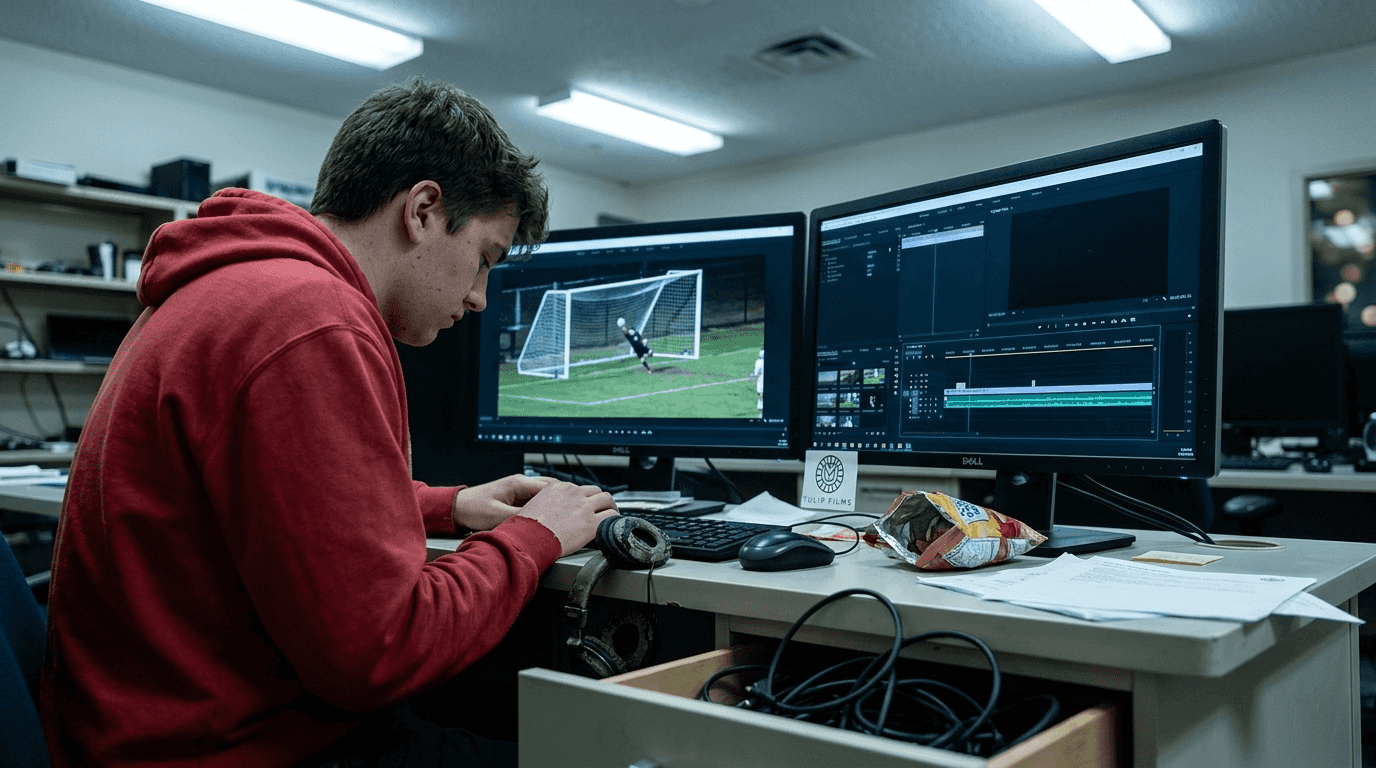
Dynamic editing techniques amplify emotional connection by crafting narratives that go beyond simple game documentation. You build tension through pacing, celebrate achievements with slow-motion replays, and create personality through player-focused segments. This storytelling approach transforms viewers into invested fans who follow your team across platforms and attend more events.
Timely highlight reels posted within hours of game completion capitalize on peak interest when fans are actively discussing the event online. Multi-platform distribution ensures your content reaches audiences where they spend time, whether on Instagram, YouTube, or your website. Each platform requires format optimization, from vertical video for mobile feeds to longer cuts for YouTube channels.
Engagement boosters that consistently perform well include:
Captions and text overlays that make content accessible without sound
Slow-motion sequences that emphasize athletic skill and dramatic moments
Behind-the-scenes footage that humanizes athletes and builds personal connections
Player interviews and reactions that add context to on-field performance
Consistent visual branding that reinforces team identity across all content
Pro Tip: Align your video style with team branding by using consistent color grading, graphic templates, and music choices. This visual consistency builds recognition and professionalism that distinguishes your content from amateur footage.
The art of sports editing lies in understanding what resonates emotionally with your specific audience. A youth soccer club highlights skill development and team camaraderie differently than a professional hockey team showcasing competitive intensity. Successful editors study their audience demographics and engagement patterns to refine their approach continuously.
For Swiss sports organizations, understanding video engagement strategies and recognizing why professional production delivers superior results helps justify production investments. The difference between amateur and professional output shows clearly in audience response metrics, with professional content consistently outperforming in views, shares, and conversion rates.
Best practices for capturing every crucial sports moment
Fast-moving sports action presents unique filming challenges where missing a key moment is not an option. Split-second plays determine game outcomes, and capturing these moments requires strategic planning, quality equipment, and skilled operators working in coordination. Multiple camera angles provide editing flexibility and ensure comprehensive coverage of the action.
Planning camera placement and operator coordination involves these essential steps:
Scout the venue in advance to identify optimal camera positions with clear sightlines and minimal obstructions
Assign specific coverage responsibilities to each operator, such as wide game action, close-up player focus, or crowd reactions
Establish communication protocols using headsets or hand signals so operators can coordinate during critical moments
Create shot lists that prioritize must-capture moments like scoring plays, key defensive stops, and coach reactions
Position backup cameras for redundancy on the most important angles to guard against equipment failure
Brief operators on team rosters and game strategy so they anticipate where action will develop
Camera selection impacts your ability to capture sharp, well-exposed footage in challenging sports environments. Different camera types offer specific advantages for various shooting scenarios.
Camera Type | Frame Rate | Autofocus Speed | Low Light Performance | Best Application |
Professional Cinema | 60 to 120 fps | Excellent | Superior | Main game coverage |
Mirrorless Sports | 120 to 240 fps | Very Fast | Good | Action close-ups |
Broadcast Camcorder | 60 fps | Good | Excellent | Live streaming |
Action Camera | 240 fps | Limited | Fair | POV and specialty angles |
Pro Tip: Set up on-site monitoring stations where a director or producer watches all camera feeds in real time. This oversight catches technical issues immediately and allows for shot adjustments during the event rather than discovering problems in post-production.
Skilled camera operators understand the sport they’re filming and anticipate action before it happens. An experienced operator tracks a soccer midfielder’s body language to predict passes, follows a basketball player’s eyes to catch assists, or positions ahead of a hockey breakaway. This anticipation separates professional coverage from amateur footage that always reacts a moment too late.
For Swiss sports teams seeking comprehensive event coverage, partnering with professional sports videography services ensures you have the equipment, expertise, and coordination necessary to capture every significant moment. Professional teams bring redundant systems, experienced operators, and proven workflows that deliver consistent results across multiple events.
Discover professional sports video production with Tulip Films
Elevating your sports content from good to exceptional requires expertise, equipment, and creative vision that professional production companies provide. Tulip Films specializes in sports video production tailored for Swiss teams and organizations seeking to enhance event coverage and promotional impact. Our experienced professionals use advanced camera systems, efficient workflows, and proven editing techniques to capture the energy and emotion that define your sport.
[
We understand the unique challenges Swiss sports organizations face, from managing multiple events across a season to creating content that resonates with local and regional audiences. Our diverse portfolio demonstrates our capability across various sports and event types, giving you confidence in our ability to deliver results. Transparent pricing structures make professional production accessible for organizations at different budget levels, ensuring you receive maximum value from your investment in video content.
FAQ
What equipment is essential for high-quality sports video production?
Professional cameras with fast autofocus, high frame rates above 60 fps, and interchangeable lenses form the foundation of quality sports production. You also need reliable audio recording equipment to capture crowd atmosphere and commentary, stabilization gear like gimbals for smooth movement, and sufficient battery and storage capacity for extended filming sessions. Professional sports videography services provide complete equipment packages customized to your specific sport and venue requirements, eliminating the need for organizations to invest in and maintain expensive gear.
How can sports organizations manage large video files effectively?
Implement cloud-based storage solutions combined with local backup drives to balance accessibility with data security. Automate file transfers using software that copies footage to multiple locations immediately after filming, reducing manual handling and human error. Use proxy workflows during editing where you work with compressed versions of files while maintaining links to full-resolution originals for final export. Review video file management strategies that help you organize, archive, and retrieve footage efficiently throughout your production cycle.
What editing techniques best engage sports audiences?
Energetic pacing with rhythmic cuts timed to music and action creates excitement that mirrors the live experience. Highlight key moments using slow motion to emphasize athletic skill, add dynamic camera movements during transitions, and incorporate story elements that provide context beyond raw gameplay. Feature individual players through close-ups and reaction shots that build personal connections with fans. Learn more about engaging video editing approaches that transform standard game footage into compelling narratives that audiences want to watch and share.
How quickly should highlight videos be published after events?
Post highlight reels within two to four hours of event completion to capitalize on peak audience interest while fans are still discussing the game online. Quick turnaround requires efficient workflows including on-site editing setups, pre-built graphic templates, and clear approval processes that avoid bottlenecks. Prioritize publishing a shorter highlight package quickly over waiting to release a longer, more polished version hours later when audience attention has shifted elsewhere.
What video formats work best for different social media platforms?
Vertical 9:16 format performs best on Instagram Stories, Reels, and TikTok where mobile users hold phones upright. Square 1:1 format works well for Instagram feed posts and Facebook, providing good visibility without requiring users to rotate devices. Horizontal 16:9 format remains standard for YouTube and website embedding where viewers expect traditional widescreen presentation. Create multiple format versions of your best content to maximize reach across platforms rather than forcing one format everywhere.
Recommended
