Understanding Video Content Strategy for Business Success


Video content is easy to scroll past and yet it drives most of what people see online today. By 2025, video is set to make up roughly 82 percent of all internet traffic. That number sounds wild for something that used to be an afterthought in business plans. The real surprise is that just posting videos is not enough and only a real video content strategy turns those minutes of footage into results that matter.
Table of Contents
Quick Summary
Takeaway | Explanation |
A structured video strategy enhances engagement. | Businesses with a clear video content strategy see higher audience engagement and more predictable marketing results. |
Identify your audience’s preferences. | Understanding target audience demographics and psychographics is essential for creating effective video content. |
Focus on storytelling for brand connection. | Emotional storytelling in videos helps humanize brands and fosters deeper connections with audiences. |
Utilize diverse video formats strategically. | Different video types, like testimonials and tutorials, cater to various audience needs and touchpoints. |
Measure and optimize video performance continuously. | Implementing analytics aids in tracking engagement and refining content strategies for better outcomes. |
What is Video Content Strategy and Why Does It Matter?
A video content strategy represents a comprehensive, intentional approach to creating, distributing, and managing video content that aligns directly with specific business objectives. Unlike random video production, this strategy transforms video from a simple marketing tactic into a powerful communication tool designed to engage audiences, build brand recognition, and drive meaningful business outcomes.
Defining the Strategic Framework
At its core, a video content strategy is a systematic plan that guides how organizations develop, publish, and optimize video content to achieve targeted goals. Research from Content Marketing Institute indicates that businesses with a structured video strategy experience significantly higher engagement rates and more predictable marketing results.
The strategic framework typically encompasses several critical elements:
Identifying target audience demographics and preferences
Establishing clear communication objectives
Determining appropriate video formats and distribution channels
Creating metrics and measurement mechanisms for performance evaluation
Strategic Value for Modern Businesses
Video content strategy goes beyond mere visual storytelling. It represents a sophisticated approach to connecting with audiences through purposeful, targeted audiovisual communication. By developing a coherent and intentional video strategy, businesses can:
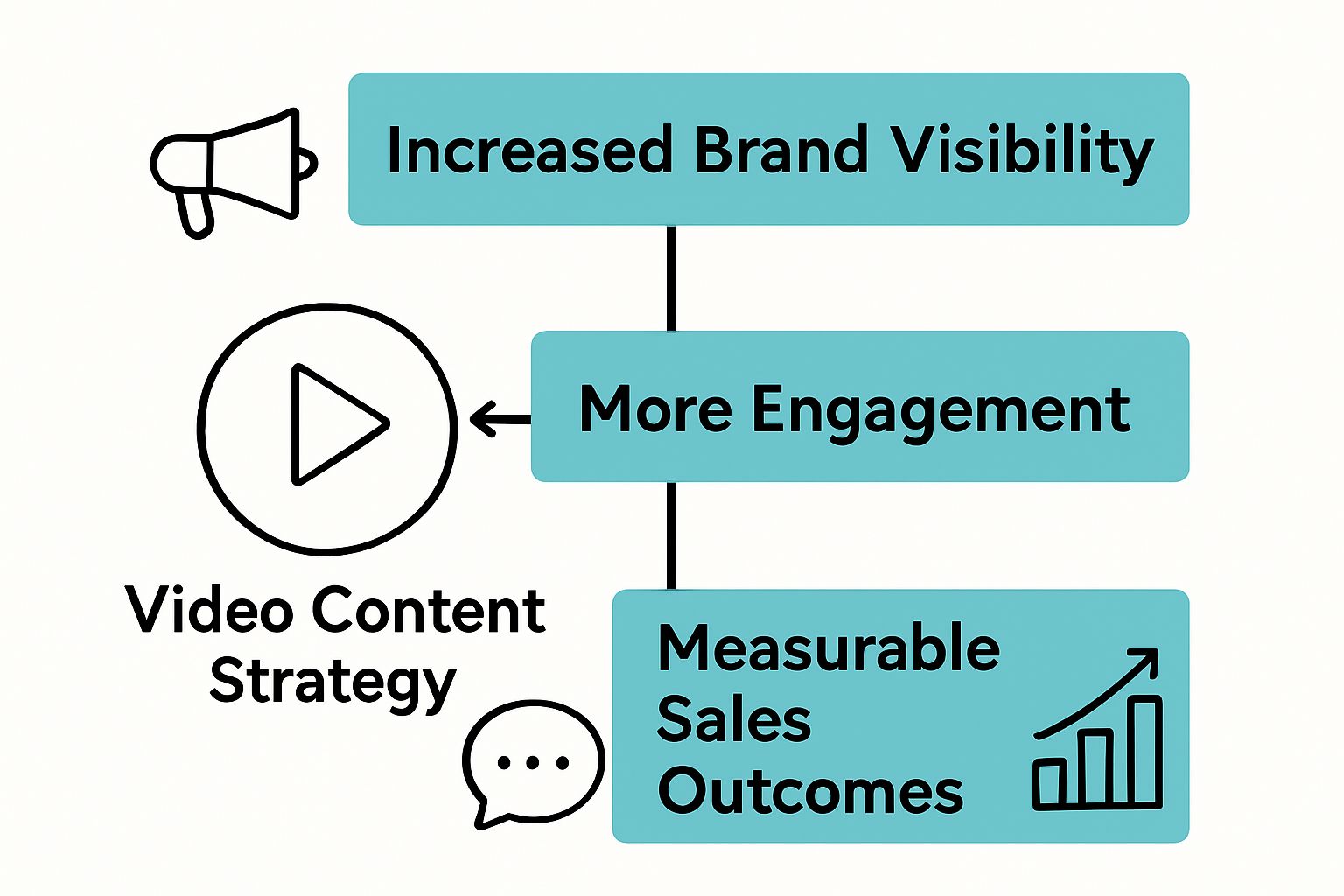
Increase brand visibility and audience engagement
Communicate complex messages more effectively
Build trust through transparent and authentic storytelling
Generate measurable marketing and sales outcomes
For Swiss businesses looking to enhance their communication approach, understanding the role of video in marketing becomes crucial in developing a competitive edge in a rapidly evolving digital landscape.
Understanding the Components of an Effective Video Content Strategy
Creating a robust video content strategy requires a systematic approach that integrates multiple interconnected elements. Unlike traditional marketing methods, a comprehensive video strategy demands careful planning, precise execution, and continuous optimization to deliver meaningful business results.
Strategic Planning and Audience Alignment
Research from Content Marketing Institute highlights that successful video strategies begin with meticulous strategic planning. This foundation involves understanding your target audience’s preferences, behaviors, and communication expectations. Organizations must develop a nuanced approach that goes beyond demographic data and delves into psychographic insights.
Key strategic planning considerations include:
Conducting comprehensive audience research
Mapping audience journey and content touchpoints
Identifying specific communication objectives
Understanding audience pain points and information needs
Content Development and Distribution Framework
Effective video content strategies transcend simple production. They require a sophisticated framework that addresses content creation, distribution, and performance measurement. Successful strategies integrate multiple content types designed to engage audiences across different stages of their interaction with your brand.
Critical components of content development include:
Creating diverse video formats (explainer videos, testimonials, tutorials)
Developing a consistent brand narrative
Selecting appropriate distribution channels
Ensuring content quality and production standards
Performance Measurement and Continuous Optimization
The final crucial component involves establishing robust measurement mechanisms. Explore our guide on video marketing strategies to understand how performance tracking enables ongoing refinement. Businesses must implement comprehensive analytics that provide actionable insights into video content performance, audience engagement, and strategic effectiveness.
By adopting a holistic approach that balances strategic planning, creative development, and data-driven optimization, organizations can transform video content from a tactical tool into a powerful strategic asset.
To clarify the core components of an effective video content strategy, the following table summarizes the main elements, their definitions, and key examples mentioned in the article.
Component | Definition | Example(s) |
Strategic Planning and Audience Alignment | Setting direction based on audience research and objectives | Conducting research, mapping audience journey |
Content Development and Distribution | Creating and sharing diverse video formats across channels | Explainer videos, testimonials, tutorials |
Performance Measurement and Continuous Optimization | Tracking analytics and refining strategy based on data | Engagement analytics, metric-driven adjustments |
Emotional Storytelling and Brand Authenticity | Crafting narrative content that humanizes the brand and builds connection | Real testimonials, transparent storytelling |
Visual Communication and Audience Interaction | Using visuals and interactive formats for attention and participation | High-quality visuals, videos solving problems |
How Video Content Enhances Brand Connection and Engagement
Video content has emerged as a powerful medium for creating authentic, compelling brand connections that transcend traditional marketing communication. By leveraging emotional storytelling and visual dynamics, businesses can forge deeper, more meaningful relationships with their target audiences.
Emotional Storytelling and Brand Authenticity
Research from Forrester reveals that video content generates significantly higher emotional engagement compared to text-based communication. Authentic video narratives allow brands to humanize their messaging, showcase their values, and create genuine connections that resonate beyond transactional interactions.
Key emotional engagement strategies include:
Developing narrative-driven content that reveals brand personality
Showcasing real human experiences and testimonials
Demonstrating brand values through transparent storytelling
Creating content that evokes genuine emotional responses
Visual Communication and Audience Interaction
Visual content provides a multisensory experience that captures audience attention more effectively than traditional media. Modern audiences crave interactive, dynamic communication formats that allow them to connect with brands on a more personal level. Video enables businesses to communicate complex messages with simplicity, clarity, and emotional depth.

Critical aspects of visual communication include:
Utilizing high-quality production techniques
Creating visually compelling narrative structures
Designing content that encourages audience participation
Developing videos that solve audience problems
Measuring Engagement and Building Trust
Learn more about video branding techniques that transform audience perception. Successful brands understand that engagement is not just about views but about creating meaningful interactions that build long-term trust and loyalty. Advanced analytics help organizations understand audience behavior, preferences, and emotional responses to their video content.
By approaching video content as a strategic communication tool that prioritizes authenticity, emotional connection, and audience value, businesses can create powerful brand experiences that drive meaningful engagement and lasting relationships.
Key Concepts of Video Content Strategy in a Digital Landscape
The digital landscape has fundamentally transformed how businesses communicate, with video content emerging as a critical strategic tool for engaging audiences. Understanding the core concepts behind effective video content strategy requires a comprehensive approach that integrates technological capabilities, audience insights, and strategic communication principles.
Digital Ecosystem and Content Dynamics
Research from Cisco predicts that video will constitute approximately 82% of all internet traffic by 2025. This statistic underscores the critical importance of developing sophisticated video content strategies that can navigate the complex digital communication environment.
Key digital ecosystem considerations include:
Understanding multi-platform content consumption patterns
Recognizing evolving audience technology preferences
Adapting content for different digital channels
Integrating emerging technological capabilities
Strategic Content Architecture
Successful video content strategies transcend simple production, requiring a nuanced approach that considers technological infrastructure, audience psychology, and communication objectives. Businesses must develop flexible frameworks that can rapidly adapt to changing digital communication trends and audience expectations.
Critical strategic architecture components include:
Developing scalable content production processes
Creating adaptable content distribution mechanisms
Implementing advanced analytics tracking
Designing audience-centric communication models
Technological Integration and Performance Optimization
Explore why businesses should invest in video content to understand the transformative potential of strategic video communication. Modern video content strategies must leverage advanced technological tools that enable precise audience targeting, real-time performance measurement, and continuous strategic refinement.
By embracing a holistic approach that combines technological sophistication, strategic thinking, and audience-centric design, organizations can develop video content strategies that deliver meaningful engagement and sustainable business impact.
Transform Your Video Content Strategy Into Business Results
Are you struggling to create video content that resonates with your audience and delivers measurable results? Many businesses find that without a clear strategy, video production can feel unfocused and fail to connect. This article explored how a well-defined video content strategy unlocks brand engagement, emotional connection, and real business growth. But building that bridge from strategy to standout videos takes expertise and focused execution.
Take action with confidence. The team at Tulip Films specializes in converting complex strategies into captivating, high-quality videos tailored for your unique goals. Our process combines deep understanding of your message, rapid delivery, and complete personalization, ensuring your videos drive genuine connection and impact.

Ready to move from planning to results? Explore how Tulip Films brings your strategic vision to life with bespoke audiovisual solutions. Book your free consultation today and discover how focused video communication grows your business now.
Frequently Asked Questions
What are the key components of a video content strategy?
A successful video content strategy includes identifying target audience demographics, establishing clear communication objectives, selecting appropriate video formats, and implementing performance metrics. Begin by conducting audience research to understand their preferences and needs.
How can I measure the success of my video content strategy?
You can measure the success of your video content strategy by establishing clear performance metrics such as engagement rates, view counts, and conversion rates. Set up analytics to track these metrics regularly and adjust your strategy based on the insights gained.
What types of video formats should I include in my strategy?
Your video content strategy should incorporate diverse formats such as explainer videos, testimonials, and tutorials to effectively engage different audience segments.
The table below outlines the major types of video formats recommended for business strategy, highlighting their primary objectives and how they best engage different audiences.
Video Format | Primary Objective | Suitable Audience/Stage |
Explainer Video | Clarify products, services, or complex concepts | Early-stage prospects, general public |
Testimonial | Build trust through real user experiences | Middle/late-stage prospects, skeptics |
Tutorial | Demonstrate how to use products or services | Existing customers, engaged prospects |
Brand Story | Create emotional connection and showcase values | Broad audience, brand-aware viewers |
FAQ/Knowledge | Address common questions and reduce barriers | Interested leads, new customers |
How can emotional storytelling enhance my video content strategy?
Emotional storytelling can foster authentic connections with your audience, making your brand more relatable and trustworthy. Focus on developing narrative-driven content that highlights real experiences and testimonials to evoke genuine emotional responses.
What steps should I take to align my video content with business objectives?
To align your video content with business objectives, start by defining clear communication goals tied to those objectives and then develop content that supports them. Review your goals quarterly to ensure that your video strategy remains focused and effective.
How often should I update my video content strategy?
You should evaluate and update your video content strategy at least every six months or whenever you notice significant shifts in audience engagement or business goals. Regular reviews will help you adapt your content to meet changing audience needs and market conditions.
Recommended
