Event Video Production Checklist 2026: 85% Faster Planning


Professional video projects with strong pre-planning reduce filming time by 85% thanks to rigorous preparation. Yet many Swiss event organizers still approach video production without a comprehensive checklist, leading to avoidable delays, budget overruns, and missed opportunities. This guide provides a complete event video production checklist tailored for corporate clients in Switzerland, covering every phase from initial consultation through final delivery. You’ll discover how to coordinate crews, manage equipment, ensure legal compliance, and deliver exceptional event videos on time and within budget.
Table of Contents
Key Takeaways
Point | Details |
Planning reduces costs | Detailed checklists covering pre-production, equipment, roles, and timelines lead to higher success rates and fewer costly mistakes. |
Clear roles improve efficiency | Defined crew responsibilities reduce filming downtime by 42% by eliminating confusion and overlaps. |
Timeline management ensures delivery | Projects with structured timelines achieve 95% on-time delivery versus 65% without clear schedules. |
Legal compliance protects projects | Music licensing, location permissions, and talent releases reduce project delays and legal risks significantly. |
Customizable for any scale | Checklist adapts to small social media clips or large corporate events while maintaining quality standards. |
Selection Criteria for Effective Event Video Production Checklists
Choosing or building the right checklist determines whether your event video production guide succeeds or stumbles. Start by evaluating how comprehensively a checklist covers the five core phases: pre-production planning, equipment preparation, crew coordination, timeline management, and legal compliance. Each phase demands specific attention to detail appropriate for Swiss corporate standards.
The best checklists segment responsibilities clearly. When every team member knows their exact role, you eliminate overlapping efforts and communication gaps. Equipment lists should scale with event complexity, from basic conference documentation to multi-camera theatrical productions. Timeline flexibility matters too, allowing buffer periods for unexpected delays without sacrificing delivery deadlines.
Budget transparency within your checklist prevents costly surprises. Include line items for equipment rentals, crew fees, travel expenses, and post-production hours. Swiss corporate clients appreciate detailed cost breakdowns that align with their financial planning cycles. Legal rights management deserves equal weight, ensuring you secure all necessary permissions before filming begins.
Pro Tip: Test your checklist on a smaller pilot project before deploying it for major corporate events to identify gaps and refine workflows.
Effective criteria transform generic templates into video production explained frameworks that match your specific event requirements. Consider audience expectations, venue constraints, and brand messaging requirements when customizing your approach. The investment in detailed planning pays immediate dividends through smoother production days and higher quality deliverables.
Essential Checklist Components:
Pre-production client consultation and goal alignment
Comprehensive equipment inventory with backup systems
Defined crew roles and communication protocols
Phased timeline with client feedback integration points
Legal clearance tracking for music, locations, and talent
Review promotional video workflow examples to see how professional teams structure their checklists for maximum efficiency.
Pre-event Planning Essentials
Successful event videos begin weeks before cameras roll. Your first step involves thorough client consultation to understand objectives, target audiences, and key messages. Ask probing questions about brand guidelines, desired video length, distribution channels, and success metrics. This foundation shapes every subsequent decision.
Script and storyboard development follows naturally from clear objectives. Even informal event coverage benefits from shot lists that prioritize must-capture moments. For structured corporate events like product launches or annual meetings, detailed scripts ensure you capture the right speakers, demonstrations, and reactions at precise moments. Defined messaging and stakeholder consultation dramatically improve final video relevance and quality.
Engage all stakeholders early. Marketing teams provide brand assets and messaging guidelines. Event coordinators share venue layouts and speaker schedules. Technical staff reveal available power sources, internet connectivity, and lighting infrastructure. This collaborative approach prevents last-minute surprises that derail production schedules.
Pre-production Planning Steps:
Conduct initial client meeting to define video purpose and success criteria
Draft detailed creative brief including visual style, tone, and key messages
Develop shot list or storyboard mapping essential coverage moments
Secure venue access for location scouting and technical assessments
Establish revision cycles and approval workflows with client decision makers
Pro Tip: Schedule your venue walkthrough at the same time of day as the actual event to assess natural lighting conditions and plan supplemental lighting accordingly.
Resource allocation starts during pre-production. Estimate crew size based on event scale and coverage requirements. Budget for equipment rentals, travel expenses, and contingency funds. Create backup plans for technical failures or scheduling conflicts. The plan event video approach reduces stress and improves outcomes dramatically.
Refer to the event video planning guide for detailed templates that streamline your pre-production phase.
Equipment and Technical Setup Checklist
Your equipment selection scales directly with event complexity and quality expectations. Small conferences may require only two cameras, wireless microphones, and basic LED panels. Large corporate galas demand multi-camera setups, professional audio mixing, theatrical lighting, and specialized gear like camera sliders or gimbals for dynamic shots.
Camera and Recording Equipment:
Primary cameras (minimum 2 for event coverage, 3-4 for multi-angle productions)
Backup camera body to replace failures instantly
Appropriate lenses covering wide establishing shots through tight speaker closeups
Tripods, monopods, or stabilization systems
High-capacity memory cards (twice your estimated needs)
External monitors for critical shot verification
Audio Systems:
Wireless lavalier microphones for speakers and presenters
Shotgun microphones for ambient sound and audience reactions
Audio recorder with XLR inputs for professional quality
Headphones for real-time audio monitoring
Backup batteries and recording media
Lighting transforms acceptable footage into exceptional visuals. Assess venue ambient light during your walkthrough, then supplement with LED panels, softboxes, or spotlights as needed. Modern LED systems offer adjustable color temperature to match existing lighting schemes seamlessly.
Comprehensive equipment checklists including cameras, audio, lighting, and drones prevent technical failures on event day. Battery management deserves special attention. Calculate total shooting hours, then pack 150% of required battery capacity. Label batteries clearly and establish charging rotation schedules.
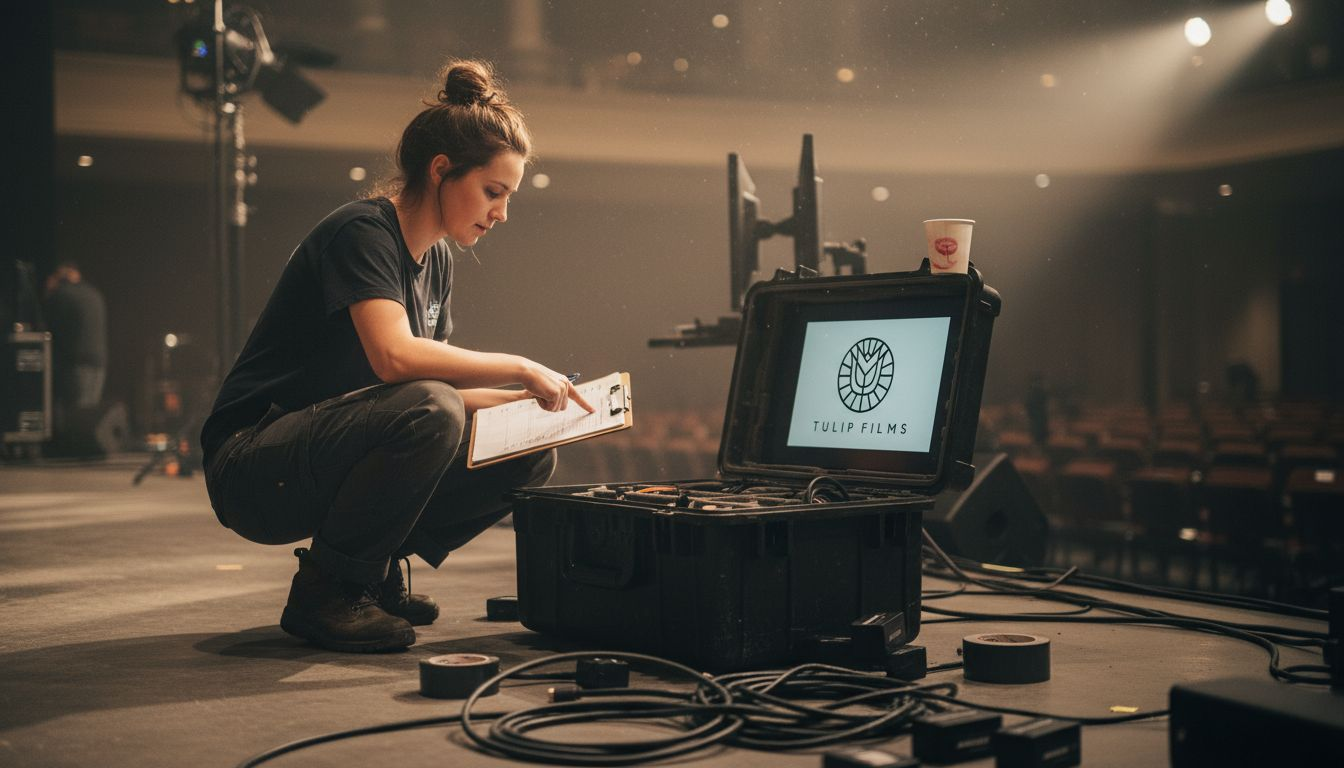
Equipment Category | Essential Items | Optional Upgrades |
Video | 2 camera bodies, standard lenses | Specialty lenses, sliders, gimbals |
Audio | 2 wireless lavs, shotgun mic | Multi-channel mixer, boom pole |
Lighting | 2 LED panels, reflectors | Softboxes, colored gels, dimmers |
Support | Tripods, memory cards, batteries | Monitor/recorder, backup camera |
Aerial | Basic drone with 4K camera | Professional drone, licensed pilot |
Pro Tip: Create equipment checklists specific to your most common event types, then customize for each project rather than building from scratch every time.
Drone footage adds cinematic production value to corporate event videos. Aerial establishing shots showcase venue grandeur and context. Ensure your drone operator holds appropriate Swiss certifications and secure necessary flight permissions well in advance. Review the corporate event coverage guide for aerial integration best practices.
Roles and Responsibilities in Event Video Production
Clear role definitions eliminate the chaos that plagues amateur productions. Your director oversees creative vision and coordinates the entire team. Camera operators focus on framing, exposure, and capturing designated shots. The audio technician monitors sound levels continuously, adjusting for speaker volume variations and ambient noise.
Lighting technicians maintain consistent illumination as natural light changes throughout events. They adjust color temperature, intensity, and direction to flatter subjects and maintain visual continuity. For larger productions, add a production assistant who manages equipment, runs cables, and handles logistical details that free skilled crew members to focus on their crafts.
Core Production Roles:
Director: Creative vision, shot calling, client liaison
Camera Operators (2-3): Primary angles, reaction shots, detail coverage
Audio Technician: Microphone placement, level monitoring, backup recording
Lighting Technician: Setup, adjustment, equipment management
Production Assistant: Equipment handling, coordination support
Clear role assignments reduce filming downtime by 42% by minimizing confusion and eliminating duplicate efforts. Pre-production meetings establish communication protocols. Use discrete hand signals or radio headsets to coordinate camera moves without disrupting events. Designate one person as client contact to prevent conflicting directions reaching crew members.
Typical Swiss corporate events function efficiently with three to five crew members. Small conferences manage with a director doubling as camera operator, plus audio and lighting specialists. Major product launches or annual shareholder meetings justify larger teams with dedicated roles. Scale your crew to match event complexity and coverage expectations.
Establish clear hierarchies and decision authority. The director makes final creative calls, but experienced crew members should feel empowered to flag potential issues immediately. Post-event debriefs identify process improvements for future projects. Visit crew roles and coordination resources for detailed responsibility matrices.
Timeline from Pre-production to Delivery
Structured timelines transform vague expectations into concrete deliverables. Allocate approximately 30% of total project time to pre-production, 20% to filming, and 50% to post-production for typical corporate event videos. These ratios shift based on project complexity and revision requirements.
Production Phase Schedule:
Weeks 1-2: Client consultation, creative brief development, budget approval
Weeks 2-3: Script/storyboard creation, venue scouting, equipment booking
Week 3: Crew hiring, final pre-production meeting, equipment prep
Week 4: Event filming day(s)
Weeks 5-7: Editing, color grading, audio mixing, initial client review
Week 8: Revision implementation, final approval, delivery
Projects with defined production timelines have a 95% on-time delivery rate versus 65% without clear schedules. Build buffer time into every phase. Technical issues, client availability delays, or creative revisions consume these buffers without derailing final deadlines.
Client review cycles deserve special attention. Schedule two formal feedback rounds: one after rough cut assembly and another before final delivery. Provide specific deadlines for feedback submission. Unlimited revisions create scope creep that destroys timelines and budgets. Define revision limits clearly in initial contracts.
Timeline Phase | Duration | Key Milestones |
Pre-production | 2-3 weeks | Brief approval, crew hired, equipment secured |
Production | 1-3 days | Event coverage complete, backup footage verified |
Post-production | 3-4 weeks | Rough cut review, revisions, final approval |
Delivery | 1-2 days | File preparation, quality checks, client handoff |
Pro Tip: Use project management software to track deliverables, share updates with clients, and maintain accountability across distributed teams.
Flexibility within structure separates professional productions from rigid amateurs. When unexpected events occur, communicate immediately with clients about impact and proposed solutions. Maintain detailed event video production timelines that accommodate reasonable adjustments without compromising quality or final deadlines.
Post-Production and Delivery Steps
Editing transforms raw footage into compelling narratives. Expect post-production to require double your filming time for polished corporate videos. Begin with footage organization, labeling clips by speaker, topic, or chronological sequence. This investment pays dividends during editing when you need specific moments quickly.
Rough cut assembly focuses on story flow and pacing. Select the strongest takes, trim unnecessary content, and establish basic sequence. Share this version with clients for structural feedback before investing hours in detailed refinements. Major revisions at this stage cost far less than after final color grading and effects application.
Post-Production Workflow:
Import and organize all footage with clear naming conventions
Create assembly edit following approved script or shot list
Refine timing, transitions, and narrative pacing
Add graphics, titles, and branded elements per client guidelines
Color grade footage for visual consistency and brand alignment
Mix audio levels, add music, and integrate sound effects
Iterative client feedback and structured post-production significantly enhance video quality and client satisfaction. Schedule formal review sessions rather than accepting ad hoc feedback via email. Walk clients through revisions in real time to clarify intentions and prevent miscommunication.
Final delivery formats depend on distribution channels. YouTube and social media platforms accept compressed H.264 files. Corporate archives prefer high-quality ProRes or uncompressed formats. Provide multiple versions: full-length event documentation, short promotional highlights, and social media-optimized vertical cuts. Quality assurance checks verify proper encoding, audio sync, and brand compliance before final handoff.
Explore post-production workflows that streamline editing phases and reduce revision cycles through clear client communication protocols.
Legal and Copyright Considerations
Legal compliance protects your investment and enables worry-free distribution. Music licensing tops the priority list. Commercial music requires synchronization licenses for video use. Royalty-free music libraries offer affordable alternatives with proper licensing built in. Never assume background music at events clears you for video use.
Location permissions prevent distribution roadblocks. Private venues require written consent for filming and subsequent publication. Public spaces in Switzerland have specific regulations regarding commercial filming. Research requirements early and secure permissions in writing before production begins.
Essential Legal Clearances:
Music synchronization licenses for all audio tracks
Location releases from venue owners or property managers
Talent releases from featured speakers, performers, and recognizable attendees
Trademark clearances for visible logos beyond fair use
Work-for-hire agreements with crew members assigning copyright
Legal clearances for music, location, and talent reduce project delays and legal risks significantly. Talent releases deserve particular attention at corporate events. Speakers and presenters generally consent implicitly, but document this formally. Audience members captured prominently in footage may require releases depending on your distribution plans.
Copyright ownership terms belong in initial contracts. Typically, clients receive full usage rights for completed videos while production companies retain portfolio rights. Clarify these terms upfront to prevent disputes. Some clients require complete copyright transfer, which justifies premium pricing.
Pro Tip: Maintain a legal clearance checklist that travels with every project, ensuring no permissions slip through gaps during hectic production schedules.
Timing legal steps appropriately prevents bottlenecks. Secure location and music permissions during pre-production. Collect talent releases on filming days. Final copyright documentation accompanies delivery. Review legal and copyright considerations for Swiss-specific requirements and template documents.
Summary Comparison and Situational Recommendations
Customizing your checklist to match event scale and objectives maximizes efficiency without sacrificing quality. Small conferences prioritize mobility and minimal setup time. Large corporate galas justify extensive equipment and larger crews for comprehensive coverage.
Checklist Element | Small Event (50-100 attendees) | Large Event (500+ attendees) |
Crew Size | 2-3 (director/camera, audio, lighting) | 4-6 (director, multiple cameras, dedicated audio, lighting, PA) |
Camera Count | 2 cameras | 3-4 cameras plus potential drone |
Audio Setup | 2 wireless lavs, 1 shotgun | Multi-channel mixer, 4+ wireless systems, ambient mics |
Lighting | 2 portable LED panels | Professional theatrical lighting package |
Timeline | 4-5 weeks total | 6-8 weeks total |
Budget Range | CHF 3,000-6,000 | CHF 12,000-25,000+ |
Social media promotional clips require adapted workflows. Prioritize vertical formats and rapid turnaround over elaborate production values. A single camera operator with gimbal stabilization captures dynamic footage efficiently. Post-production focuses on punchy editing, bold graphics, and platform-specific optimization.
Decision factors for Swiss corporate clients include event importance, intended distribution scope, and available budget. Annual shareholder meetings justify premium production quality. Internal team-building events may prioritize fast delivery over cinematic polish. Assess these variables honestly during initial consultations to set appropriate expectations.
Event type influences coverage approach. Conferences need speaker capture and audience reactions. Product launches demand detailed demonstrations and executive messaging. Award ceremonies require comprehensive winner coverage and emotional moments. Match your checklist emphasis to event priorities.
Budget constraints drive creative solutions. Limited funds suggest focusing resources on critical moments rather than full-event documentation. Hybrid approaches work well, pairing professional multi-camera coverage of keynotes with simple fixed-camera recording of breakout sessions. Quality beats quantity when resources limit comprehensive coverage.
Enhance Your Event Videos with Tulip Films
Executing comprehensive checklists demands experience, equipment, and coordination expertise. Tulip Films brings all three to Swiss corporate event projects, transforming detailed plans into exceptional video deliverables that enhance your brand and engage audiences.
[
Our experienced team handles every checklist element seamlessly, from pre-production planning through final delivery. We maintain extensive equipment inventories that scale to any event size, eliminating rental coordination headaches. Clear communication protocols keep you informed throughout production while our proven workflows ensure on-time delivery within agreed budgets.
Flexible packages accommodate diverse needs and budgets. Whether you need comprehensive multi-day conference coverage or focused highlights of your product launch, we customize our approach to your specific objectives. Explore our corporate video portfolio showcasing successful Swiss event projects across industries.
Transparent pricing eliminates budget surprises. View our video production pricing structures designed for Swiss corporate clients. Professional support from concept through delivery means you focus on hosting exceptional events while we capture them beautifully. Learn more with our expert event video guide and contact us to elevate your next corporate video project.
Frequently Asked Questions
What is the most critical phase in event video production?
Pre-production planning determines success more than any other phase. Thorough client consultations, detailed shot lists, and comprehensive equipment preparation prevent costly mistakes and enable efficient filming days. Skipping pre-production invariably creates problems that multiply during production and post-production phases.
How can I ensure legal compliance for event videos in Switzerland?
Secure written permissions for music licensing, location filming, and talent appearances before production begins. Use royalty-free music libraries or obtain synchronization licenses for commercial tracks. Collect signed releases from featured speakers and recognizable attendees, and research venue-specific filming regulations that vary across Swiss cantons.
What role does client feedback play in post-production?
Structured client feedback cycles refine videos to match expectations while controlling revision scope. Schedule two formal review rounds after rough cut and before final delivery, providing specific deadlines for feedback submission. Real-time review sessions clarify intentions and prevent miscommunication that causes unnecessary revision cycles.
How to adapt the checklist for small vs. large events?
Small events prioritize mobility with minimal crew and streamlined equipment, typically 2-3 people with two cameras and basic audio. Large events justify comprehensive coverage with 4-6 crew members, multi-camera setups, professional audio mixing, and theatrical lighting. Scale timeline and budget proportionally while maintaining core checklist elements.
Why is timeline management vital for successful event videos?
Clear timelines with defined milestones achieve 95% on-time delivery rates compared to 65% without structured schedules. Timelines coordinate crew availability, manage client expectations, and build in buffer periods for unexpected delays. Phase-based scheduling also improves budget control by preventing scope creep through unlimited revisions.
Do I need drone footage for corporate event videos?
Drone footage adds cinematic value through aerial establishing shots that showcase venue scale and context. It works best for outdoor events or venues with impressive architecture. Ensure your drone operator holds appropriate Swiss certifications and secure necessary flight permissions well in advance, as regulations vary by location and event type.
Recommended
