Event Video Planning Guide for Effective Conferences


Event planners across Switzerland know that presenting a conference message clearly can make or break attendee engagement. In a world where attention spans are short and expectations are high, thoughtful video planning is more vital than ever. By focusing on specific, measurable outcomes and crafting concise key messages, you build a foundation for compelling and effective audiovisual communication throughout your event.
Table of Contents
Quick Summary
Main Insight | Explanation |
1. Define Clear Objectives | Establish specific, measurable outcomes to guide video production and ensure alignment with conference goals. |
2. Develop a Video Production Plan | Create a detailed roadmap addressing video types, budget, and timelines to streamline the production process. |
3. Select Suitable Technical Equipment | Invest in high-quality cameras and sound systems to capture exceptional video, enhancing overall viewer engagement. |
4. Coordinate Filming Logistics | Plan venue layout and crew movements in advance to ensure seamless video production during the event. |
5. Implement a Review Process | Conduct thorough evaluations of footage to guarantee the final video meets professional standards and aligns with event objectives. |
Step 1: Define event objectives and key messages
Successful conference video planning starts with crystal-clear objectives that will guide every aspect of your audiovisual strategy. By meticulously defining your event’s purpose and core communication goals, you create a roadmap that ensures your video content resonates precisely with your target audience.
When establishing event objectives, focus on creating specific, measurable outcomes that align with your conference’s broader mission. The goal is to transform abstract ideas into concrete, actionable targets. Strategic key message development requires a methodical approach that considers several critical elements:
Identify the primary purpose of your conference
Determine the specific knowledge or experience you want attendees to gain
Outline the core messages that support your main objectives
Consider how video can effectively communicate these messages
Your key messages should be concise, memorable, and directly tied to your event’s core purpose. Think of them as the narrative backbone that will guide your video production. Consider these strategic elements when crafting your messages:
Clarity: Ensure messages are straightforward and easy to understand
Relevance: Connect messages directly to audience interests and needs
Consistency: Maintain a uniform communication approach across all event materials
Emotional resonance: Craft messages that inspire and engage your audience
Effective key messages transform complex conference goals into compelling, digestible narratives that capture audience attention and drive meaningful engagement.
Pro tip: Draft your key messages early and review them with your video production team to ensure they can be effectively translated into visual storytelling.
Step 2: Develop a strategic video production plan
Developing a comprehensive video production plan is critical to transforming your conference objectives into compelling visual content. Your strategic approach will serve as a blueprint that guides every aspect of video creation, ensuring alignment with your event’s core communication goals.
Strategic video production planning requires careful consideration of multiple interconnected elements. Start by outlining a detailed roadmap that addresses the following key components:
Define the specific video types needed for your conference
Establish technical requirements and production standards
Determine budget and resource allocation
Create a realistic production timeline
Identify potential challenges and mitigation strategies
Your production plan should include precise technical specifications and creative direction that translate your conference objectives into actionable video strategies. Consider these critical planning dimensions:
Here’s a comparison of two critical planning phases in conference video production:
Planning Phase | Primary Focus | Key Benefit |
Objective Setting | Define goals and messages | Ensures targeted content |
Video Production Planning | Execution roadmap | Improves workflow efficiency |
Scope definition: Clearly articulate video project boundaries
Creative approach: Align visual storytelling with event messaging
Technical requirements: Specify equipment, crew, and production standards
Postproduction workflow: Plan editing, review, and delivery processes
A well-crafted video production plan acts as a strategic compass, guiding your team from conceptualization through final delivery with clarity and purpose.
Pro tip: Collaborate closely with your video production team during planning to ensure technical feasibility and creative alignment with your conference goals.
Step 3: Select the right technical setup
Choosing the appropriate technical equipment can make or break your conference video production. The right setup ensures high-quality recordings that effectively capture and communicate your event’s most important moments.
Technical equipment selection involves carefully evaluating multiple components that work together to create professional-grade video content. Your technical arsenal should address several key performance areas:
Camera quality and resolution capabilities
Audio recording and sound management systems
Lighting equipment and control
Livestreaming and recording infrastructure
Backup and redundancy systems
When selecting your technical setup, focus on matching equipment to event requirements and anticipated video production challenges. Consider these critical evaluation criteria:
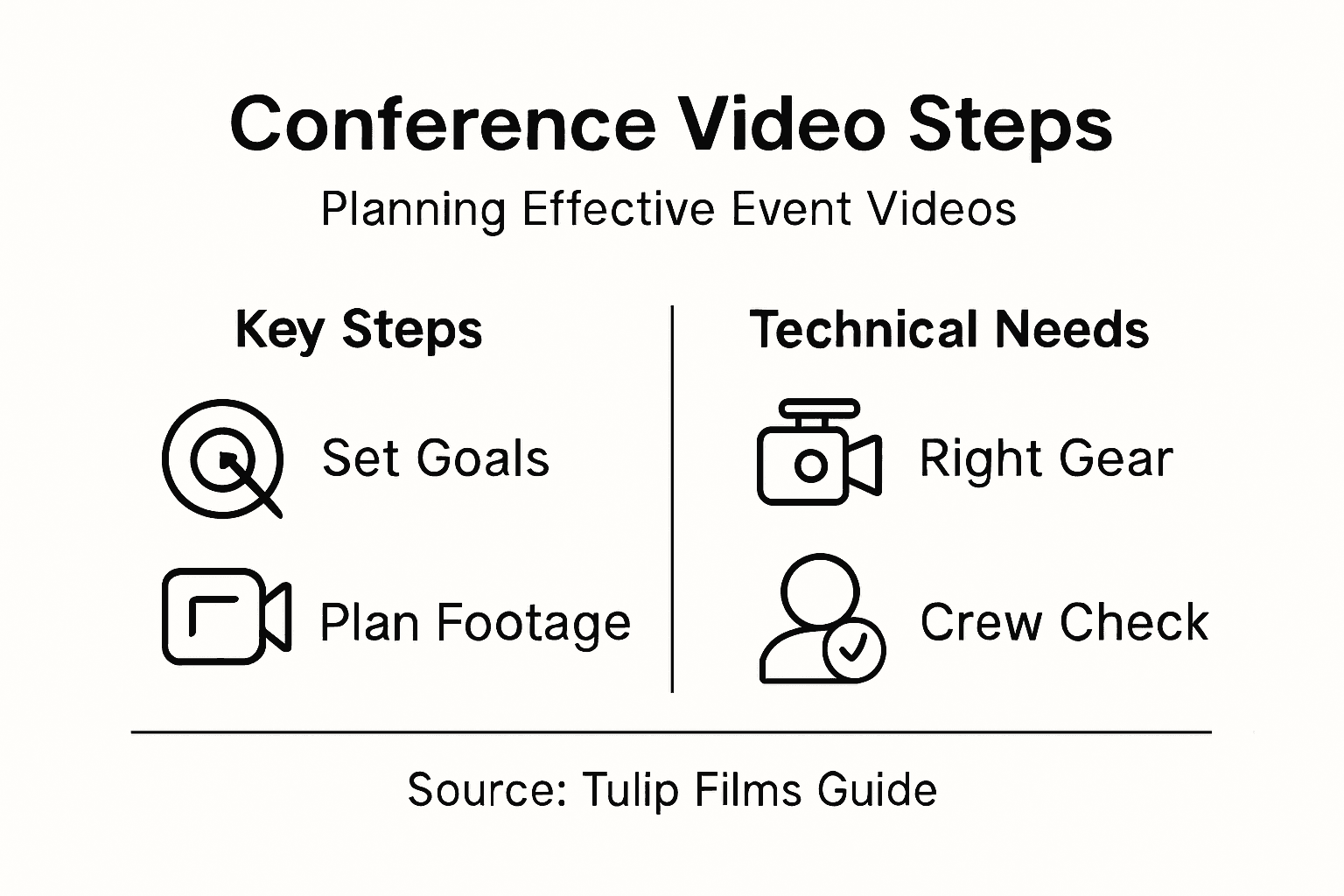
Use this summary to quickly distinguish core technical considerations:
Technical Factor | Why It Matters | Common Mistake to Avoid |
Camera Resolution | Captures visual detail | Using outdated, low-res equipment |
Audio Quality | Enhances viewer engagement | Ignoring venue acoustics |
Lighting Setup | Prevents unwanted shadows | Not adapting lighting to the venue |
Resolution and image quality standards
Compatibility with existing conference technology
Portability and ease of setup
Scalability for different recording scenarios
Investing in versatile, high-quality technical equipment is not an expense but a strategic asset that elevates your conference’s visual storytelling and professional presentation.
Pro tip: Conduct a comprehensive technical rehearsal with your entire equipment setup to identify and resolve potential issues before the actual event.
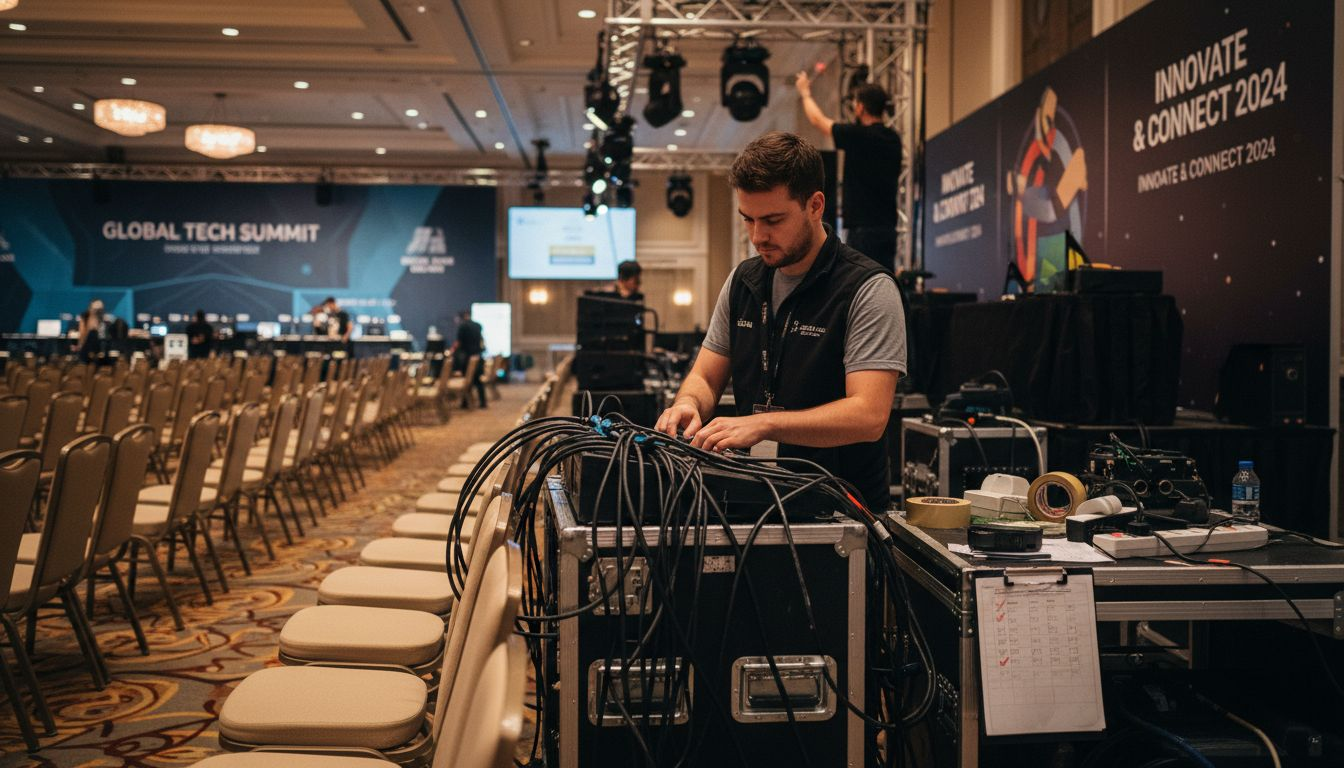
Step 4: Coordinate onsite filming logistics
Successful event video production hinges on meticulous onsite logistics planning. Your ability to seamlessly coordinate filming operations will determine the quality and effectiveness of your conference video documentation.
Location scouting and filming coordination requires comprehensive preparation and strategic communication across multiple teams. Your logistical planning should address several critical operational domains:
Venue mapping and camera placement strategies
Permission and access management
Technical equipment positioning
Crew movement and operational guidelines
Contingency planning for unexpected scenarios
Prepare your onsite filming strategy by developing a detailed operational framework that anticipates potential challenges. Focus on these key coordination elements:
Create a detailed venue floor plan with designated filming zones
Establish clear communication protocols for filming crew
Develop precise shooting schedules with built-in flexibility
Identify potential technical and physical obstruction points
Effective onsite filming logistics transform complex conference environments into streamlined, professional video production spaces.
Pro tip: Conduct a comprehensive pre-event walkthrough to map out every critical filming position and potential technical challenge.
Step 5: Review footage and ensure quality
Critical to any successful conference video project is a systematic and thorough review process that guarantees your final product meets the highest professional standards. Your meticulous evaluation will transform raw footage into a polished, impactful visual narrative.
Video production quality assurance requires a comprehensive approach that addresses multiple technical and creative dimensions. Your review process should encompass several strategic assessment areas:
Technical video and audio quality
Narrative coherence and messaging alignment
Visual consistency and brand representation
Compliance with conference objectives
Accessibility and viewer engagement potential
Implement a structured review methodology that systematically examines every aspect of your recorded content. Focus on these critical evaluation criteria:
Check technical elements like resolution and sound clarity
Validate narrative flow and information accuracy
Assess emotional and communicative impact
Verify alignment with original conference goals
A disciplined, multi-stage review process is the difference between average documentation and truly exceptional conference video content.
Pro tip: Create a standardized review checklist with weighted scoring to ensure objective and consistent quality assessment across all footage.
Step 6: Deliver final video and gather feedback
Successfully delivering your conference video marks the culmination of your production journey, transforming months of planning into a compelling visual narrative. The final step involves not just distribution, but strategic engagement with your audience to validate and improve future video efforts.
Effective feedback collection strategies are critical for understanding the impact of your conference video. Your delivery and feedback process should encompass several key strategic elements:
Distribute video through multiple targeted channels
Create accessible viewing platforms
Design structured feedback mechanisms
Establish clear evaluation criteria
Provide multiple feedback submission options
Implement a comprehensive feedback collection framework that goes beyond simple viewer comments. Consider these essential evaluation dimensions:
Technical video quality assessment
Messaging and content relevance
Viewer engagement metrics
Alignment with conference objectives
Thoughtful video delivery and systematic feedback collection transform a one-time production into a continuous improvement opportunity for future conference communications.
Pro tip: Design a concise, user-friendly feedback survey with both quantitative ratings and open-ended questions to capture nuanced viewer insights.
Elevate Your Conference Video with Expert Planning and Production
Planning an effective conference video can be challenging when you need to clearly define objectives, select the right technical setup, and flawlessly coordinate onsite logistics. The article highlights crucial pain points like developing strategic key messages, ensuring high-quality footage, and gathering valuable feedback—each step demanding precision and creativity to engage your audience fully and communicate your event’s purpose. These goals require a personalized, professional approach that balances technical expertise with emotional storytelling.
At Tulip Films, we specialize in turning complex conference video planning into seamless, impactful audiovisual experiences. We focus on understanding your unique event objectives and crafting videos that capture your message with clarity and emotional resonance. Whether you need expert technical setup guidance or comprehensive production support that covers everything from filming logistics to final delivery, our Swiss-based team delivers high-quality, efficient results tailored to your needs. Explore how our event video production services bring your conference stories to life or schedule your free consultation today to start planning your perfect video solution.
Ready to transform your conference content into engaging video narratives? Visit Tulip Films now to discover our personalized approach and rapid delivery services designed to make your event stand out. Don’t wait keep your audience captivated from start to finish with professional video production built around your goals.
Frequently Asked Questions
What are the first steps in event video planning for conferences?
To start event video planning, clearly define your conference objectives and key messages. Identify specific outcomes you want to achieve and establish core messages that align with your event’s purpose.
How can I ensure my video content resonates with the target audience?
Ensuring that your video content resonates involves crafting key messages that are clear, relevant, and emotionally engaging. Draft these messages early and review them with your video production team to achieve effective communication.
What should be included in a video production plan for conferences?
A comprehensive video production plan should include your specific video types, technical requirements, budget, timeline, and potential challenges. Outline these components to create a structured roadmap for your video production.
How do I choose the right technical setup for filming?
Choosing the right technical setup requires evaluating factors like camera quality, audio systems, and lighting equipment. Focus on matching your equipment to your event needs to ensure high-quality video production.
What logistical steps should I consider for onsite filming?
For onsite filming, coordinate venue mapping, camera placements, permissions, and crew movement. Conduct a pre-event walkthrough to identify critical filming positions and potential technical challenges.
How can I effectively gather feedback after delivering the conference video?
Effective feedback collection involves distributing the video through multiple channels and creating a structured feedback form. Design this survey to capture both quantitative and qualitative insights from your viewers.
Recommended
