Why Video for Corporate Alumni Networks: 2026 Guide


TL;DR:
Video is the most effective format for corporate alumni networks because it fosters emotional connections, enhances visibility, and generates measurable engagement that text and email cannot match. Remote, authentic storytelling at scale increases content volume, reduces costs, and strengthens community bonds, making video a vital infrastructure for ongoing alumni engagement. Strategic planning, goal setting, and diverse formats are essential to maximize measurable outcomes and build sustainable, authentic alumni networks.
Video is the most effective format for corporate alumni networks because it builds emotional connection, increases member visibility, and generates measurable engagement that text and email simply cannot replicate. Corporate communications professionals managing alumni programs increasingly treat video not as a bonus channel but as the primary driver of community health. The benefits of video for alumni engagement are backed by 2026 data from Wistia, HubSpot, and PeoplePath, and by case studies from organizations like MUFG that have scaled alumni storytelling dramatically. This guide explains why video for corporate alumni networks works, how to measure it, and how to build a strategy that lasts.
Why video for corporate alumni networks outperforms every other format
Video activates emotional memory in ways that a newsletter or LinkedIn post cannot. When alumni watch a former colleague describe a career pivot, a shared project, or a defining moment at the organization, they feel recognized. That recognition is the foundation of belonging, and belonging is what keeps alumni networks alive.
The alumni credibility that drives real engagement comes from lived experience, and video delivers that experience directly to the viewer. A written quote from an alumnus carries weight. The same person on camera, with tone, expression, and context, carries conviction. That difference in emotional impact translates directly into higher click-through rates, more shares, and deeper participation.
PeoplePath recommends video alongside other multimedia formats specifically because it improves click-through rates and drives ongoing measurement opportunities. This matters for alumni managers because every engagement signal, a share, a comment, a registration, is data you can act on. Video generates those signals at a higher rate than static content.
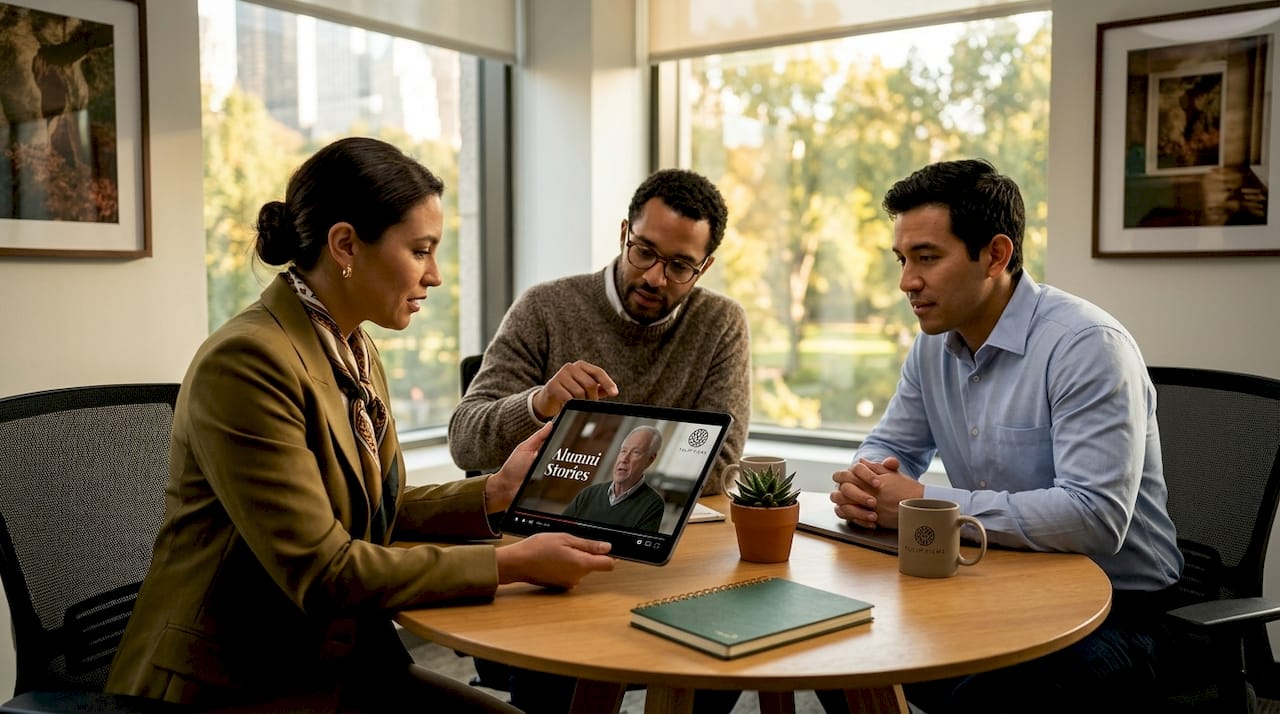
The corporate alumni video strategy that works in 2026 is not about production glamour. It is about authentic stories told at scale, distributed where alumni already spend their time, and measured against goals that matter to the business.
How video creates emotional connections and rekindles alumni engagement
Alumni networks lose momentum when members feel invisible. Video solves this by making people real to each other again. A two-minute profile of a former team lead who now runs a startup in Zurich does more for network cohesion than six months of email newsletters.
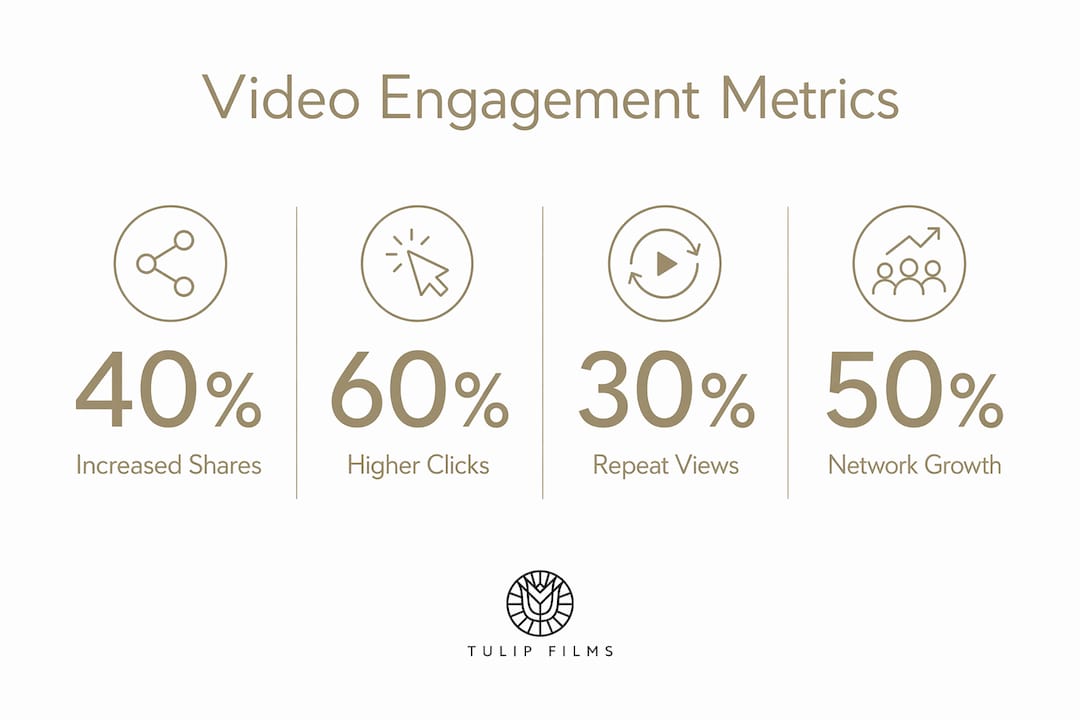
Video storytelling taps into nostalgia and shared identity in a way that scales. When alumni see their former organization producing content that reflects their experience honestly, pride follows. Pride drives participation. Participation builds the network.
The MUFG case study illustrates this at an organizational level. The bank piloted a remote video production model that shifted alumni storytelling from expensive, travel-dependent shoots to distributed, interview-based recordings. The result was not just cost savings. It was a volume and authenticity increase that a traditional production model could not achieve. Alumni voices that would never have been captured in a three-video annual cycle became part of an ongoing content stream.
Here is what makes video emotionally effective for alumni programs specifically:
Nostalgia activation: Seeing familiar faces, office environments, or project references triggers positive memory associations that text cannot reach.
Social proof at scale: When one alumnus shares a career win on video, others see what the network produces and want to contribute their own story.
Credibility transfer: Alumni trust other alumni. A video featuring a peer carries more weight than any message from the communications team.
Belonging signals: Watching a video where someone describes the same experience you had confirms that your time at the organization mattered.
Pro Tip: Record a short “where are they now” video series featuring two or three alumni per quarter. Keep each video under three minutes and ask one consistent question: “What did your time here teach you that still applies today?” The consistency makes the series feel like a community, not a campaign.
Why video improves visibility and network identity within alumni communities
Identity visibility is the foundation of a thriving alumni community. Eric Peterson’s research makes this explicit: members need to see who is in the network before they will engage with it. A static directory of names and job titles does not accomplish this. Video does.
When alumni can watch a short profile of another member, they immediately understand context, personality, and potential common ground. That understanding reduces the friction of reaching out. It converts a cold connection request into a warm conversation. The identity visibility principle explains why networks built around video profiles consistently outperform those built around text-only directories.
Here is a practical sequence for using video to build network identity:
Create a founding cohort video. Feature ten to fifteen alumni who represent the network’s range of industries, roles, and tenures. This gives new members an immediate sense of who belongs and why.
Produce event recap videos. After every alumni gathering, virtual or in-person, publish a short highlight reel. Members who could not attend feel included. Members who did attend feel recognized.
Invite alumni-generated content. Ask members to submit short video updates on career milestones, projects, or advice. Co-created content drives ownership and deepens engagement.
Use video introductions for new members. A thirty-second welcome video from a network leader makes onboarding personal and sets the tone for participation.
Animate your community data. A short annual video summarizing where alumni are working, what industries they represent, and what the network accomplished makes the community feel real and worth belonging to.
Pro Tip: Do not wait for a polished production budget to start. A smartphone-recorded, well-lit interview with a compelling alumnus outperforms a slick but generic promotional video every time. Authenticity is the production value that matters most in alumni engagement with video.
How video supports measurable engagement and business-aligned outcomes
Alumni managers who cannot demonstrate ROI lose budget. Video solves this problem because it generates behavioral data that maps directly to business goals. The fastest-growing video metric in 2026 is social engagement, specifically comments and shares, outweighing passive view counts as the primary signal of content success.
This shift matters because it changes how you plan content. A video that gets 200 views and 40 shares is performing better than one with 2,000 views and no interaction. Shares extend reach into networks you do not control. Comments signal that the content provoked thought or emotion. Both are outcomes that justify continued investment.
The table below maps common alumni engagement goals to the video metrics that measure them:
Alumni engagement goal | Video metric to track | What it tells you |
Increase network participation | Comments and replies | Members are responding, not just watching |
Drive event registrations | Click-through rate on CTAs | Video is converting passive viewers to active participants |
Grow referral pipeline | Shares and reposts | Alumni are amplifying content to their own networks |
Improve retention in the program | Return viewer rate | Members are coming back, signaling ongoing relevance |
Measure brand sentiment | Sentiment in comments | Alumni associate the network with positive experiences |
Wistia and HubSpot surveyed over 900 marketing professionals and found that behavioral metrics like conversion assists and social engagement are now the primary benchmarks for video success. For alumni managers, this means setting KPIs before production begins, not after. Define what a successful video looks like in terms of shares, registrations, or referrals, then build content to hit those targets.
Video budgets for professional content typically sit around $10,000 for webinar-style or interview-based formats. That figure is not a ceiling. It is a planning anchor that helps you decide how many videos to produce, what format to use, and where to distribute them for maximum return.
Traditional alumni engagement vs. scalable video strategies
The old model for alumni video was simple and expensive. You hired a crew, filmed an event, and published one or two polished videos per year. The new model is the opposite: distributed, remote, always-on, and built for volume.
The MUFG pilot quantifies this shift precisely. Scaling remote video production dropped the cost from $20,000 for three travel-dependent videos to $10,000 for fifty remote videos in a single month. That is not a marginal improvement. It is a structural change in what alumni storytelling can look like.
Approach | Cost | Volume | Authenticity | Scalability |
Traditional event filming | High ($20,000+) | Low (2 to 3/year) | Moderate | Limited |
Remote interview model | Moderate ($10,000) | High (50+/month) | High | Strong |
Alumni-generated content | Low | Very high | Very high | Very strong |
The remote interview model works because it removes the logistical barriers that kept alumni voices out of the content pipeline. An alumnus in Singapore can record a ten-minute interview on their laptop, and your production partner can turn that into a polished two-minute video within days. The geographic and scheduling constraints that made alumni storytelling rare are gone.
Shifting to an always-on video pipeline also changes the relationship between the network and its members. Instead of alumni appearing in content once a year, they become regular contributors. Regular contribution builds habit. Habit builds loyalty.
Practical steps to build a corporate alumni video strategy
A corporate alumni video strategy that actually works starts with goals, not cameras. Before you produce a single frame, define what you want alumni to do after watching. Register for an event. Submit a referral. Connect with another member. Every video needs a next step built into it.
Here is how to build the strategy from the ground up:
Set two or three specific KPIs before production begins. Use the metrics table above as a starting point. Align them with broader communications or talent goals so leadership sees the connection.
Mix formats deliberately. Use long-form interview videos for depth, short clips for social distribution, and event recaps for community building. Mixing video with other formats and iterating based on alumni feedback keeps programs relevant and prevents content fatigue.
Distribute on LinkedIn first. LinkedIn is the dominant professional video sharing platform in 2026, and most corporate alumni are already active there. Repurpose longer videos into short clips optimized for LinkedIn’s feed to extend reach without additional production cost.
Build a feedback loop. Survey alumni after video campaigns. Ask what resonated, what felt irrelevant, and what stories they want to see next. Use that data to shape the next production cycle.
Partner with experienced producers for flagship content. In-house production works for volume and authenticity. Professional production works for flagship stories, annual reviews, and content that represents the network to external audiences.
Include a clear call to action in every video. A video without a next step is a missed opportunity. Whether it is a link to an event, a form to share your own story, or a prompt to connect with a featured alumnus, every video should move the viewer toward participation.
Pro Tip: Repurpose every long-form alumni interview into at least three shorter clips. Each clip can target a different segment of your alumni base or a different stage of the engagement funnel. One production investment, multiple touchpoints.
Key takeaways
Video drives stronger alumni engagement than any other format because it combines emotional resonance, identity visibility, and measurable behavioral signals in a single content type.
Point | Details |
Emotional connection | Video activates nostalgia and belonging in ways text cannot, driving participation and pride. |
Identity visibility | Members engage more when they can see who is in the network through video profiles and recaps. |
Measurable ROI | Track shares, comments, and conversion assists, not just views, to prove and improve video impact. |
Scalable production | Remote interview models cut costs dramatically while increasing video volume and authenticity. |
Strategy before production | Define KPIs, distribution channels, and calls to action before filming a single frame. |
What I have learned from watching alumni video programs succeed and fail
After years of working on corporate video production across Switzerland and beyond, the pattern I see most often is this: organizations invest in one beautiful video, publish it, and wait for engagement to follow. It rarely does. The video was good. The strategy was absent.
The programs that actually build thriving alumni communities treat video as infrastructure, not an event. They produce content continuously, measure it honestly, and adjust based on what alumni respond to. They do not chase production perfection. They chase relevance.
The co-creation principle is the one I find most underused. When alumni contribute their own stories, even in raw, unpolished formats, engagement spikes. People watch content featuring people they know. They share it. They comment. They reach out to the person featured. That chain of behavior is what a healthy alumni network looks like in motion.
The organizations that get this right also understand that video is not a communications tool in isolation. It is a relationship tool. Every video is an invitation to reconnect, to contribute, and to belong. When you design content with that intention, the metrics follow.
My honest advice: stop asking whether your alumni network needs video. It does. Start asking what story you have not told yet, and who in your alumni community is waiting to tell it.
— Pieter
Bring your alumni video strategy to life with Tulipfilms
Building a corporate alumni video strategy that actually moves people requires more than a camera and a script. It requires a production partner who understands how to capture authentic stories, deliver them at scale, and align every frame with your engagement goals.
[
Tulipfilms specializes in corporate video production for Swiss businesses and organizations, with a portfolio that spans alumni storytelling, event documentation, and brand-driven content. Whether you are launching your first alumni video series or scaling an existing program, Tulipfilms brings the production expertise and personalized approach to make it work. Explore the full production portfolio to see how Tulipfilms translates organizational stories into content that connects. Book a free consultation to discuss your alumni engagement goals.
FAQ
Why is video better than email for alumni engagement?
Video generates behavioral signals like shares and comments that email cannot produce at the same rate. These signals give alumni managers actionable data to measure and improve engagement over time.
How much does a corporate alumni video program cost?
Professional interview-based video content typically starts around $10,000 per production cycle, according to Wistia and HubSpot data. Remote production models can deliver significantly more volume at that same budget, as the MUFG case study demonstrates.
What metrics should I track for alumni video content?
Track social engagement (shares and comments), click-through rates on calls to action, and return viewer rates. Passive view counts alone do not indicate whether your content is driving participation or network growth.
How often should a corporate alumni network publish video content?
Monthly is a practical minimum for maintaining visibility and habit among members. Organizations using remote interview models can realistically publish weekly without exceeding typical communications budgets.
What video format works best for alumni networks?
Short interview-based videos of two to three minutes perform best for emotional connection and shareability. Event recap videos build community, and alumni-generated content drives the highest levels of ownership and organic reach.
Recommended
