How to Plan Event Video for Corporate Success


Every successful corporate event in Geneva starts with a clear vision—yet translating that vision into a compelling promotional video often feels overwhelming. Defining event goals and understanding your audience are the foundation for video content that truly connects and drives results. By focusing on strategic audience insights and crisp objectives, you set the stage for creative decisions that engage viewers and reflect your brand’s unique story.
Table of Contents
Quick Summary
Key Point | Explanation |
1. Define Clear Goals First | Establish specific objectives for your video to guide all production decisions and ensure alignment with your overall event strategy. |
2. Understand Your Target Audience | Analyze audience demographics and preferences to tailor messaging, making content more relatable and engaging for viewers. |
3. Map Out Key Moments for Filming | Identify significant scenes for your video and choose an appropriate format to effectively deliver your story to your audience. |
4. Plan Logistics and Technical Needs | Coordinate all technical details beforehand to avoid chaos on production day, ensuring a smooth filming process and capturing quality footage. |
5. Conduct Structured Review Sessions | Schedule thorough review meetings with stakeholders to catch potential issues and ensure the final video aligns with your original vision. |
Step 1: Define event goals and target audience
Before you shoot a single frame, you need clarity on why this video exists. Are you launching a new product? Building brand awareness? Generating leads for your sales team? Your video’s entire direction flows from these goals, so get specific about what success looks like.
Knowing your goals shapes every decision you make:
Here’s a quick reference to how event video goals impact production decisions:
Event Video Goal | Ideal Format | Typical Tone | Distribution Priority |
Brand Awareness | Short highlight reel | Energetic and upbeat | Social media, website |
Lead Generation | Testimonial or case study | Professional, persuasive | Email campaigns, LinkedIn |
Internal Training | Documentary or explainer | Informative and clear | Intranet, employee portal |
Product Launch | Live stream or showcase | Exciting, polished | Website, sales enablement |
Campaign objective: Lead generation, brand awareness, or conversion
Video length and format: 30-second social clip vs. 5-minute documentary
Tone and messaging: Professional and corporate vs. energetic and casual
Distribution channels: LinkedIn, company website, email, or in-person screening
Your target audience determines everything else. Understanding audience preferences and demographics allows you to tailor messaging that actually resonates with the people watching. Are you reaching C-level executives or front-line employees? International attendees or local Geneva-based professionals? Young, digital-native marketers or established industry veterans?
Effective planning starts with analyzing the data you already have. Pull your past event attendance records, social media insights, and customer profiles. Segment your audience by role, industry, location, and interests. You’ll quickly see patterns that shape your video strategy.
Consider engaging directly with your audience through quick interviews or focus groups before production. Ask three to five target attendees what content they actually want to see. This saves you from producing something polished but irrelevant.
Clear goals and a well-defined audience are your foundation. Everything else—creative direction, messaging, talent, and editing—builds from these two decisions.
Pro tip: Document your goals and audience profile in a one-page brief before talking to any videographer or production team, ensuring everyone works toward the same vision from day one.
Step 2: Map out key moments and video format
Now that you know your goals and audience, it’s time to plan what you’re actually filming. This means identifying the critical moments that tell your story and deciding what format best delivers that story to your viewers.
Start by listing every significant moment at your event. These are the scenes that matter most to your goals and audience:
Keynote speeches or executive announcements
Product launches or debuts
Panel discussions or expert insights
Audience reactions and networking moments
Award ceremonies or recognition moments
Q&A sessions or live interactions
Your video format should align directly with how people will consume it. Are you creating a highlight reel showcasing event energy, a formal testimonial series, or live-streamed coverage? A 90-minute conference needs a different approach than a two-hour product launch. Think about pacing, tone, and what format keeps your specific audience engaged.
Create a simple storyboard or shot list before production day. Map out the sequence of scenes you need, which speakers or moments to prioritize, and where you want close-ups versus wide shots. This isn’t about being rigid—it’s about having a clear plan so your camera operator knows what to chase.
Consider how branding fits into each moment. Your company logo, color palette, and graphic overlays should feel natural, not forced. They reinforce your message without distracting from the content.
Knowing your key moments and format eliminates guesswork on set and ensures your final video actually supports your original goals.
Pro tip: Walk through your venue the day before shooting and mark specific camera positions and sightlines for key moments, so your videographer captures the best angles without scrambling during the actual event.
Step 3: Coordinate logistics and technical needs
Production day chaos happens when logistics fall apart. Your job is to think through every technical detail ahead of time so your team can focus on capturing great footage instead of troubleshooting problems.
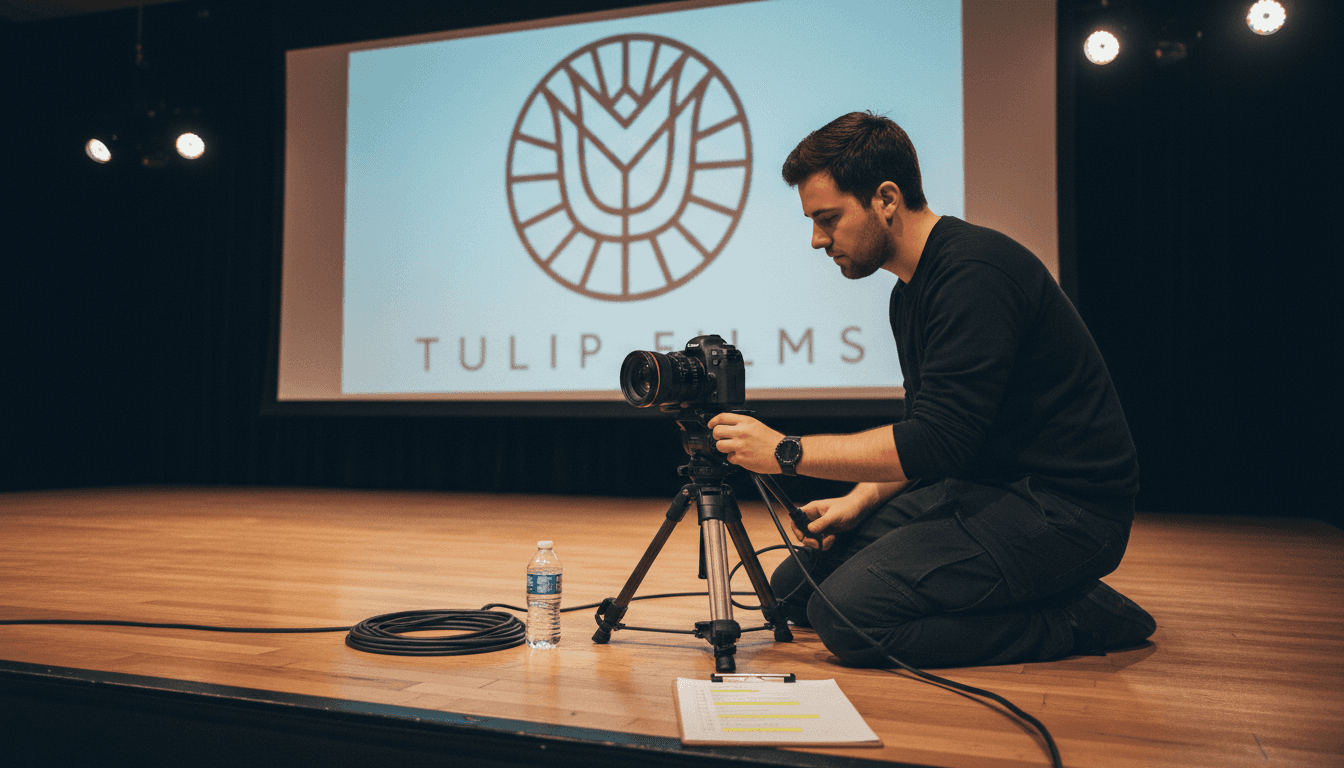
Start with venue walkthroughs. Understand your space: Where will cameras sit? Is there adequate power for lighting and equipment? Can you run cables safely without creating tripping hazards? Do you need permits or venue approval for certain setups? Visit the location at the same time of day as your event to see natural lighting.
Audio and visual equipment coordination demands careful planning. Your checklist should include:
Multiple camera positions to capture different angles simultaneously
Audio capture for speeches, interviews, and ambient sound
Lighting setup to handle varying room brightness
Live streaming infrastructure if broadcasting in real time
Backup power supplies and extra batteries for all devices
Cable management and safety protocols
Create a detailed timeline that shows when key moments happen and which crew members are responsible for each. This prevents your photographer from missing the CEO’s speech because they were repositioning a light.
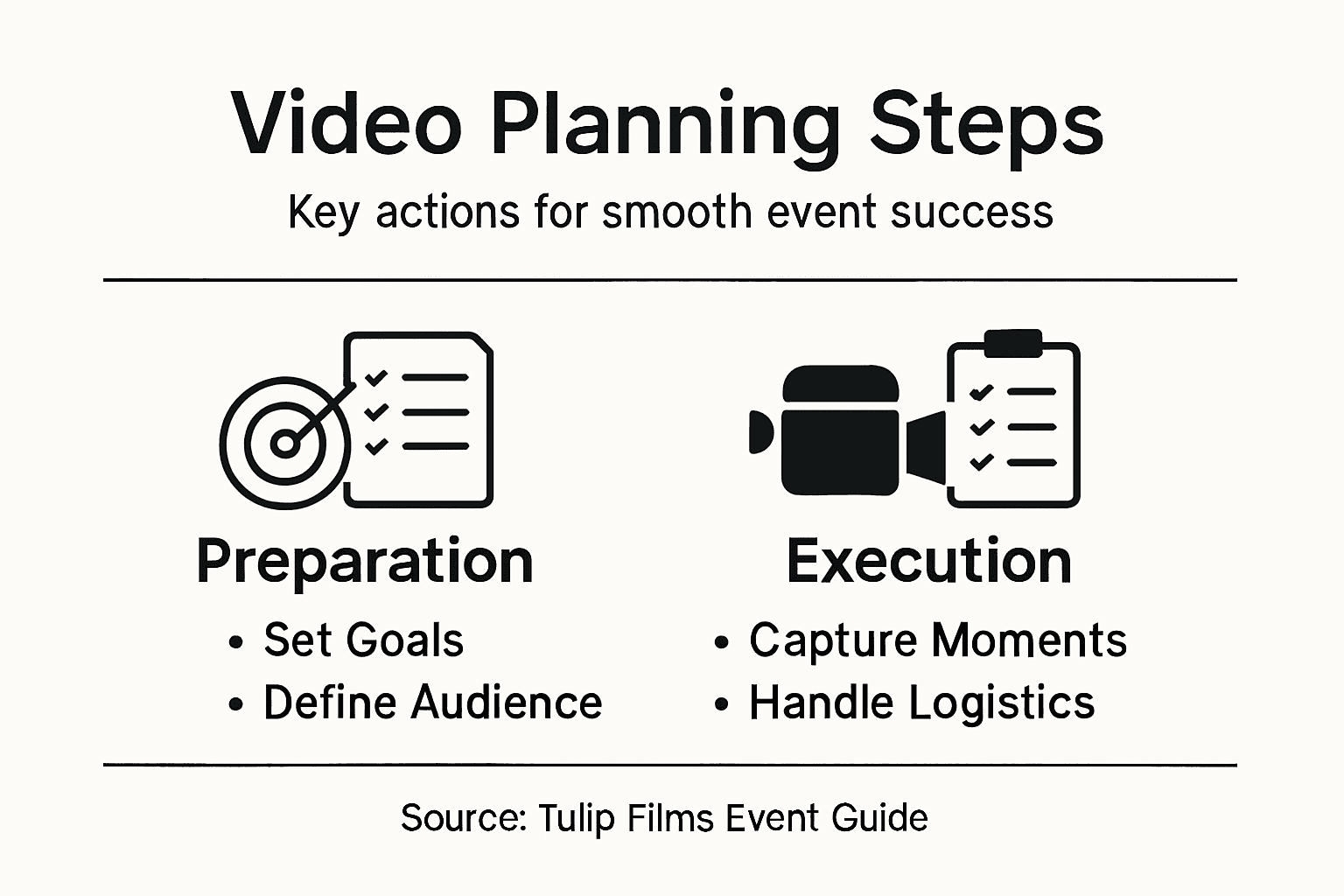
Test everything before the event. Run through your camera positions, audio levels, and backup systems. Nothing worse than discovering technical problems when guests are arriving.
Coordinate with your venue’s technical team. They know the building, power capacity, and any restrictions. Make them your ally.
A clear technical plan and advance testing eliminate 90 percent of production disasters.
Pro tip: Assign one team member as your on-site technical lead who communicates with crew and venue staff, freeing you to focus on storytelling and capturing the moments that matter.
Step 4: Select and brief your video production partner
Your video is only as good as the team producing it. Selecting the right partner and briefing them clearly determines whether you get a polished final product or an expensive mistake.
Look for a production company with proven experience in corporate events similar to yours. Review their portfolio. Do they understand your industry? Have they worked with audiences like yours? Ask for references from past clients in your sector.
When evaluating candidates, assess their technical capabilities and creative approach. The right partner asks thoughtful questions about your goals, not just “How much is your budget?” They should demonstrate understanding of video production for similar corporate events and how to tell your story effectively.
Once you’ve selected your partner, invest time in a comprehensive briefing. Don’t assume they understand what you want. Share everything:
Event goals and how success is measured
Target audience and what messaging resonates with them
Key moments and shots that cannot be missed
Brand guidelines for logos, colors, and visual style
Deliverables you need and timeline for delivery
Budget constraints and any scope limitations
Compliance or approval requirements before publishing
Provide your videographer with access to the venue layout, speaker list, and event schedule. Walk them through critical camera positions and sightlines you identified earlier.
Discuss style preferences too. Are you aiming for documentary-style authenticity or cinematic polish? Should interviews be formal or conversational? These creative choices matter.
A clear, detailed brief prevents misunderstandings and ensures your production team delivers exactly what you envisioned.
Pro tip: Create a one-page visual brief with images, color palettes, and example videos showing the tone and style you want, so your production partner sees your vision instantly rather than interpreting written descriptions.
Step 5: Review, approve, and share final video
Your video is nearly complete, but don’t skip the review and approval phase. This is where you catch problems before the world sees your content and where you ensure the final product actually matches your original vision.
Schedule a structured review session with key stakeholders. Invite your marketing manager, subject matter experts, legal or compliance reviewers if needed, and anyone with decision-making authority. Watch the video together and collect feedback systematically rather than gathering random opinions later.
Evaluate the video against your original goals. Does it convey your key messages? Does it resonate with your target audience? Does it look professional and represent your brand well? Does the pacing feel right, or does it drag in places?
This summary outlines key stakeholder roles in the review and approval phase:
Role | Review Focus | Typical Input |
Marketing Manager | Branding and messaging | Ensures alignment with campaigns |
Subject Matter Expert | Content accuracy | Validates facts and information |
Legal/Compliance Reviewer | Regulatory requirements | Checks for legal risks |
Executive Decision Maker | Strategic vision | Approves final business outcomes |
Provide feedback in writing. Vague comments like “something feels off” aren’t helpful to your videographer. Be specific: “The CEO’s introduction is 45 seconds but feels rushed. Can we slow the pacing in that segment?” or “The product demo needs a clearer explanation of features.”
Understand that iterative edits based on stakeholder feedback refine your content and ensure everyone’s vision aligns before final delivery. Budget time for revisions. Most videos need one or two rounds of edits.
Once approved, plan your distribution strategy:
Email campaigns to attendees within 48 hours while momentum is fresh
LinkedIn for professional audiences and B2B reach
Company website and intranet for employee visibility
Social media clips to extend reach beyond the full-length version
Sales enablement platforms if your sales team uses the video
Don’t post and forget. Track views, engagement, and shares to measure whether your video achieved those original goals you set in Step 1.
Final approval signals confidence in your video. Distribution amplifies that confidence into measurable business results.
Pro tip: Create multiple versions of your video for different platforms before final approval, such as a 2-minute version for social media and a 30-second teaser, so you can launch everything simultaneously and maximize reach.
Elevate Your Corporate Event with Expert Video Production
Planning successful event videos requires clear goals, precise coordination, and a focused strategy to truly engage your target audience. Whether you need high-impact highlight reels, polished product launches, or insightful testimonial videos, knowing exactly what moments to capture and how to present them is key to driving results. Avoid common pitfalls like unclear messaging or technical mishaps by partnering with a team that understands every step of the process from goal setting to final distribution.
At Tulip Films, we specialize in translating your corporate event vision into compelling audiovisual content that resonates with your specific audience. Our personalized approach ensures every important moment is captured with professional precision while aligning with your brand’s identity. Explore how our experience in corporate event videos can help you create content that truly connects by visiting Tulip Films.
Ready to turn your event into a powerful story worth sharing?
[
Book your free consultation today to discuss tailored video solutions and start planning your project with a trusted Swiss video production partner. Visit our landing page now and bring your corporate event video strategy to life.
Frequently Asked Questions
What are the first steps to plan event video for corporate success?
Start by defining your event goals and identifying your target audience. Create a one-page brief that outlines your objectives and the demographics you want to reach before engaging with videographers or production teams.
How do I determine the ideal video format for my corporate event?
Consider your event goals and audience preferences when deciding on the video format. For example, a highlight reel works well for brand awareness, while a testimonial video is better suited for lead generation.
What key moments should I include in my event video?
Identify moments that align with your goals, such as keynote speeches, product launches, and audience reactions. Make a list of these critical scenes to ensure you capture what matters most during production.
How can I ensure smooth logistics on the day of the event?
Coordinate all technical needs in advance, including camera positioning, audio setup, and lighting. Walk through the venue before the event to identify potential challenges, ensuring everything runs smoothly on production day.
What should I discuss with my video production partner?
Provide your video production partner with detailed briefs covering your goals, target audience, key moments to capture, and brand guidelines. Communicate openly about your vision and style preferences to align both parties effectively.
How do I review and approve my final video?
Schedule a structured review session with key stakeholders to gather feedback on the video. Make specific suggestions for revisions based on your event goals and brand messaging to ensure the final product meets expectations.
Recommended
