Audiovisual Storytelling Guide for Swiss Businesses Success


Did you know that viewers are up to 22 times more likely to remember a story than a simple fact? Emotional storytelling is not just a creative choice, it is a secret weapon for capturing your audience’s attention and inspiring real connections. Whether you want to humanize your brand or engage viewers with a memorable message, understanding how to plan, craft, and deliver powerful audiovisual stories ensures your content stands out in a crowded world.
Table of Contents
Quick Summary
Key Point | Explanation |
1. Conduct thorough audience research | Understand audience values, emotions, and aspirations to craft relatable narratives. |
2. Develop detailed audience personas | Create personas that reflect genuine insights to pinpoint what resonates with your viewers. |
3. Create a strategic audiovisual script | Outline your story arc, including emotional beats and visual transitions for viewer engagement. |
4. Capture high-quality footage and audio | Prioritize authentic visuals and sound for a powerful narrative that connects emotionally. |
5. Optimize video for various platforms | Review technical quality and adjust formats to ensure optimal viewer experience across devices. |
Step 1: Identify key messages for your audience
In this step, you will learn how to uncover the core narratives that will connect powerfully with your target audience. Crafting compelling audiovisual stories starts with understanding what truly resonates with the people you want to reach.
The first key to identifying compelling messages is deep audience research. You need to go beyond basic demographics and truly understand the values, emotional triggers, and aspirations of your viewers. According to World Economic Forum, effective storytelling builds profound emotional connections with consumers by aligning them with a company’s vision and inspiring trust and loyalty.
Start by creating detailed audience personas that capture not just statistical data, but genuine human insights. Ask yourself: What challenges do they face? What dreams motivate them? What stories will make them stop and pay attention? The Swiss Quality highlights that storytelling allows companies to humanize their brands by creating narratives that truly resonate with audience values and emotions.
To refine your key messages, conduct interviews, survey your target market, and analyze their existing content consumption patterns. Look for recurring themes, emotional touchpoints, and language that sparks genuine engagement. Your goal is to develop messages that feel authentic and speak directly to your audience’s lived experiences.

Warning: Avoid generic messaging that tries to appeal to everyone. The most powerful stories are specific, nuanced, and deeply personal to a particular audience segment.
As you move forward, these carefully identified messages will become the foundation of your audiovisual storytelling strategy, guiding every creative decision in your video production.
Step 2: Plan visuals and scripts for engagement
In this step, you will craft a strategic audiovisual script that transforms your key messages into a compelling narrative that captivates your audience. Your goal is to create a visual storytelling blueprint that seamlessly combines narrative structure with engaging visual elements.
According to University of Bern, the first critical task is to define clear goals, learning objectives, and understand your target audience. This means choosing thematic focuses and production styles that align precisely with your communication objectives. Start by creating a detailed outline that maps out your story arc, identifying key emotional beats and visual transitions that will maintain viewer interest.
Drawing insights from Carnegie Mellon University, develop a multi-column audiovisual script that meticulously plans both visual and audio elements. Use simple storyboard sketches to visualize shot composition, considering factors like shot size, visual details, and how audio will integrate with your visuals. Your script should be a living document that balances structured planning with creative flexibility.
Pro tip: Think cinematically. Every visual choice should serve your narrative purpose. Consider how camera angles, lighting, and composition can amplify the emotional impact of your message.
Remember that a great script is not just about information delivery but creating an immersive experience that resonates with your audience on a deeper emotional level. As you move forward, your carefully crafted script will become the roadmap for your video production journey.
Next, we will explore how to transform your script into a powerful visual narrative that captures attention and drives engagement.
Step 3: Capture compelling footage and authentic sound
In this step, you will transform your carefully crafted script into a powerful visual narrative by capturing high quality footage and pristine audio that brings your story to life. Your mission is to create authentic visual content that resonates emotionally and communicates your message with precision.
According to University of Bern, successful video production requires meticulous planning of the recording process, including strategic location selection, appropriate equipment choices, and careful personnel management. This means ensuring every technical detail supports your goal of maintaining viewer engagement through high quality audio and video capture.
Carnegie Mellon University recommends creating scratch tracks and rough animatics to visualize key narrative points before final recording. This preparatory step allows you to experiment with different visual elements like video clips, photographs, and animations to discover the most compelling storytelling approach.
Pro tip: Always record more footage than you think you will need. Capturing additional angles and moments provides flexibility during post production editing and helps you craft a more nuanced narrative.
Remember that authentic storytelling emerges from genuine moments. Technical perfection matters, but emotional truth matters more. Your goal is to create visual content that feels real, engaging, and true to your original narrative vision.
Next, we will explore how to transform your raw footage into a polished and impactful final video that connects with your audience.
Step 4: Edit and refine the audiovisual narrative
In this crucial stage, you will transform your raw footage into a polished, compelling story that captivates and communicates with precision. Your goal is to craft an audiovisual narrative that not only looks professional but resonates deeply with your intended audience.
According to University of Bern, the editing process is about ensuring clarity and coherence. This means strategically adding graphics, animations, and visual elements that enhance understanding and viewer engagement. Focus on creating a seamless flow that guides your audience through the narrative with intentional visual and auditory cues.
Carnegie Mellon University emphasizes the importance of script refinement during editing, ensuring the final product appeals to both the intellectual and emotional dimensions of your audience. This means going beyond technical perfection and creating a story that speaks to the heart as much as the mind.
Pro tip: Watch your edit with the sound off. This technique helps you evaluate the visual storytelling and emotional flow independently of dialogue or narration.
Remember that great editing is almost invisible. Your audience should be so immersed in the story that they forget they are watching a produced video. Every cut, transition, and visual element should serve your core narrative purpose.
As you complete this stage, you are preparing to share a powerful visual story that can transform how your audience thinks, feels, and connects with your message.
Step 5: Verify quality and optimize for delivery
In this final stage, you will meticulously review and prepare your audiovisual story for seamless distribution across various platforms. Your mission is to ensure technical excellence and strategic presentation that maximizes audience engagement.
According to University of Bern, the verification process demands a comprehensive review of both technical quality and content accuracy. This means optimizing file formats and resolutions to match the specific requirements of your intended delivery platforms. Consider the viewing experience across different devices such as smartphones, tablets, desktop computers, and professional projection systems.
Carnegie Mellon University recommends carefully listening to your recorded script to identify subtle areas for improvement. Pay special attention to the pacing and rhythm to ensure they align perfectly with your intended message and maintain audience engagement. This involves making nuanced adjustments that might seem minor but can significantly impact viewer experience.
Pro tip: Create multiple export versions of your video with different compression levels and formats. This approach provides flexibility and ensures you have the right version for each distribution channel.
Remember that your final product is more than just a technical artifact. It is a communication tool designed to connect, inspire, and drive action. Every pixel and sound wave should serve your core narrative purpose.
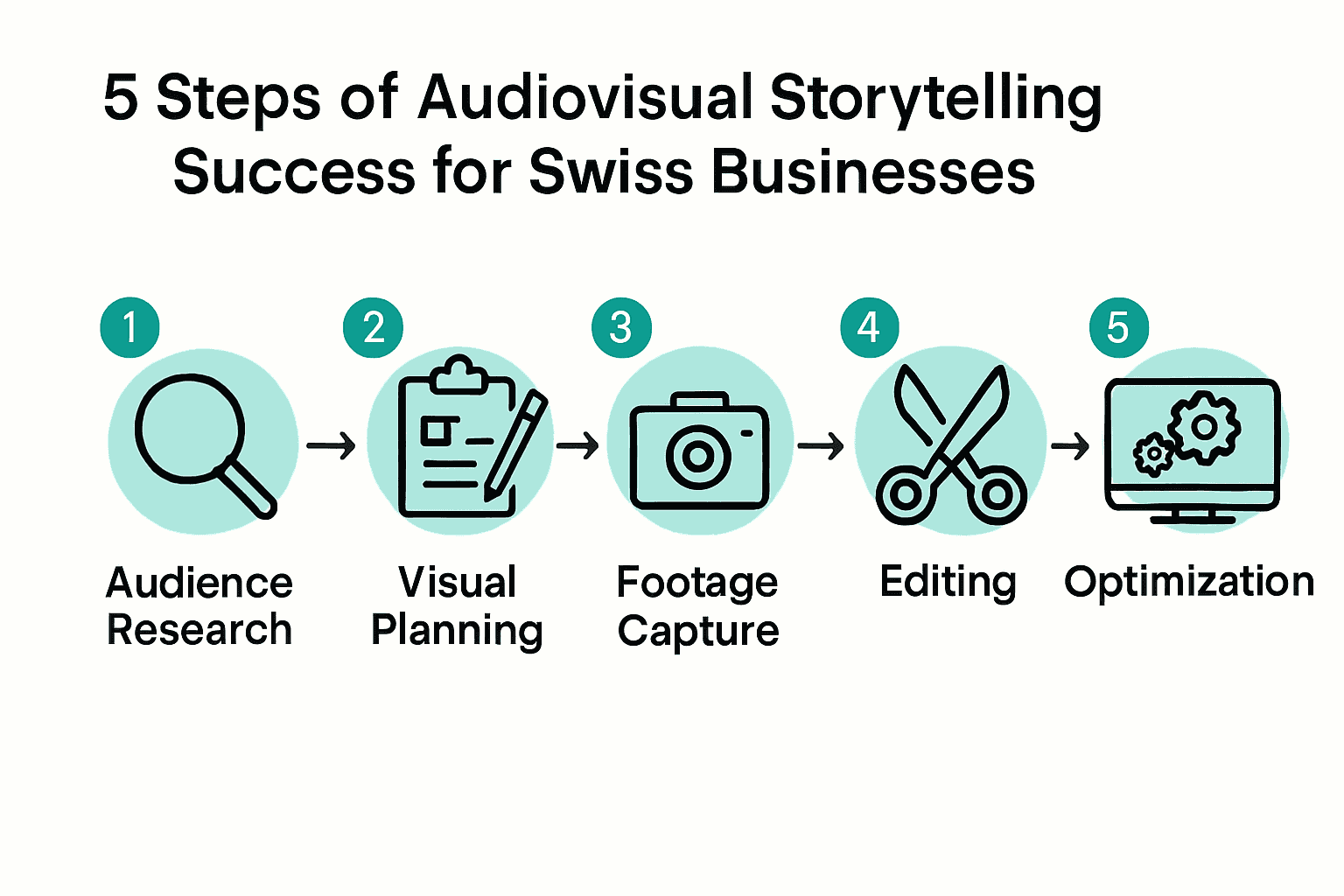
Congratulations. You have now completed a comprehensive audiovisual storytelling journey that transforms raw ideas into compelling visual narratives.
Transform Your Brand Story with Expert Audiovisual Production
Unlock the true power of your business narrative by addressing the core challenges highlighted in the “Audiovisual Storytelling Guide for Swiss Businesses Success”. Many organizations struggle with crafting authentic messages that truly connect emotionally and visually with their audience. Your story deserves more than just generic content it needs tailored, compelling audiovisual storytelling that engages hearts and minds while maintaining clarity and professionalism.
At Tulip Films, we specialize in turning your unique messages into unforgettable visual experiences. Our personalized approach, rapid delivery, and deep understanding of Swiss businesses ensure your story is told with passion and precision. From initial concept to final edit we focus on the nuances that make your brand relatable and trustworthy.
Ready to elevate your brand through captivating video content?
Explore how we tailor visuals and scripts to enhance engagement
Plan your free consultation and start your audiovisual storytelling journey today
Take the next step now and visit Tulip Films to see how we bring your story to life with energy and authenticity.
Create visual stories that resonate. Connect deeper. Act now.
Capture attention and foster loyalty with professional video content made just for you.
Ready to make a lasting impact with your brand story?
Discover how tailored audiovisual storytelling drives real engagement and business success with Tulip Films. Schedule your free consultation today at www.tulipfilms.ch and start connecting with your audience like never before.
Frequently Asked Questions
How can I identify key messages for my Swiss business’s audiovisual storytelling?
You can identify key messages by conducting detailed audience research that uncovers their values, emotional triggers, and aspirations. Create audience personas depicting their challenges and dreams to ensure your narrative resonates with them.
What steps should I take to plan visuals and scripts for my audiovisual content?
Start by defining your goals and understanding your target audience. Create a detailed outline mapping your narrative structure, and develop a multi-column audiovisual script that includes both visual and audio elements to enhance engagement.
What techniques can help me capture compelling footage and sound?
Focus on meticulous planning of your recording process, including selecting appropriate locations and equipment. Capture more footage than you think you’ll need to provide flexibility during editing and enhance your storytelling.
How do I effectively edit and refine my audiovisual narrative?
Ensure clarity and coherence by strategically adding graphics and employing a seamless flow in your edits. Watch your edit without sound to evaluate the visual storytelling independently and make adjustments to enhance emotional impact.
What are the key considerations for verifying quality and optimizing my audiovisual content for delivery?
Review both technical quality and content accuracy before distribution. Optimize your video for different platforms by creating multiple export versions with varying compression levels to enhance viewer experience across all devices.
Recommended
