Brand Video Creation Process for Engaging Audiences


Over 80 percent of marketing managers in Geneva say video helps drive deeper audience engagement than traditional formats. For SME brands aiming to compete with American storytelling standards, mastering an efficient video production workflow can give your brand a powerful edge. This guide walks you through essential steps that clarify goals, shape strategy, and organize resources for captivating campaigns that truly connect with viewers.
Table of Contents
Quick Summary
Key Insight | Explanation |
1. Define clear goals | Establish specific brand goals and video objectives to guide your video strategy. |
2. Tailor video concepts | Create video concepts that align with brand identity and resonate with target audiences. |
3. Organize production logistics | Plan detailed logistics to ensure smooth video production and effective resource management. |
4. Execute filming professionally | Focus on high-quality filming and audio capture to enhance the storytelling impact. |
5. Revise before delivery | Conduct thorough reviews and revisions to ensure the final video meets desired quality standards. |
Step 1: Define brand goals and video objectives
Defining clear brand goals and video objectives is the foundational blueprint that transforms your visual storytelling from random content to strategic communication. This critical first step ensures your video speaks directly to your target audience while advancing your broader marketing mission.
Start by conducting a comprehensive assessment of what your brand represents and the specific outcomes you want to achieve. Understanding the role of video in brand building helps you craft precise objectives that resonate with your audience. Your goals might include increasing brand awareness, explaining complex product features, humanizing your company culture, or driving specific customer actions like engagement or purchases.
To develop meaningful objectives, map out specific metrics and outcomes. Are you looking to boost social media following? Increase website conversions? Generate leads? Each goal requires a tailored approach. Align your video objectives with measurable key performance indicators that demonstrate concrete business impact. Ensure these goals are realistic, time-bound, and directly connected to your broader organizational strategy.
Here’s a summary of common video objectives and how they drive business impact:
Video Objective | Desired Business Outcome | Example KPI |
Increase brand awareness | Reach a larger audience | Social shares, impressions |
Explain product features | Improve product understanding | Website time spent |
Humanize company culture | Build trust and relatability | Engagement rate |
Drive customer actions | Boost leads or purchases | Conversion rate |
Pro Tip: Create a one-page strategic brief that succinctly outlines your brand goals, target audience, key messages, and desired outcomes before beginning video production.
Step 2: Develop a tailored video concept
Developing a tailored video concept transforms your brand strategy into a compelling visual narrative that connects powerfully with your target audience. This crucial step bridges your defined goals with creative execution that resonates authentically with viewers.
Begin by planning your content with strategic scripting and prototyping that supports your core messaging. Your concept should emerge from a deep understanding of your brand identity, target audience preferences, and specific communication objectives. Consider the emotional and cognitive impact you want to create through visual storytelling. Will you use humor to engage? Demonstrate expertise through technical explanation? Share customer success stories? Each approach requires careful consideration of tone, style, and narrative structure.

Generate multiple concept variations by brainstorming diverse approaches that could potentially meet your objectives. Evaluate each concept against key criteria such as audience relevance, brand alignment, production feasibility, and potential emotional impact. Select the concept that most effectively communicates your message while feeling genuine and compelling to your viewers.
Pro Tip: Create visual mood boards and quick concept sketches to help stakeholders visualize and provide feedback on your initial video concept ideas.
Step 3: Organize production logistics and resources
Organizing production logistics and resources is the critical backbone that transforms your creative vision into a practical, executable video project. This phase requires meticulous planning and strategic coordination to ensure smooth operations and maximize your team’s efficiency.
Pre-production planning involves comprehensive resource management that covers every aspect of your video creation. Begin by developing a detailed production blueprint that outlines specific requirements such as crew roles, equipment needs, location logistics, talent requirements, and precise shooting schedules. Break down your budget allocation for each production element, ensuring you have contingency funds for unexpected challenges. Consider the technical specifications needed for your video concept including camera equipment, lighting, sound recording gear, and any specialized tools that will help you achieve your creative vision.
Establish clear communication protocols and create a centralized project management system where all team members can access updated schedules, shot lists, and resource allocations. Conduct thorough pre-production meetings to align everyone on project expectations, potential challenges, and individual responsibilities. Schedule location scouting sessions to understand potential shooting environments, anticipate logistical obstacles, and make necessary preparations to streamline your filming process.
The following table highlights key roles and resources for a smooth video production process:
Production Element | Role or Resource Example | Importance to Success |
Crew Management | Director, Camera Operator | Ensures creative and technical vision |
Equipment | Cameras, Lighting, Audio Gear | Delivers professional sound and visuals |
Locations | Studio, Office, Outdoor Sites | Sets context and logistical needs |
Talent | Actors, Company Staff | Brings the story to life |
Scheduling | Shooting Calendar | Maximizes efficiency and coordination |
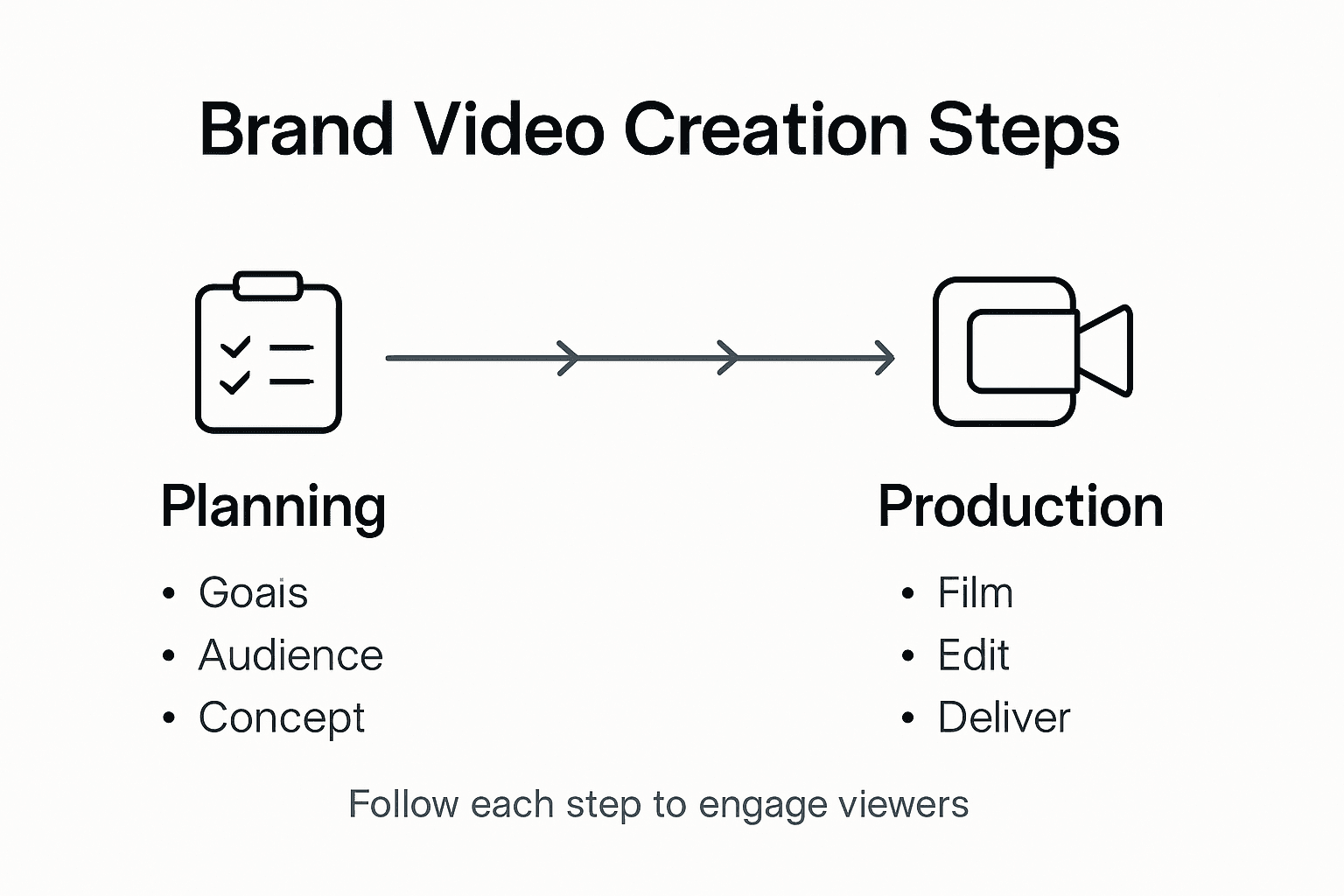
Pro Tip: Create a comprehensive production checklist with color coded priority levels to track all logistical elements and ensure nothing falls through the cracks during your video shoot.
Step 4: Execute professional filming and audio capture
Executing professional filming and audio capture transforms your meticulously planned concept into a tangible visual narrative that captivates your target audience. This critical phase demands precision technical skills and creative expertise to translate your brand story into compelling audiovisual content.
Configuring the shooting environment requires optimizing lighting and audio settings that complement your narrative objectives. Select high quality microphones matched to your recording environment whether you are capturing interview testimonials corporate presentations or brand story segments. Pay careful attention to camera positioning lighting conditions and sound capture techniques that minimize background noise and maximize audio clarity. Professional filming demands technical excellence coupled with creative intuition understanding how each technical choice impacts viewer perception and emotional engagement.
Establish rigorous quality control protocols during filming to ensure consistent visual and audio standards. Conduct multiple test recordings to validate sound levels camera framing and lighting conditions before committing to final takes. Coordinate closely with your production team to maintain seamless communication and quickly address any technical challenges that emerge during shooting. Remember that professional filming is both a technical and artistic process requiring adaptability precision and creative problem solving.
Pro Tip: Invest in professional audio monitoring headphones that allow real time sound quality assessment during filming to catch and resolve audio issues immediately.
Step 5: Edit visuals and audio for maximum impact
Editing visuals and audio transforms raw footage into a compelling narrative that captures your brand’s essence and resonates powerfully with your target audience. This critical phase is where technical precision meets creative storytelling to elevate your video from good to extraordinary.
Professional editing techniques require strategic arrangement of visual and audio elements that maintain viewer engagement and reinforce key messaging. Begin by reviewing all captured footage critically selecting the most impactful shots that align with your original concept. Focus on creating a visual hierarchy that guides viewer attention naturally through your narrative arc. Adjust color grading to ensure consistent visual tone and use transitions that feel smooth and intentional. Pay meticulous attention to audio synchronization balancing dialogue background sounds and potential music tracks to create a harmonious auditory experience.
Implement a systematic editing approach that prioritizes narrative clarity and emotional resonance. Trim unnecessary footage ruthlessly while preserving the authentic moments that truly communicate your brand story. Use subtle sound design techniques to enhance emotional impact subtle audio cues can dramatically influence viewer perception and connection. Consider pacing carefully alternating between dynamic and reflective moments to maintain viewer interest and create a memorable viewing experience that compels your audience to take action.
Pro Tip: Create multiple rough cuts and review them with fresh eyes several hours apart to maintain objective perspective and catch nuanced improvements in your edit.
Step 6: Review, revise, and deliver the final video
Reviewing, revising, and delivering the final video represents the culmination of your brand storytelling journey transforming raw creative vision into a polished marketing asset. This critical final stage ensures your video meets the highest standards of quality and effectively communicates your brand message.
Systematic review and revision processes are essential for refining video content to maximize audience engagement and impact. Assemble a diverse review team including creative professionals marketing experts and potential target audience representatives to provide comprehensive feedback. Evaluate the video against your original objectives examining elements such as narrative clarity visual coherence emotional resonance and technical quality. Be prepared to make strategic edits that enhance the video’s effectiveness even if it means removing segments you initially loved.
Prepare your final video for distribution by ensuring it meets technical specifications for various platforms. Create multiple file versions optimized for different channels including social media websites presentation decks and potential broadcast requirements. Develop a strategic distribution plan that targets your specific audience segments and maximizes potential reach. Consider adding subtitles closed captions and alternative language versions to increase accessibility and broaden your video’s potential impact.
Pro Tip: Create a comprehensive review checklist that covers technical quality storytelling effectiveness brand alignment and potential audience reaction before finalizing your video.
Elevate Your Brand Story with Professional Video Production
Creating compelling brand videos is essential to capturing your audience’s attention and driving real business results. The article highlights key challenges such as defining clear objectives, developing authentic concepts, managing complex logistics, and executing flawless filming and editing. These pain points can make video production feel overwhelming without expert support. At Tulip Films, we specialize in transforming your strategic vision into captivating audiovisual content that connects emotionally and clearly with your target market.
Why struggle with multiple production steps when you can rely on a trusted partner that understands your goals and audience? Our Swiss-based team offers tailored solutions from concept development to final delivery, ensuring every detail aligns perfectly with your brand values and messaging. From high-quality corporate videos to engaging promotional ads, we provide efficient, personalized service that respects your deadlines and budget needs.
Discover our process and portfolio of work at Tulip Films to see how we turn complex production challenges into seamless creations. Ready to bring your brand story to life with precision and creativity Explore our approach to customized video concepts and professional filming services designed to maximize audience engagement and measurable impact.
Plan your free consultation today and start crafting videos that resonate deeply and deliver real business growth.
Unlock the full potential of your brand through expertly produced videos by visiting Tulip Films now and take the first step toward unforgettable storytelling.
Frequently Asked Questions
What are the key steps in the brand video creation process?
The key steps include defining brand goals and video objectives, developing a tailored video concept, organizing production logistics, executing filming and audio capture, editing visuals and audio, and reviewing and delivering the final video. Start by outlining each of these steps to ensure a structured approach to your project.
How can I define effective video objectives for my brand?
To define effective video objectives, assess what outcomes you want to achieve, such as increasing brand awareness or driving customer actions. Map these objectives to measurable key performance indicators (KPIs) to track progress and impact.
What should I focus on when developing a video concept?
Focus on aligning your concept with your brand identity and audience preferences while considering the emotional impact you want to create. Generate multiple concept variations and evaluate them against criteria like audience relevance and brand alignment.
What resources do I need to organize for video production?
You will need to organize crew roles, equipment, locations, talent, and schedules. Develop a detailed production blueprint to manage these resources effectively.
How can I ensure high-quality filming and audio capture?
Ensure high-quality filming by selecting proper lighting, positioning cameras correctly, and using quality microphones to capture sound. Conduct test recordings beforehand to check settings and make necessary adjustments for clarity and impact.
What’s the best way to review and revise my final video?
Assemble a diverse review team to evaluate the video against your original objectives for clarity and emotional resonance. Prepare to make strategic edits to enhance effectiveness, then finalize the video for distribution on various platforms.
Recommended
