Boost Client Engagement Through Video With Proven Strategies


Over 90 percent of Swiss marketing managers say that client engagement through video is their top challenge in Geneva’s corporate sector. With American brands setting new standards for visual communication, Swiss firms need smarter strategies to connect with today’s audience. This article offers practical insights for building video plans that achieve measurable goals, helping your team create impactful content that stands out and drives strong results.
Table of Contents
Quick Summary
Key Insight | Explanation |
1. Define clear engagement goals | Establish specific, measurable objectives that align with your overall marketing strategy. |
2. Choose appropriate video formats | Select video styles that resonate with your target audience’s preferences and needs. |
3. Craft engaging video scripts | Utilize storytelling to connect emotionally and motivate viewers to take action. |
4. Produce high-quality visuals | Invest in professional standards to ensure visuals communicate your brand effectively. |
5. Validate performance regularly | Analyze viewer feedback and metrics to refine your video strategy for better results. |
Step 1: Define client engagement goals with clear metrics
Defining clear client engagement goals starts with understanding precisely what success looks like for your specific business context. Your video strategy demands targeted metrics that transform abstract ambitions into measurable outcomes.
Begin by identifying core business objectives that directly connect with your client engagement strategy. These might include improving brand visibility, increasing customer interaction rates, or driving specific conversion actions through video content. Focus on creating metrics that are specific, trackable, and aligned with your overall marketing strategy.
To develop meaningful engagement goals, break down your objectives into quantifiable components. For instance, instead of a vague goal like “increase customer interest,” set precise targets such as “boost video view retention by 25%” or “increase click through rates from video content by 15%.” Tracking client interaction frequency becomes crucial here, allowing you to understand how customers engage with your visual content.
Each metric should pass a straightforward test: can it be objectively measured? Can it provide actionable insights? Will it help you understand customer behavior and preferences? By answering these questions, you create a robust framework for evaluating video engagement success.
Pro tip: Always align your engagement metrics with your specific business goals to ensure your video strategy delivers meaningful results.
Step 2: Select effective video formats for target audiences
Selecting the right video format is crucial for capturing and maintaining your audience’s attention. Your goal is to create content that resonates directly with your target viewers while meeting their specific information needs and preferences.
Understand that different video formats serve unique purposes. Video marketing effectiveness depends on matching format to audience expectations and communication objectives. Tutorials work exceptionally well for explaining complex products, while live videos create interactive experiences that build genuine connections. Animated explainer videos can simplify technical concepts, and testimonial videos build trust through authentic customer stories.
Consider your audience demographics when choosing video formats. Younger audiences might prefer quick animated videos or short form content, while professional audiences often appreciate detailed tutorial or expert interview formats. Analyze your target group’s viewing habits, preferred platforms, and content consumption patterns. A manufacturing company might need technical demonstration videos, whereas a lifestyle brand could benefit more from storytelling and behind the scenes content.
Remember that versatility is key. Combining multiple video formats can help you reach different segments of your audience and keep your content strategy dynamic. Track engagement metrics for each format to continuously refine your approach and understand what truly resonates with your viewers.
Here’s a summary comparing common video formats to audience objectives and effectiveness:
Video Format | Audience Type | Primary Objective | Engagement Effectiveness |
Tutorial | Professional/Technical | Educate and explain | High for detailed learning |
Animated Explainer | Younger/General | Simplify complex concepts | Strong for visual storytelling |
Live Video | Broad/Energetic | Build interactive connection | Excellent for real-time responses |
Testimonial | Consumer/Decision-maker | Foster trust | Effective for credibility |
Pro tip: Experiment with multiple video formats and carefully measure audience response to discover your most effective content strategy.
Step 3: Craft compelling scripts for audience connection
Crafting a compelling video script is your strategic pathway to creating meaningful audience connections that transform passive viewers into engaged participants. Your script serves as the blueprint for delivering a message that resonates deeply and motivates action.
Video script writing requires understanding audience emotional drivers and creating a narrative that speaks directly to their experiences. Start by identifying your audience’s core pain points and desires. Your script should begin with a powerful hook that captures attention within the first few seconds. Use storytelling techniques that create an emotional connection right away. This means moving beyond simply presenting information to weaving a narrative that makes viewers feel understood and inspired.
Structure your script with a clear arc that guides viewers through a journey. Open with a provocative question or relatable scenario that immediately draws your audience in. Develop your narrative with concise language that maintains momentum and keeps viewers engaged. Ensure each section of your script has a specific purpose whether that is educating explaining or persuading. Your closing moments should include a strong call to action that clearly communicates what you want viewers to do next whether that is scheduling a consultation visiting a website or taking a specific step.

Remember that authenticity trumps perfection. Your script should sound natural and conversational not like a robotic sales pitch. Practice reading your script out loud to ensure it flows smoothly and sounds like genuine human communication. Pay attention to pacing rhythm and emotional tone to create a script that feels personal and genuine.
Pro tip: Record multiple script drafts and review them with team members to refine your message and emotional impact.
Step 4: Produce high-quality visuals for brand impact
Creating visually compelling content requires a strategic approach that transforms your brand message into memorable visual experiences. Your goal is to craft visuals that not only capture attention but also communicate your brand’s unique identity and values.
High-quality visual production reinforces brand credibility through meticulous attention to detail. Start by establishing a consistent visual language that includes color palettes, typography, and graphic styles that align perfectly with your brand identity. Invest in professional equipment like high resolution cameras professional lighting and quality audio recording tools. Pay special attention to lighting which can dramatically transform the emotional tone and perceived quality of your video. Natural light works wonderfully for authentic shots while controlled studio lighting enables precise mood and tone management.
Focus on creating visual narratives that go beyond simple information delivery. Each frame should tell a part of your brand story. Use composition techniques that draw viewer attention to key messages. Consider the balance between different visual elements ensuring that graphics motion and text work harmoniously. Consider incorporating motion graphics or animated elements that can help explain complex concepts quickly and engagingly. Professional editing is crucial transform raw footage into a polished final product that reflects your brand’s commitment to quality.
Remember that technical excellence matters but emotional resonance matters more. Your visuals should create an immediate connection with your audience making them feel understood and inspired. Test your visual content with small focus groups to gather feedback and refine your approach. Watch for subtle reactions that indicate whether your visuals truly communicate your intended message.
Pro tip: Develop a visual style guide to maintain consistency across all your video productions and create a recognizable brand aesthetic.
Step 5: Validate video performance and client satisfaction
Validating your video strategy is crucial for understanding how effectively your content resonates with your audience and drives meaningful business outcomes. This process involves methodically analyzing both quantitative metrics and qualitative feedback to continuously refine your approach.
Tracking video performance metrics provides critical insights into audience engagement and content effectiveness. Begin by establishing key performance indicators that align with your specific business objectives. Essential metrics include view count, watch time, engagement rate, click through rate, and audience retention graphs. Pay close attention to moments where viewers drop off and analyze what might cause their disengagement. Use analytics tools to generate detailed reports that reveal how different segments of your audience interact with your video content.
Here’s a quick reference for key video engagement metrics and why they matter:
Metric | What It Measures | Business Impact |
View Count | Number of times watched | Indicates reach and popularity |
Watch Time | Minutes viewed overall | Reveals viewer interest level |
Click Through Rate | Rate of link clicks | Shows content-driven action |
Audience Retention | % video watched | Highlights engagement quality |
Engagement Rate | Likes, shares, comments | Reflects viewer interaction |
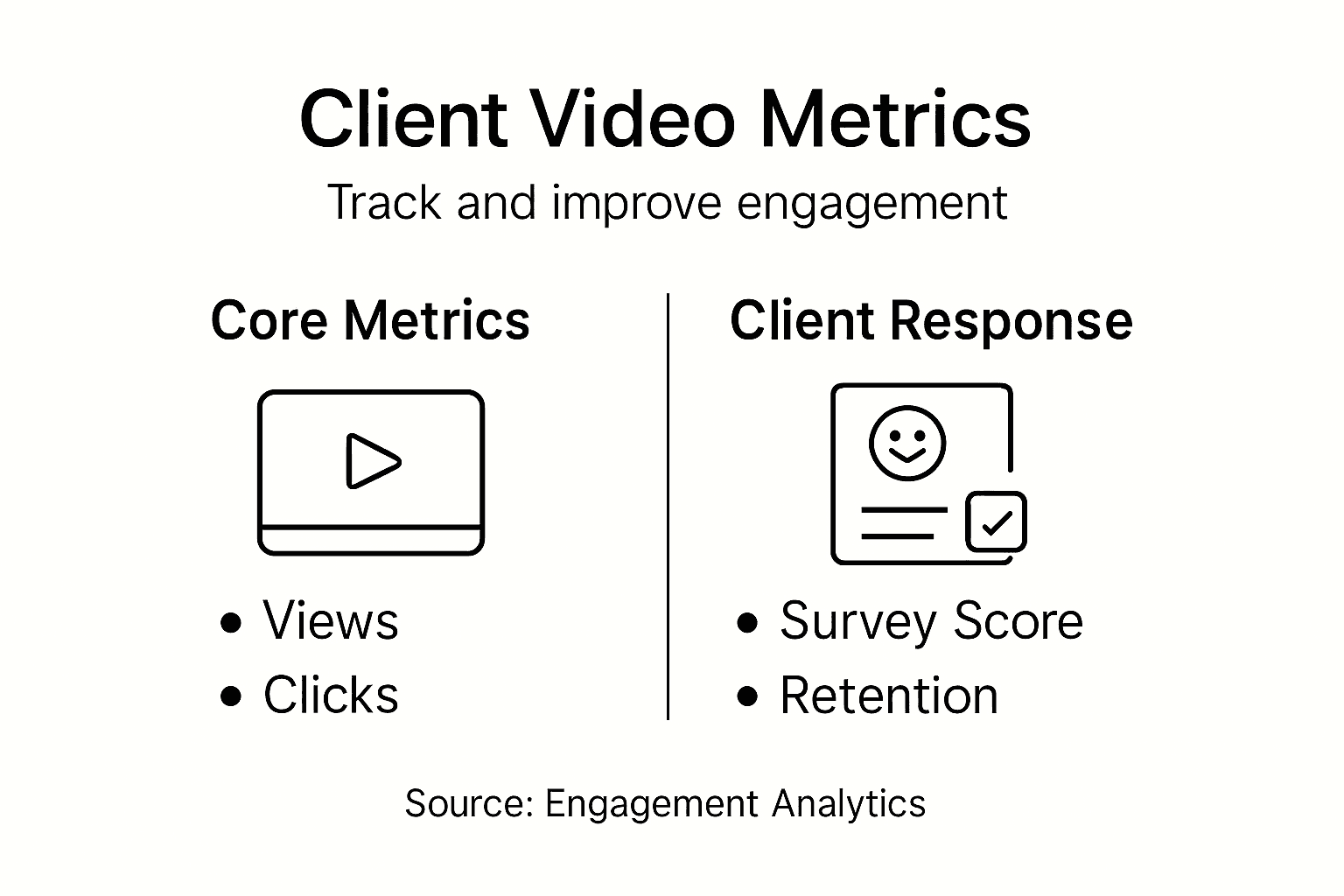
Qualitative assessment is equally important in validating video performance. Implement client satisfaction surveys that capture nuanced feedback about your video content. Ask specific questions about emotional response, clarity of message, and perceived value. Encourage open ended comments that provide deeper insights into viewer perceptions. Cross reference quantitative data with qualitative feedback to develop a comprehensive understanding of your video strategy’s impact. Look for patterns in viewer responses that might indicate areas for improvement or highlight particularly successful narrative approaches.
Remember that validation is an ongoing process. Regular analysis and iteration are key to maintaining and improving your video engagement strategy. Set up quarterly review cycles where you comprehensively assess your video performance metrics and gather comprehensive client feedback. Be prepared to make strategic adjustments based on your findings.
Pro tip: Create a standardized feedback template to ensure consistent and actionable insights across different video productions.
Elevate Your Client Engagement with Tailored Video Solutions
The challenge of transforming passive viewers into active, engaged clients is at the heart of effective video marketing. This article highlights how defining clear metrics, choosing the right video formats, and crafting authentic scripts can dramatically boost engagement. At Tulip Films, we understand these pain points and specialize in creating high-quality audiovisual content that connects brands to their audiences emotionally while delivering measurable business results. We focus on personalized video production that aligns with your unique goals and audience preferences.
By partnering with us, you gain access to professional expertise in visual storytelling, expert script development, and compelling production values designed to maximize your video performance and client satisfaction. Whether you need corporate videos, promotional ads, or event coverage, our Swiss-based team will work closely with you to build a strong brand connection through visuals that matter.
Are you ready to transform your engagement strategy and see tangible outcomes from your video content?
Explore how Tulip Films can tailor videos to your business objectives at our website. Start planning your project today with a free consultation and take the first step toward captivating your audience with videos that deliver impact and drive action.
Frequently Asked Questions
How can I define effective client engagement goals for my video strategy?
To define effective client engagement goals, start by identifying specific business objectives that your video content should achieve, such as increasing customer interaction rates or improving brand visibility. Break these objectives into measurable targets, like boosting video view retention by 25% within 60 days.
What video formats are most effective for engaging different audience types?
Different video formats serve unique purposes; for instance, tutorials are great for professional audiences, while animated explainers work well for younger viewers. Experiment with various formats, such as live videos or testimonials, and track engagement metrics to determine which formats resonate best with your target audience.
How do I create a compelling video script that connects with my audience?
To create a compelling video script, start by identifying your audience’s pain points and desires, then craft a narrative that emotionally connects with them. Use a strong opening hook and ensure your script flows naturally, aiming for a clear call to action by the end of your video.
What are the key aspects of producing high-quality visuals for my videos?
Producing high-quality visuals involves establishing a consistent visual style that aligns with your brand identity and using professional equipment for filming. Focus on creating visuals that tell a story and evoke emotions, and consider gathering feedback from viewers after production to refine your approach.
How can I validate the performance of my videos and gauge client satisfaction?
To validate video performance, track key metrics such as view count, audience retention, and engagement rates to assess effectiveness. Additionally, implement client satisfaction surveys to gather qualitative feedback, and conduct regular reviews to identify areas for improvement in your video strategy.
Recommended
