Engaging Business Video Tips for Swiss Brands Success


Over 90 percent of top marketers believe that clear audience targeting and strong video goals drive real results. With business videos flooding every platform, understanding exactly who you want to reach and what you want to achieve quickly separates engaging content from wasted effort. By building a strategy on these foundations, you unlock the full power of visual storytelling and learn how to create videos that capture attention and spark action.
Table of Contents
Quick Summary
Key Point | Explanation |
1. Understand your audience deeply | Create detailed personas that reflect behaviors and challenges to tailor your video’s message effectively. |
2. Set specific video goals | Define clear, measurable goals aligned with your overall business objectives to guide your video creation. |
3. Develop compelling narratives | Focus on a single powerful idea to create engaging and relatable storytelling that resonates with viewers. |
4. Ensure high production quality | Invest in quality visuals and audio to enhance your message and establish credibility with your audience. |
5. Analyze video performance regularly | Track key metrics and viewer engagement to refine your content strategy for future video projects. |
Step 1: Identify audience and video goals
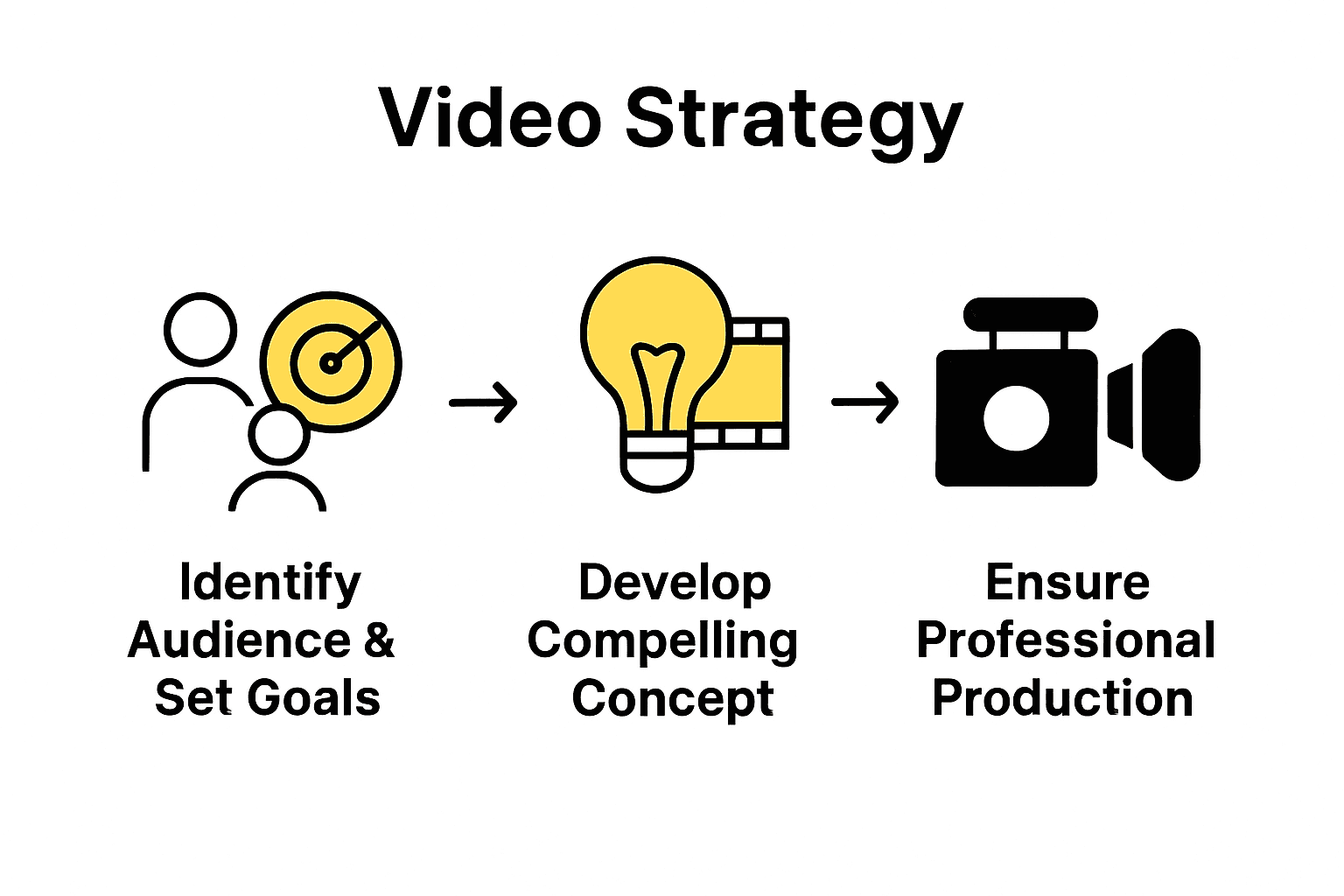
Successful business videos begin with crystal clear audience understanding and strategic goal definition. By pinpointing exactly who you want to reach and what you want to achieve, you create a powerful foundation for compelling visual storytelling.
According to UNDP, an audience-centric approach is essential for tailoring your message effectively. Start by developing detailed audience personas that go beyond basic demographics. Consider their behaviors, interests, professional challenges, and communication preferences. Ask yourself key questions: What problems does your target audience face? What motivates them? What type of video content would they find most engaging?
Your video goals should be specific, measurable, and aligned with broader business objectives. Are you aiming to increase brand awareness, generate leads, educate customers, or showcase a new product? As Kentucky Department of Education suggests, your multimedia content must align precisely with your project objectives. Pro tip: Write down 2-3 concrete, achievable goals that your video will accomplish.
Before moving to the next stage of video production, validate your audience insights and goals with quick market research or feedback from team members. This initial groundwork will dramatically improve your video’s potential for success.
Step 2: Develop a compelling video concept
Crafting a compelling video concept transforms your marketing strategy from ordinary to extraordinary. This critical stage bridges your audience understanding with creative storytelling that captivates and motivates viewers.
According to Resource Media, the key is to create a narrative that entices immediate action without overwhelming your audience. Start by distilling your core message into a single powerful idea. What single emotion or insight do you want viewers to experience? Your concept should be clear, focused, and designed to resonate deeply with your target audience.
Sports Society emphasizes selecting the right video format to match your organizational goals. Consider whether a monologue, dialogue, animation, or documentary style will best convey your message. Some formats work better for educational content, while others excel at emotional storytelling. Pro tip: Storyboard your concept first, mapping out key scenes and emotional beats to ensure your narrative flows smoothly and maintains viewer engagement.
Remember that authenticity trumps perfection. Your video concept should feel genuine, not overly produced. As you move forward, stay true to your brand voice while creating a story that connects with your audience on a human level.
Step 3: Script and storyboard for clarity
Transforming your video concept into a clear narrative requires strategic scripting and visual planning. This crucial stage transforms abstract ideas into a concrete roadmap for your video production.
According to Kentucky Department of Education, effective multimedia projects depend on meticulous documentation and creative mapping. Start by creating a comprehensive flowchart or storyboard that breaks down your video into distinct scenes and visual sequences. Use lists, journals, or sketches to capture and organize your creative ideas systematically.
Resource Media recommends simplifying your message to ensure audience understanding. Draft a script that communicates your core concept clearly and concisely. Each scene should have a specific purpose and move your narrative forward. Pro tip: Read your script aloud to check for natural flow and eliminate unnecessary complexity. Aim for language that feels conversational and authentic.
Remember that your script and storyboard are living documents. Be prepared to iterate and refine them as your concept evolves. The goal is creating a compelling visual narrative that resonates with your target audience while maintaining crystal clear communication.
Step 4: Produce with professional visuals and audio
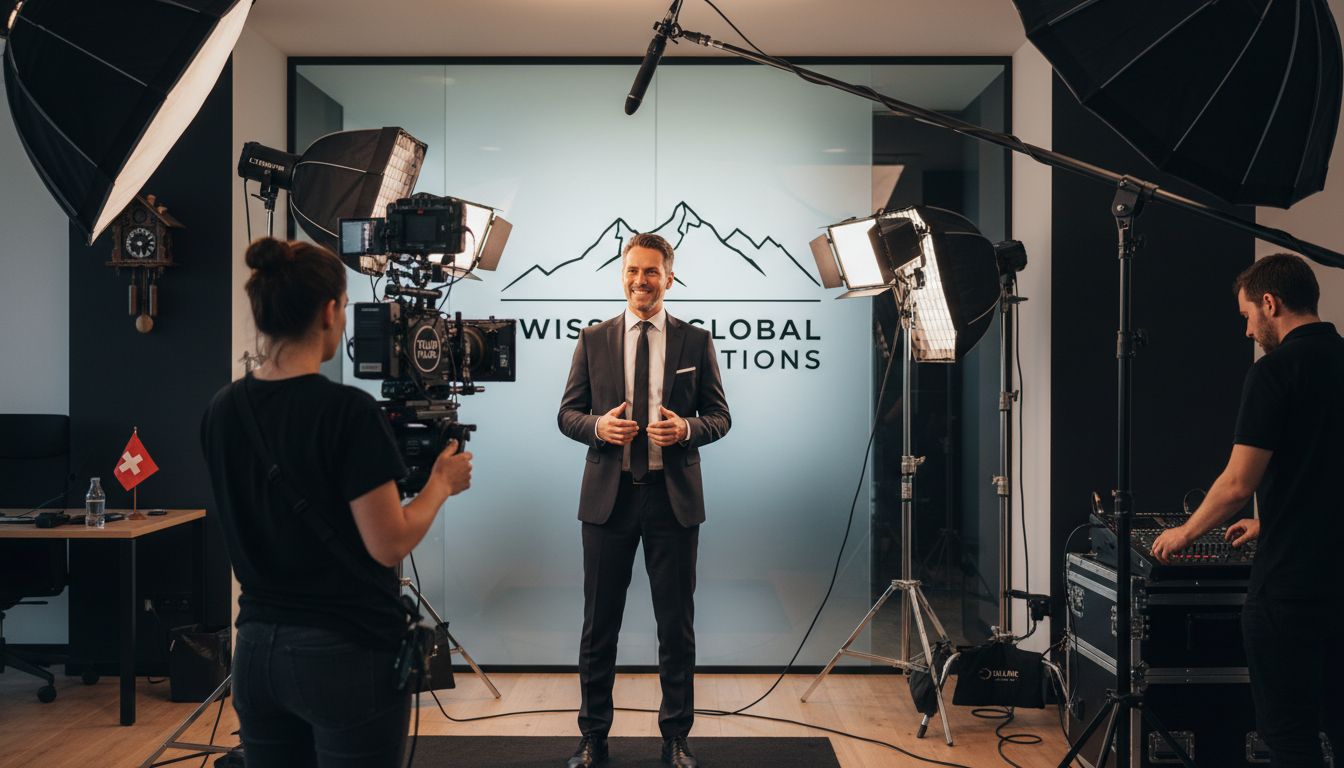
Transforming your carefully crafted script into a polished video requires meticulous attention to visual and audio quality. Professional production elevates your brand message from ordinary to extraordinary.
Sports Society emphasizes creating videos that are not just informative but authentically compelling. Invest in high quality equipment like professional cameras, microphones, and lighting to capture crisp visuals and clear sound. Your visual composition should be intentional every single moment professional gear helps create that polished look that communicates credibility.
Resource Media recommends understanding your audience’s viewing environment to tailor production elements effectively. Consider the platforms where your video will be watched desktop, mobile, or large screens and adjust your technical approach accordingly. Pro tip: Always use external microphones for superior audio quality and invest in stable camera mounting to eliminate unwanted shakiness.
Remember that technical perfection serves your storytelling. Your production quality should enhance your message without overshadowing the genuine human connection at the heart of your video.
As you move forward, balance professional polish with authentic emotional engagement.
Step 5: Optimize video for platforms and sharing
Creating an outstanding video is only half the battle strategic distribution determines your content’s true impact and reach. Platform optimization transforms your video from a standalone piece into a dynamic marketing asset.
Tech Journal reveals that social media videos receive significantly more shares compared to text and image content. This means you must customize your video for each platform. Consider creating different video formats vertical for Instagram stories, horizontal for YouTube, square for LinkedIn and adjust your video length accordingly. Trim longer videos into bite sized clips that maintain your core message while fitting platform specific requirements.
Resource Media recommends simplifying your message and investing strategically in both organic and paid promotion. Pro tip: Always include platform appropriate captions, relevant hashtags, and engaging thumbnails to increase visibility. Ensure your video loads quickly and looks crisp across different devices and screen sizes.
Remember that successful video distribution is about understanding viewer behaviors and platform dynamics. Your goal is creating content that not only looks professional but also travels seamlessly across digital landscapes.
Step 6: Review and refine video performance
The journey of video marketing does not end with publishing your content but continues through strategic performance analysis. Understanding how your video resonates with audiences enables continuous improvement and more effective communication.
Venture World highlights key metrics crucial for evaluating video success. Focus on tracking view count, engagement rate, click-through rate, and conversion metrics. These numbers tell a story beyond surface level interactions revealing how deeply your content connects with viewers. Analyze which segments of your video generate the most interest and where potential viewers might lose attention.
Resource Media recommends diving deep into audience analytics to inform future content strategies. Pro tip: Compare performance across different platforms and audience segments. Look for patterns in viewer demographics, watch duration, and interaction rates. This data becomes your roadmap for creating more targeted and compelling video content in future campaigns.
Remember that video performance analysis is an ongoing process. Treat each video as a learning opportunity to refine your storytelling approach and better understand your audience’s preferences.
Elevate Your Swiss Brand with Expert Business Video Production
Many Swiss brands struggle to create videos that genuinely connect with their target audience and clearly communicate their business goals. The article highlights key challenges including defining precise audience personas, crafting authentic narratives, and optimizing content for different platforms. These steps require a partner that understands not just video production but the full strategy behind effective storytelling.
At Tulip Films, we specialize in transforming your unique brand message into engaging audiovisual experiences tailored to your audience. By focusing on clarity, authenticity, and platform-specific formats, we help you overcome common pain points like unclear scripting, lack of professional polish, and ineffective distribution. Our personalized approach ensures your videos inspire genuine connection while driving measurable results.
Experience how professional production meets strategic insight by visiting Tulip Films. Whether you need captivating corporate videos or compelling promotional ads, our dedicated team works quickly to bring your vision to life.
Are you ready to create videos that truly engage and convert your audience?
Start your journey with a free consultation at Tulip Films and explore how expert video solutions can elevate your Swiss brand today. Visit us now and see your story come to life through powerful visuals and sound.
Frequently Asked Questions
How can I identify my target audience for business videos?
To identify your target audience, develop detailed audience personas that encompass behaviors, interests, and challenges. Conduct quick market research to gather insights and validate your findings within 2–3 weeks.
What are effective video goals for Swiss brands?
Effective video goals should be specific and measurable, such as increasing brand awareness by 30% or generating 100 new leads. Clearly define 2–3 goals that align with your overall business objectives to guide your video content.
What key elements should I include in my video concept?
Your video concept should focus on a single powerful idea that resonates with your audience. Start by brainstorming emotional insights and mapping out key scenes in a storyboard to ensure clarity and engagement.
How can I optimize my video for different platforms?
To optimize your video for various platforms, customize formats and dimensions accordingly, such as vertical for stories and horizontal for YouTube. Ensure your video includes engaging captions and relevant hashtags to enhance visibility and engagement.
What metrics should I track to evaluate my video performance?
Track key metrics such as view count, engagement rate, and conversion metrics to evaluate video success. Use these insights to inform your future video strategies and refine content approaches within each campaign.
Recommended
