Master Property Video Storytelling: A Strategic Guide

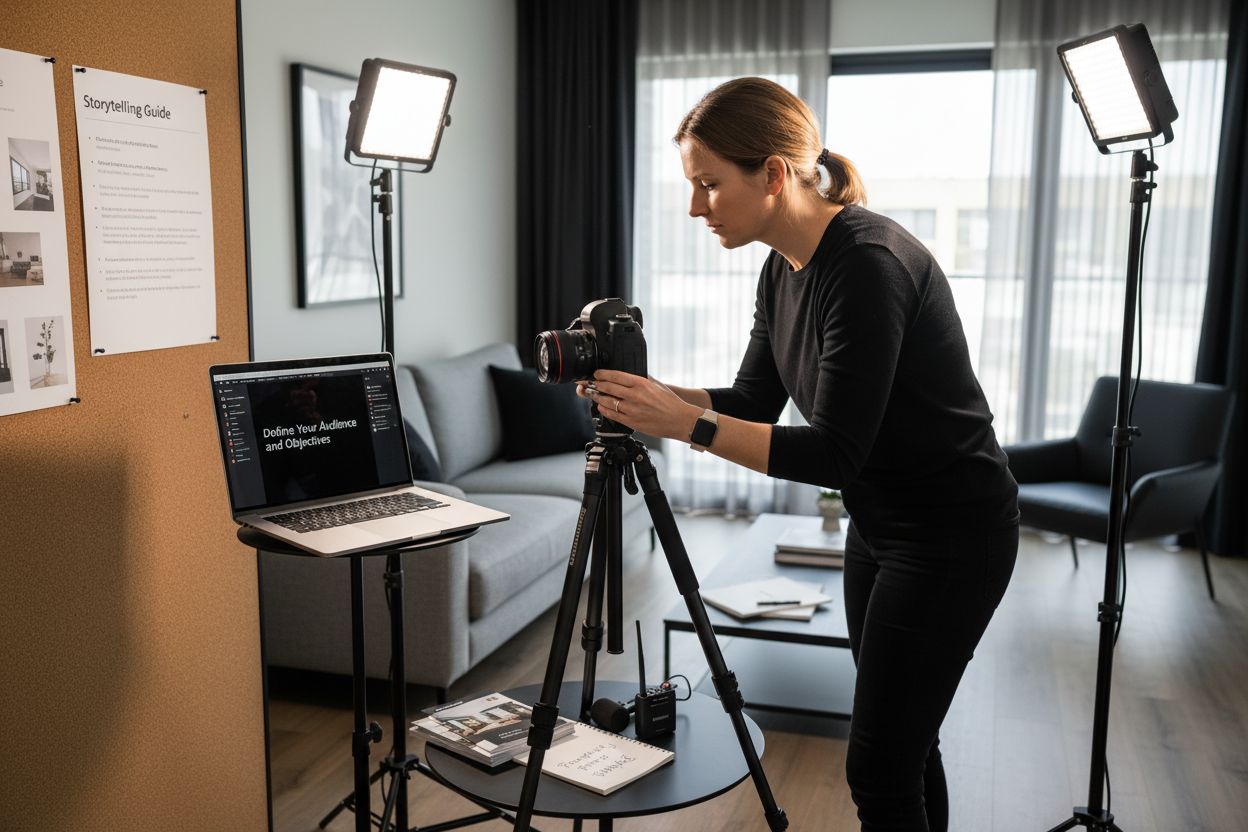
Property videos are everywhere right now and real estate pros are pouring time and money into visual storytelling. But here’s a curveball. Most videos only scratch the surface and ignore what actually drives people to act. By unlocking audience insights, brands can see up to 300 percent higher engagement rates compared to generic video marketing. The difference between a forgettable listing and a property that sells fast all comes down to this first step.
Table of Contents
Quick Summary
Key Point | Explanation |
1. Define Your Audience Clearly | Understand your audience’s demographics, motivations, and preferences to tailor your video content effectively. |
2. Develop Comprehensive Viewer Personas | Create detailed personas to focus your narrative on the specific needs and aspirations of potential clients. |
3. Create a Structured Storyboard | Outline your video’s narrative framework with emotional and informational touchpoints to guide production. |
4. Invest in Quality Equipment | Select professional camera gear, lighting, and audio tools that enhance your storytelling capabilities. |
5. Analyze Audience Engagement Metrics | Use analytics to evaluate video performance and refine future content based on viewer behavior. |
Step 1: Define Your Audience and Objectives
Successful property video storytelling begins with crystal clear understanding of who you are speaking to and what you want to achieve. This foundational step determines the entire trajectory of your video strategy, transforming generic content into a targeted communication tool that resonates deeply with your intended viewers.
Identifying your target audience requires strategic profiling beyond basic demographics. Real estate video storytelling demands nuanced insights into potential clients psychological drivers, lifestyle preferences, and specific property interests. A first time homebuyer will connect differently with video content compared to luxury property investors or commercial real estate professionals. Your video narrative must speak directly to their unique aspirations, challenges, and decision making criteria.
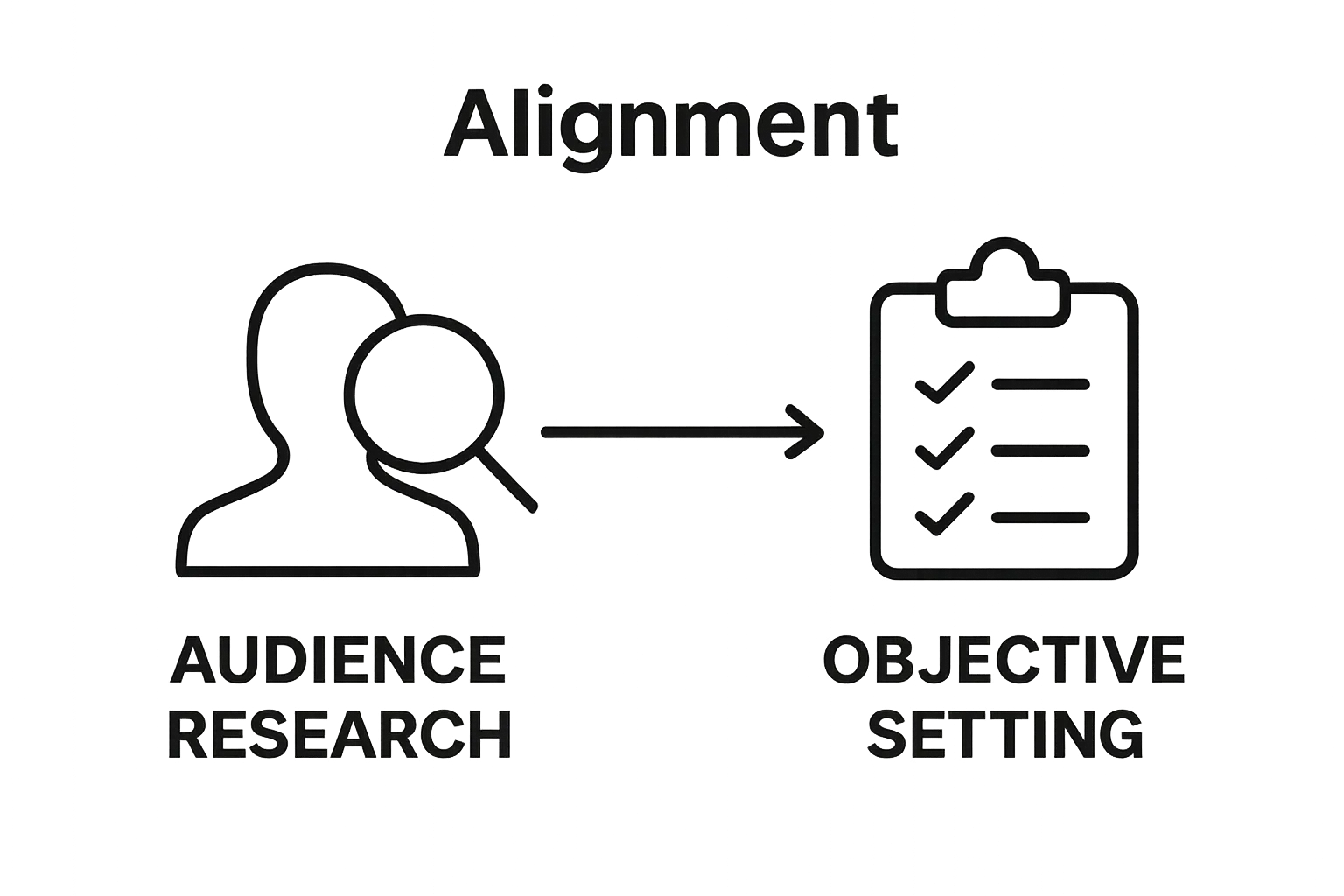
To effectively map your audience, consider developing comprehensive viewer personas that encompass more than surface level characteristics. Research potential client motivations, including their professional backgrounds, income ranges, family structures, and specific property search goals. Are they young professionals seeking urban apartments? Families looking for suburban homes? Investors scanning commercial real estate opportunities? Each segment requires a distinctly crafted visual narrative.
Parallel to audience definition, crystallize your objectives with remarkable precision. What specific outcomes do you want this property video to generate? Your goals might include generating qualified leads, increasing property visibility, showcasing unique property features, or establishing brand credibility within specific market segments. Each objective demands a tailored storytelling approach.
Successful video storytelling integrates audience insights with strategic objectives through meticulous planning. According to Content Marketing Institute, organizations that align their content precisely with audience needs see up to 300% higher engagement rates. By investing time in comprehensive audience and objective mapping, you transform property videos from generic visual content into powerful communication instruments that genuinely connect and convert.
Verification checklist for completing this step:
Detailed audience persona developed
Specific viewer segments identified
Clear video objectives outlined
Preliminary narrative themes mapped to audience motivations
Step 2: Plan Your Storyboard and Script
Transforming audience insights into a compelling property video narrative requires meticulous storyboarding and scriptwriting. This critical phase translates your strategic objectives into a visual roadmap that guides every aspect of production, ensuring your message resonates powerfully with intended viewers.
Begin by creating a structured narrative framework that connects emotionally and informationally. Visualize the property journey from the audience perspective, mapping out key emotional and rational touchpoints. Your script should not merely describe physical features but tell a story that allows potential buyers or investors to imagine themselves within the space. Start with an engaging opening that captures attention quickly, then develop a narrative arc that progressively reveals the property’s most compelling attributes.
Technical script development demands precision and creativity. Break down your narrative into clear segments: introduction, property showcase, unique selling points, and compelling conclusion. Each segment should serve a specific purpose in guiding viewer engagement.
For residential properties, this might mean highlighting lifestyle possibilities. For commercial spaces, focus on potential business advantages and spatial functionality.
Storyboarding requires translating your script into visual sequences. Sketch or digitally map each scene, indicating camera angles, movement, and key visual elements. Consider using digital tools like Storyboarder or professional software that allows detailed shot planning. Prioritize visual storytelling techniques that create emotional connection: showcase natural lighting, capture space transitions, highlight architectural details that distinguish the property.
According to Content Marketing Institute, well-planned video content can increase viewer retention by up to 60%. Your storyboard serves as a crucial blueprint, ensuring every frame contributes meaningfully to your communication goals.
Verification checklist for completing this step:
Comprehensive script draft completed
Storyboard with detailed scene descriptions
Visual narrative mapped to audience motivations
Key emotional and informational points identified
Step 3: Gather Equipment and Set Up Your Studio
Equipping your property video production space requires strategic investment in quality tools that balance professional performance with budget considerations. This critical setup phase transforms your creative vision into tangible visual storytelling capabilities, ensuring you can capture compelling property narratives with technical precision.
Camera selection represents the cornerstone of your equipment arsenal. While professional grade cameras offer superior quality, modern mirrorless and DSLR models provide exceptional video capabilities at more accessible price points. Look for cameras with strong low light performance, 4K resolution, and good dynamic range. Prioritize models with interchangeable lenses that allow flexibility in capturing different property perspectives, from wide architectural shots to detailed interior features.
Lighting equipment demands equally thoughtful selection. Property videos require nuanced illumination that highlights spatial qualities authentically. Invest in adjustable LED panel lights with color temperature controls, allowing you to balance natural and artificial lighting conditions. Soft box lighting kits help eliminate harsh shadows and create professional looking interior shots. Consider portable lighting solutions that enable quick setup across different property environments.
Additional essential equipment includes sturdy tripods with fluid head mechanisms for smooth camera movements, external microphones for clear audio capture, and stabilization tools like gimbals for dynamic property walkthroughs. Audio quality matters significantly in property storytelling, so allocate meaningful budget toward professional grade microphones that capture crisp, clear sound.
According to Professional Photographers of America, investing in versatile equipment that grows with your skills creates long term production value. Your studio setup should balance immediate project needs with potential future expansion.
Below is a summary table of essential equipment needed for effective property video production, including key specifications and each tool’s primary purpose.
Equipment | Key Specifications | Purpose |
Camera | 4K resolution, good low-light, interchangeable lenses | Captures high-quality video content |
LED Panel Lights | Adjustable brightness, color temperature controls | Provides balanced interior lighting |
Soft Box Lighting Kit | Diffuses light, eliminates harsh shadows | Creates professional, soft illumination |
Tripod with Fluid Head | Sturdy build, smooth movement | Stabilizes camera for steady shots |
Gimbal | Portable, motorized stabilization | Enables smooth walkthrough footage |
External Microphone | Professional-grade, clear sound pickup | Ensures crisp, clear audio capture |
Portable Lighting | Lightweight, easy setup | Adds lighting flexibility in different spaces |
Verification checklist for completing this step:
Professional camera with video capabilities selected
Lighting equipment acquired
Audio recording tools secured
Basic stabilization equipment obtained
Studio space prepared for shooting
Step 4: Shoot Dynamic Footage with Engaging Techniques
Crafting compelling property video storytelling demands mastering sophisticated shooting techniques that transform standard property documentation into immersive visual experiences. This crucial production phase translates your strategic planning into captivating visual narratives that emotionally connect with potential buyers or investors.
Camera movement becomes your primary storytelling instrument. Instead of static shots, develop fluid techniques that guide viewers through property spaces naturally. Implement smooth tracking shots that reveal architectural details progressively, creating a sense of spatial discovery. Utilize gentle gimbal movements that simulate human walking patterns, allowing viewers to experience the property as if they were physically present. Vary your shot types strategically: wide establishing shots provide context, medium shots highlight specific features, and close ups capture intricate design elements that communicate property quality.
Lighting and composition play pivotal roles in creating visually stunning property narratives. Natural light represents your most powerful ally. Schedule shoots during golden hours when soft, warm sunlight enhances architectural aesthetics. Position yourself to capture how light interacts with different spaces, revealing depth, texture, and spatial qualities. Experiment with backlighting to create dramatic silhouettes and front lighting to showcase intricate interior details. Always maintain a balanced exposure that preserves details in both bright and shadowed areas.
Elevate Real Estate Videos with Drone Techniques can provide additional insights into aerial cinematography. Incorporating drone footage offers unprecedented perspectives, transforming property showcases from ground level to comprehensive visual experiences. Aerial shots reveal property context, landscape integration, and spatial relationships that ground level photography cannot capture.
According to National Association of Realtors, properties featuring high quality video content receive 403% more engagement than static listings. Your shooting techniques directly influence viewer connection and potential conversion.
Verification checklist for completing this step:
Diverse shot types captured
Smooth camera movements executed
Optimal lighting conditions utilized
Aerial and ground level perspectives recorded
Property narrative visually communicated
Step 5: Edit the Video for Maximum Impact
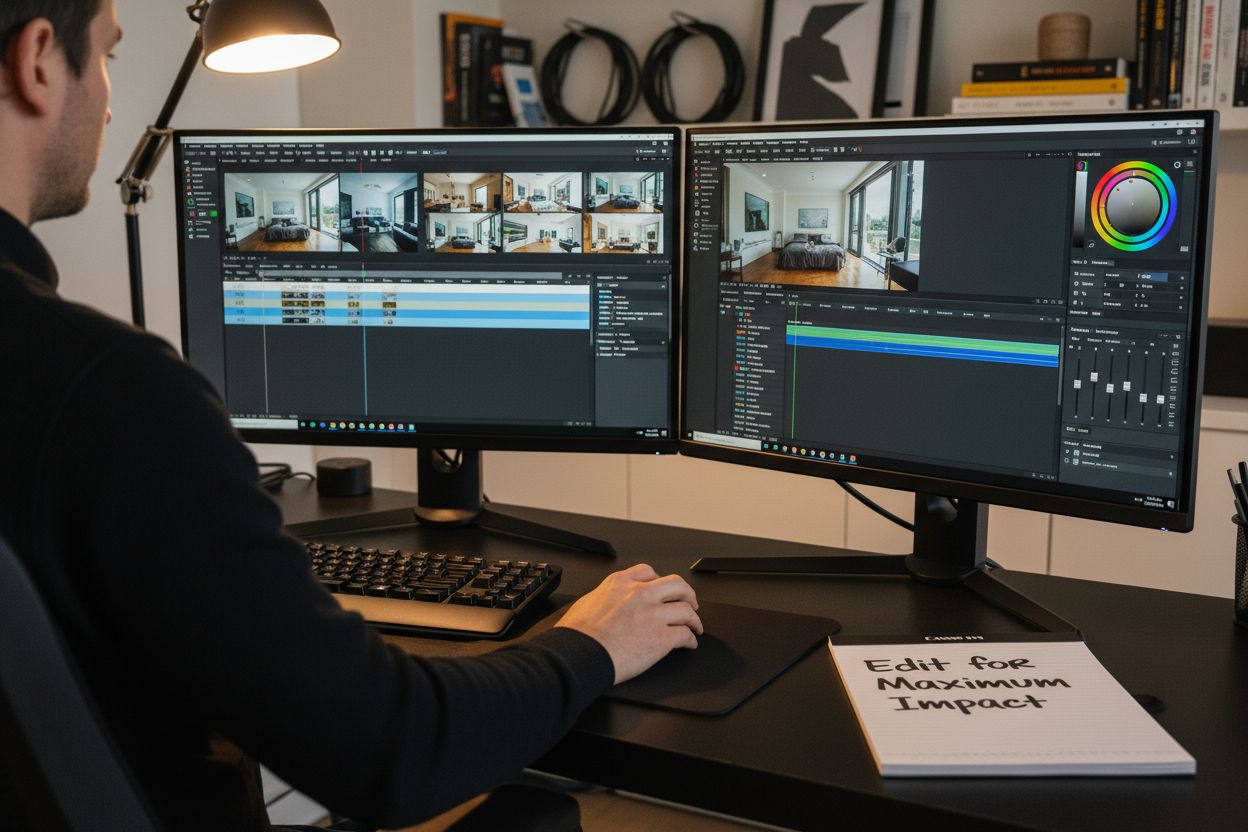
Video editing transforms raw footage into a compelling narrative that captivates and converts potential property buyers. This critical stage refines your visual storytelling, distilling hours of recording into a concise, emotionally resonant experience that communicates property value within minutes.
Narrative pacing becomes your primary editing focus. Begin by selecting the strongest footage that aligns perfectly with your original storyboard and audience objectives. Trim unnecessary segments ruthlessly, maintaining a rhythm that keeps viewers engaged. Most successful property videos run between 2 to 3 minutes, providing enough detail without overwhelming viewers. Use strategic cuts that create smooth transitions between spaces, guiding viewers through the property journey with intentional visual flow.
Color grading and audio enhancement dramatically elevate your video’s professional quality. Adjust color temperatures to create a consistent, inviting visual aesthetic that highlights the property’s best attributes. Normalize audio levels to ensure crisp, clear sound throughout the video. Incorporate subtle background music that complements the property’s style subtle enough to enhance emotion without distracting from the visual narrative. Consider adding gentle sound effects that accentuate spatial transitions or highlight unique property features.
Mastering Your Video Storytelling Workflow for 2025 can provide additional insights into advanced editing techniques. Professional editing software like Adobe Premiere Pro or Final Cut Pro offers advanced tools for creating polished, high impact property videos. Experiment with graphic overlays that provide key property information, using clean typography and minimal design elements that complement rather than overwhelm your visual narrative.
According to Content Marketing Institute, well edited videos can increase viewer retention by up to 60%, transforming passive viewers into potential leads. Your editing process directly influences the video’s ability to communicate property value and emotional connection.
Use the checklist below to verify you have completed all key tasks in the video editing phase. This table converts the step-by-step verification into a scannable format for easy reference.
Task | Description | Complete (Yes/No) |
Footage Trimmed | Video cut to optimal 2-3 minute length | |
Color Grading Applied | Colors adjusted for consistent and appealing visuals | |
Audio Levels Balanced | Sound normalized across entire video | |
Transitions Smoothed | Cuts and scenes flow naturally | |
Graphics/Info Overlays Added | Key details presented with clean visual overlays |
Verification checklist for completing this step:
Footage trimmed to optimal length
Color grading completed
Audio levels balanced
Transitions smoothly implemented
Graphics and information overlays added
Step 6: Share and Analyze the Audience Response
Successful property video storytelling extends beyond production, requiring strategic distribution and meticulous performance analysis. This final step transforms your creative work into a measurable marketing instrument that provides actionable insights for future content optimization.
Platform selection dramatically influences video visibility and engagement. Distribute your property video across multiple channels to maximize reach. Professional platforms like LinkedIn offer excellent targeting for commercial real estate, while Instagram and YouTube provide broader audience exposure for residential properties. Each platform demands slightly different video formatting, so prepare versions that meet specific platform requirements. Optimize video thumbnails, titles, and descriptions to attract potential viewers and communicate property value instantly.
Analytics represent the cornerstone of understanding audience response. Leverage platform specific tracking tools to gather comprehensive performance metrics. Examine key indicators such as view duration, engagement rates, click through rates, and viewer demographics. These data points reveal how effectively your video communicates property value and resonates with intended audiences. Pay special attention to moments where viewers lose interest or replay specific segments, as these insights guide future storytelling strategies.
How to Optimize Video Marketing for Business Success can provide additional strategies for maximizing video performance. Implement A B testing by creating multiple video versions with subtle variations in narrative approach, allowing you to scientifically determine which storytelling techniques most effectively connect with your target audience.
According to Google Marketing Insights, videos that provide clear, targeted information see 300% higher conversion rates compared to generic content. Your analytical approach transforms video from a creative exercise into a strategic business communication tool.
Verification checklist for completing this step:
Video distributed across multiple platforms
Analytics tracking implemented
Audience engagement metrics collected
Preliminary performance insights documented
Potential content refinement strategies identified
Ready to Turn Storyboards into Stunning Sales Tools?
Many real estate professionals struggle to turn complex storyboards and careful planning into a video that captures true buyer attention. Maybe you have felt that frustration too. You invest hours drafting scripts, mapping out scenes, and perfecting property walkthroughs—yet too often, the delivered footage lacks emotional impact or falls flat in converting curious viewers into real leads. The article “Master Property Video Storytelling: A Strategic Guide” highlights exactly those pain points, from connecting with multiple target audiences to achieving the right visual and emotional balance that drives engagement.

Tulip Films understands how every detail, from camera movement to sound design, shapes a property’s story. We work side by side with Swiss businesses, brokers, and agencies to craft made-to-measure real estate videos that go beyond checklist production. With our fast turnaround and obsessive attention to your goals, you can skip the guesswork and see measurable results. Ready to transform your approach from storyboard to screen? Book a free consultation with our team today at Tulip Films and discover how you can level up your property marketing instantly. Your next client is waiting to be inspired—let us help you reach them now.
Frequently Asked Questions
What are the key elements of property video storytelling?
Key elements include understanding your audience, defining clear objectives, developing a structured narrative, and utilizing effective shooting and editing techniques to create an engaging visual experience.
How important is audience profiling in property video storytelling?
Audience profiling is crucial as it helps tailor the video content to resonate with specific viewer motivations, lifestyles, and property interests, enhancing engagement and connection.
What are some effective shooting techniques for property videos?
Effective techniques include using smooth camera movements, maximizing natural light, varying shot types, and incorporating drone footage to showcase properties in a dynamic and visually appealing manner.
How can I analyze the effectiveness of my property video?
You can analyze effectiveness by tracking performance metrics such as view duration, engagement rates, and click-through rates using analytics tools, helping you understand audience response and inform future content strategies.
Recommended
