Role of Storytelling in Video: Complete Guide

Almost 90 percent of what people remember from videos comes from strong storytelling rather than just visual effects or technical quality. Crafting a narrative that resonates goes far beyond simply recording events. For creators and brands, understanding the principles behind video storytelling can mean the difference between forgettable content and memorable impact. Discover how intentional story structure, emotional arcs, and strategic visuals work together to create video experiences viewers never forget.
Table of Contents
Key Takeaways
Point | Details |
Importance of Narrative | Effective storytelling in video transcends documentation by evoking emotions and crafting compelling psychological journeys for audiences. |
Audience Engagement | Successful narratives create deep connections through authenticity, relatability, and emotional resonance, transforming viewers into active participants. |
Techniques and Structure | Strategic techniques like clear narrative arcs, character development, and audio quality enhance storytelling power and viewer impact. |
Common Pitfalls | Avoid narrative fragmentation and misalignment of story elements to maintain coherent, engaging, and emotionally progressive videos. |
Defining Storytelling in Video Production
Storytelling in video production is a sophisticated art of communicating narrative through visual sequences, transforming raw footage into meaningful experiences. According to Oxford Academic, visual storytelling fundamentally involves juxtaposing images to create deliberate meaning, utilizing dramatic narrative beats and strategic camera positioning to engage viewers.
At its core, storytelling transcends mere documentation. Narratology reveals that narrative structures profoundly impact human perception, tracing back to Aristotelian principles of dramatic composition. In video production, this translates to crafting sequences that evoke emotion, communicate complex ideas, and create compelling psychological journeys for audiences.
Effective video storytelling relies on several critical elements:
Purposeful image selection
Emotional narrative arc
Strategic visual progression
Deliberate camera techniques
Coherent thematic development
The goal isn’t simply to record events but to transform visual information into a resonant, memorable narrative experience.
Why Use Video Storytelling becomes crucial when brands and creators understand that stories don’t just communicate information - they create connections, provoke responses, and leave lasting impressions on viewers.
Narrative Structures and Video Categories
Narrative structures form the backbone of compelling video storytelling, providing a framework that transforms raw visual content into meaningful experiences. According to Wikipedia’s entry on Constructing a Story, pioneering storytelling theorist Yves Lavandier demonstrates how narrative principles apply across multiple visual mediums, from cinema to television, illustrating complex storytelling techniques through iconic examples like ‘Once Upon a Time in the West’.
Modern video production encompasses diverse narrative categories that extend beyond traditional linear storytelling. Transmedia storytelling represents a sophisticated approach where a single narrative can be adapted across multiple platforms, emphasizing unique audience engagement strategies and medium-specific content interpretations. This approach allows creators to craft rich, multilayered storytelling experiences that transcend single-format limitations.
Key video narrative categories include:
Documentary narratives
Fictional storytelling
Promotional narratives
Corporate communication stories
Personal brand journeys
What is Video Storytelling? Complete Guide for 2025 reveals that each narrative category requires distinct storytelling techniques. Successful video creators understand how to tailor their approach, using strategic narrative structures that resonate with specific audience expectations and emotional triggers, transforming simple visual sequences into powerful communication tools.
Techniques for Crafting Compelling Stories
Storytelling techniques transform ordinary video content into extraordinary narrative experiences. Oxford Academic provides comprehensive guidance on film and video storytelling, highlighting the critical importance of strategic approaches across preproduction, shooting, and postproduction phases that elevate narrative impact.
Sound design plays a crucial role in storytelling that many creators overlook. According to Wikipedia’s resource on Producing Great Sound for Film and Video, expert Jay Rose emphasizes that audio quality can dramatically enhance narrative depth, turning technical recordings into emotionally resonant experiences. The right sound can transform visual sequences from mere documentation to powerful storytelling.
Key storytelling techniques include:
Establishing clear narrative arcs
Creating emotional character connections
Using visual metaphors
Maintaining narrative tension
Crafting meaningful transitions
7 Video Storytelling Techniques for Swiss Brands demonstrates that successful storytelling isn’t about complex technology, but about understanding fundamental human emotional triggers. Professional video creators know how to balance technical skills with genuine narrative creativity, turning simple sequences into memorable experiences that engage and inspire audiences.

Impact of Storytelling on Audience Engagement
Audience engagement represents the critical intersection where narrative meets emotional connection. ArXiv research reveals a groundbreaking framework for generating storytelling videos that strategically customize existing clips to maximize viewer interaction, demonstrating how intentional narrative design can transform passive viewing into active emotional experiences.
Storytelling’s psychological power lies in its ability to create deep, neurological connections with viewers. When a narrative resonates, it triggers empathy, activates mirror neurons, and transforms abstract information into memorable, visceral experiences. This neurological engagement means viewers don’t just watch a story - they live it, feel it, and internalize its core message far more effectively than through traditional informational delivery.
Key elements that drive audience engagement include:
Authentic emotional narratives
Relatable character journeys
Unexpected narrative twists
Compelling visual metaphors
Genuine human connection points
Understanding the Role of Storytelling in Videos underscores that successful engagement isn’t about technical perfection, but about creating genuine human connections. The most powerful stories transcend mere information, becoming shared experiences that bridge the gap between creator and audience, transforming viewers from passive observers to active participants in the narrative journey.
Common Mistakes in Storytelling for Video
Narrative fragmentation represents one of the most critical challenges in video storytelling. ArXiv research on video segmentation highlights the fundamental difficulties creators encounter when attempting to transform raw footage into coherent storytelling sequences, revealing that many videos fail due to poorly structured narrative progressions.
According to research examining narrative coherence, another significant storytelling mistake emerges from misalignment between video segments and intended narrative synopses. Creators often struggle to maintain a consistent storytelling thread, resulting in disjointed experiences that confuse and disengage viewers. This disconnection can transform potentially powerful narratives into meandering, ineffective visual content.
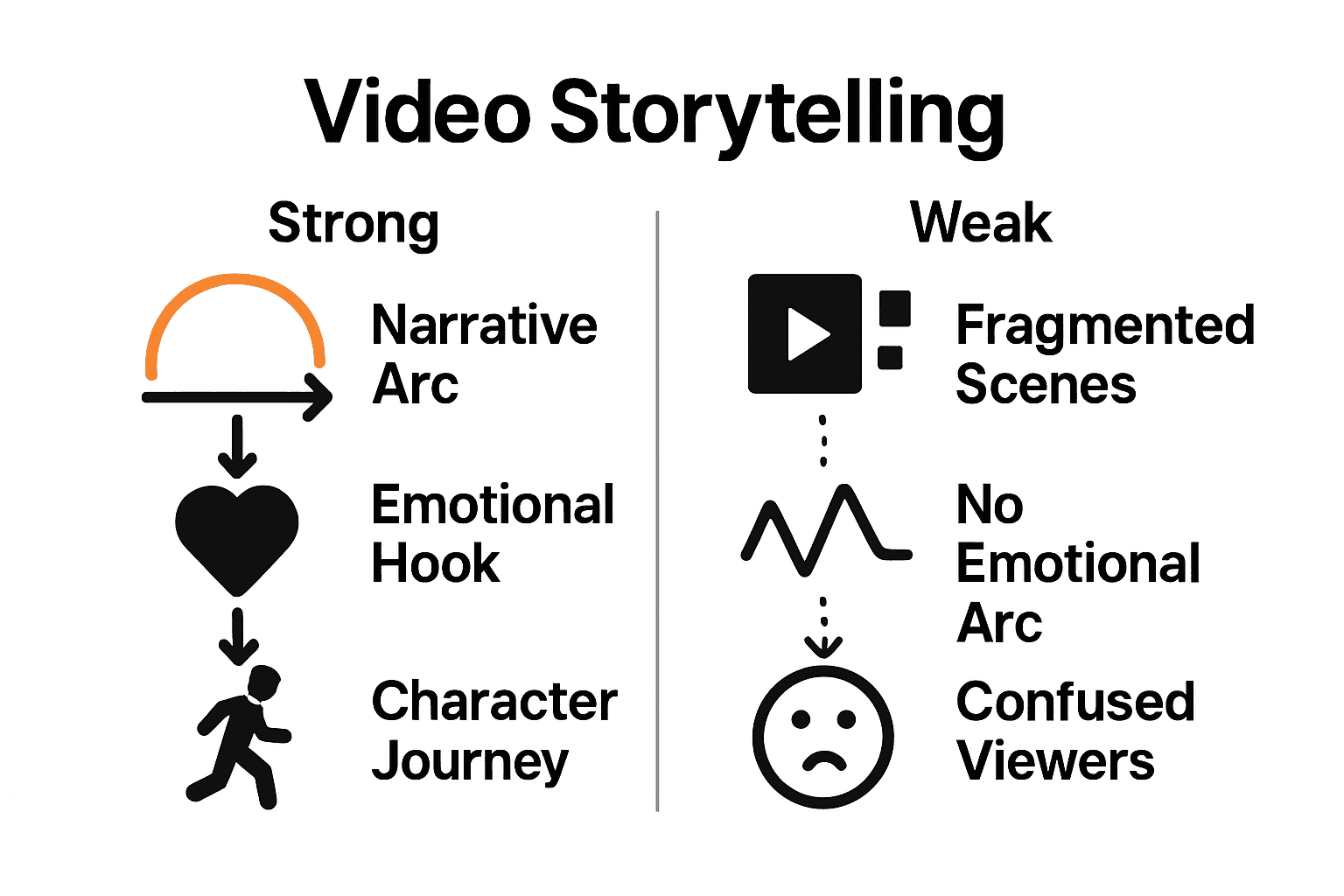
Common storytelling mistakes include:
Weak narrative structure
Inconsistent character development
Lack of emotional progression
Overcomplicating the narrative
Neglecting audience perspective
Solving Script Issues in Corporate Films underscores that successful storytelling demands more than technical proficiency. The most compelling videos seamlessly blend technical execution with authentic, purposeful narrative design, transforming potential missteps into opportunities for genuine audience connection.
Elevate Your Brand with Powerful Video Storytelling
Struggling with creating video content that truly connects and engages your audience? The challenge many face is transforming raw footage into a clear narrative that resonates emotionally and drives viewer engagement. Your story deserves more than ordinary visuals — it needs purposeful image selection, emotional arcs, and strategic storytelling methods to create memorable experiences that build real connections.
Tulip Films specializes in crafting these authentic narratives with a personalized approach tailored to your unique goals. Whether you want promotional ads that captivate or corporate videos that inspire, we focus on genuine human connection and effective communication. Our work balances technical precision with storytelling creativity to transform your message into a visual journey your viewers live and remember.
Ready to transform your video content into engaging stories that move your audience?

Discover how our expertise can bring your vision to life at Tulip Films. Explore our portfolio of recent projects to see real examples of storytelling done right. Start building deeper audience engagement today by planning a free consultation with our team here. Act now and turn your ideas into stories that truly connect.
Frequently Asked Questions
What is the importance of storytelling in video production?
Storytelling in video production is crucial because it transforms simple visual content into meaningful narratives that engage audiences and evoke emotions, fostering deeper connections.
What are the key elements of effective video storytelling?
Key elements include purposeful image selection, an emotional narrative arc, strategic visual progression, deliberate camera techniques, and coherent thematic development.
How does audience engagement relate to storytelling in videos?
Audience engagement is deeply tied to storytelling as powerful narratives create emotional connections, making viewers more likely to resonate with the message and actively participate in the viewing experience.
What are common mistakes to avoid in video storytelling?
Common mistakes include weak narrative structure, inconsistent character development, lack of emotional progression, overcomplicated narratives, and neglecting the audience’s perspective.
Recommended
