Video Briefs: Ensuring Clear Communication in Production


Miscommunication on a video project can waste both time and budget, especially when over sixty percent of American agencies report project delays due to unclear briefs. In Geneva’s competitive business scene, a well-structured video brief becomes your strongest asset for aligning Swiss corporate visions with creative teams. This introduction shares practical guidance so marketing managers can craft briefs that lead to efficient, successful promotional and event videos every time.
Table of Contents
Key Takeaways
Point | Details |
Importance of a Video Brief | A well-crafted video brief aligns corporate stakeholders and production teams, clarifying project expectations and goals. |
Core Components | Effective briefs should include project context, objectives, audience analysis, and technical specifications for smooth production. |
Types of Video Briefs | Different types such as Creative, Production, and Campaign briefs serve distinct business purposes tailored to specific objectives. |
Common Pitfalls | Avoid vague objectives and incomplete analyses, which can lead to miscommunication and project inefficiencies. |
Defining a Video Brief for Corporate Production
A video brief transforms abstract project ideas into actionable production guidelines, serving as a critical communication blueprint between corporate stakeholders and video production teams. This strategic document outlines specific project expectations, goals, and technical requirements that ensure everyone involved understands the visual narrative’s precise objectives.
Effective video briefs typically encompass several core components that guide the production process. How corporate video strategies succeed depend on comprehensive documentation that addresses key elements such as project purpose, target audience, messaging goals, preferred style, budget constraints, and desired outcomes. By meticulously detailing these parameters, organizations can minimize miscommunication and streamline the creative workflow.
The fundamental structure of a robust video brief includes specific sections that provide clarity and direction. These typically include background context about the project, primary communication objectives, audience demographics, preferred tone and style, technical specifications, brand guidelines, and specific deliverable requirements. Marketing managers must articulate not just what they want, but why they want it, helping production teams understand the deeper strategic intent behind the visual content.
Pro tip: Invest time in creating a detailed brief upfront to save significant time and resources during the production process, reducing potential revisions and misunderstandings.
Key Components and Essential Information
A comprehensive video brief requires meticulous attention to critical information elements that transform conceptual ideas into actionable production plans. Corporate video project blueprints serve as strategic roadmaps, ensuring all stakeholders understand the project’s fundamental objectives and expectations.

The essential components of an effective video brief typically include several key sections that provide comprehensive guidance. These components encompass project background, specific communication objectives, target audience analysis, messaging strategy, creative direction, technical specifications, brand alignment, budget constraints, and specific deliverable requirements. Marketing managers must craft each section with precision, offering clear context that enables production teams to translate strategic vision into compelling visual narratives.
Detailed documentation within the video brief helps prevent potential misunderstandings and streamlines the entire production workflow. Critical sections should include:
Project Context: Background information explaining the video’s purpose
Business Objectives: Specific goals and key performance indicators
Target Audience Profile: Demographic and psychographic details
Messaging Framework: Core communication points and desired emotional response
Creative Guidelines: Preferred style, tone, and visual aesthetic
Technical Requirements: Format, duration, resolution, and distribution channels
Pro tip: Create a standardized video brief template for your organization to ensure consistent, comprehensive documentation across all video production projects.
Types of Video Briefs for Business Needs
Businesses require diverse video brief approaches tailored to specific project objectives and communication strategies. Unique video brief configurations emerge based on project complexity, collaboration requirements, and intended outcomes, ensuring each video production meets precise organizational needs.
The primary types of video briefs can be categorized into several key formats, each serving distinct business communication purposes:
Creative Brief: Focuses on artistic direction, narrative approach, and emotional messaging
Production Brief: Emphasizes technical specifications, logistical requirements, and practical execution details
Campaign Brief: Aligns video content with broader marketing strategy and specific campaign goals
Internal Communication Brief: Tailored for employee engagement and organizational messaging
External Marketing Brief: Designed to attract customers, showcase products, or enhance brand perception
Recruitment Brief: Specialized format for creating employer branding and talent attraction videos
Each brief type demands a nuanced approach, requiring marketing managers to carefully match the documentation style with the project’s specific objectives. The depth and focus of the brief will vary significantly depending on whether the video targets internal stakeholders, potential customers, or broader audience segments. Technical details, creative expectations, and strategic alignment must be meticulously documented to ensure successful video production.
Here’s a quick overview of how each video brief type supports distinct business objectives:
Brief Type | Primary Purpose | Typical Use Case | Key Advantage |
Creative Brief | Define artistic vision and storytelling | Brand campaigns, product launches | Enhances emotional resonance |
Production Brief | Specify technical/logistical needs | Animation, location shoots | Prevents technical issues |
Campaign Brief | Align video with marketing goals | Multi-channel promotions | Boosts cross-platform impact |
Internal Communication | Strengthen organizational messaging | Staff training, CEO messages | Improves workforce alignment |
External Marketing Brief | Drive customer engagement | Product demos, testimonials | Grows brand awareness |
Recruitment Brief | Promote employer brand appeal | Hiring campaigns, job fairs | Attracts targeted talent |
Pro tip: Develop a flexible brief template that can be easily customized across different video project types, allowing for consistent yet adaptable documentation.
Role in Effective Communication With Production Teams
Video briefs serve as the critical communication bridge between marketing strategists and production teams, transforming abstract concepts into tangible visual narratives. Effective corporate communication strategies depend on precise, comprehensive documentation that eliminates ambiguity and aligns creative vision with strategic objectives.
The primary function of a video brief in team communication is to create a shared understanding that transcends individual interpretations. By providing clear, detailed guidance, the brief acts as a strategic blueprint that outlines:
Specific project goals and expectations
Desired emotional tone and messaging
Target audience characteristics
Brand guidelines and aesthetic preferences
Technical and creative constraints
Measurable performance indicators
Successful communication through video briefs requires more than just documenting requirements. It demands a collaborative approach that encourages dialogue, welcomes creative input, and establishes a framework for ongoing interaction between marketing managers and production professionals. Marketing teams must articulate not just what they want, but why each element matters, helping production teams understand the deeper strategic context behind the visual storytelling.
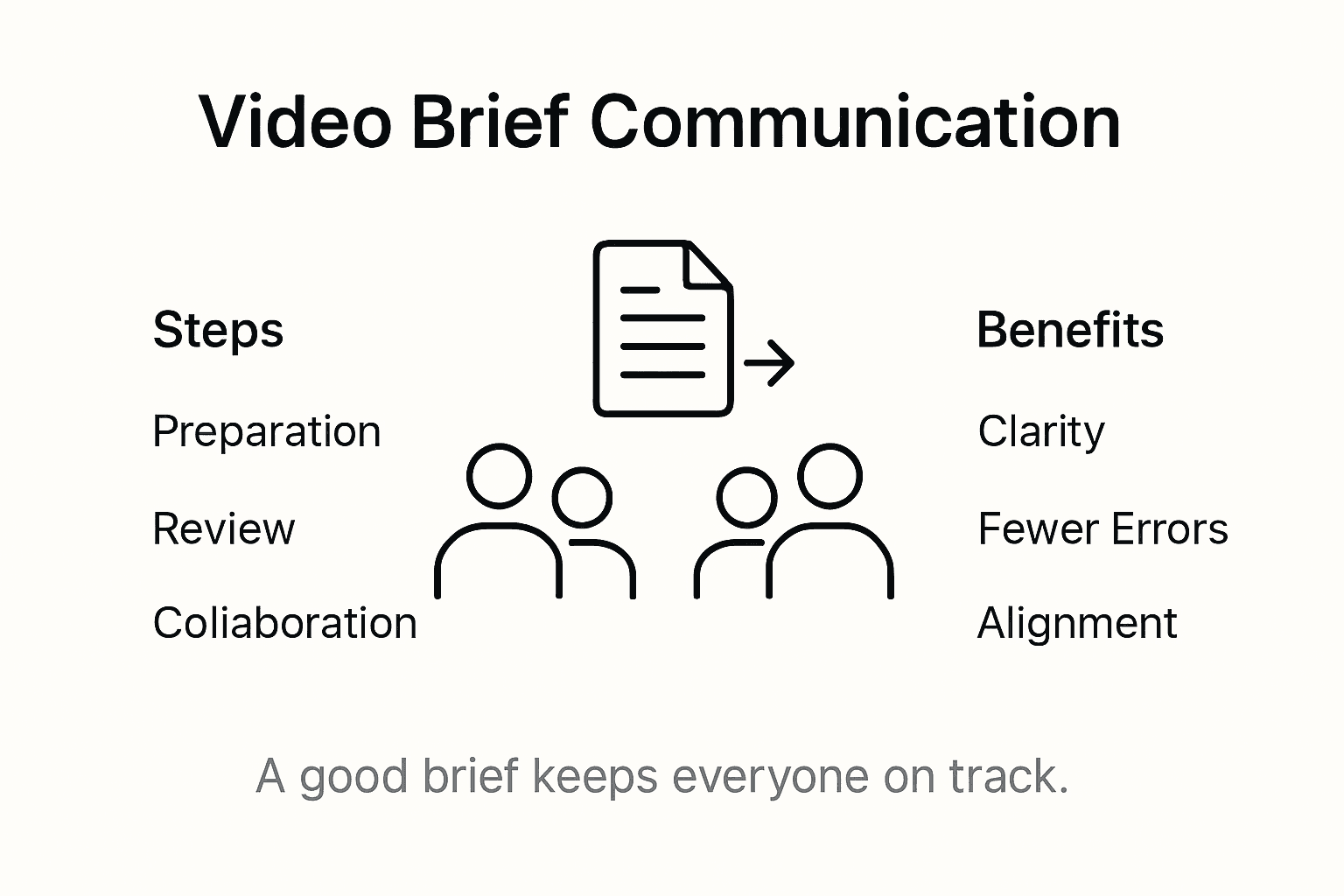
Pro tip: Schedule an initial brief review meeting with key production team members to walk through the document collaboratively, ensuring mutual understanding and addressing potential questions or clarifications upfront.
Common Mistakes and Risks to Avoid
Corporate video production involves numerous potential pitfalls that can derail project success, with many stemming from inadequate or poorly constructed video briefs. Common video brief mistakes undermine project effectiveness by creating communication gaps, misaligned expectations, and inefficient workflows that ultimately compromise the final video product.
The most critical mistakes marketing managers must avoid include:
Vague Objectives: Failing to clearly define specific, measurable goals
Incomplete Audience Analysis: Neglecting to provide detailed target audience insights
Undefined Brand Parameters: Lacking precise guidelines on brand voice and visual identity
Scope Ambiguity: Not establishing clear project boundaries and deliverable expectations
Budget Misalignment: Inadequate financial context or unrealistic resource allocation
Feedback Mechanism Gaps: Omitting clear review and revision protocols
Successful video briefs require meticulous attention to detail and a comprehensive understanding of potential communication barriers. Marketing teams must anticipate potential misunderstandings by providing context, examples, and explicit guidelines that leave no room for misinterpretation. This approach helps production teams navigate complex creative requirements while maintaining the strategic vision of the project.
Compare common risks of poor video briefs with effective solutions to enhance project outcomes:
Common Risk | Resulting Problem | Proactive Solution |
Vague objectives | Unclear video direction | Set measurable, strategic goals |
Weak audience analysis | Off-target messaging | Research audience personas |
Brand inconsistency | Confusing viewer experience | Use detailed brand guidelines |
Scope ambiguity | Resource waste, delays | Define deliverables and boundaries |
Budget misalignment | Overruns or compromised quality | Review realistic financial limits |
Poor feedback process | Repeated revisions, frustration | Establish clear review protocols |
Pro tip: Create a standardized checklist of critical brief components to ensure consistent, comprehensive documentation across all video production projects.
Clear Video Briefs Make Powerful Productions Possible
Crafting a precise video brief is essential to avoiding miscommunication and costly revisions during production. If you have struggled with vague objectives or unclear audience targeting, you are not alone. Many marketing managers face challenges converting strategic goals into detailed creative and technical guidelines that production teams can confidently follow. Key concepts like audience profile, messaging framework, and creative guidelines are critical to bridging this gap and achieving video projects that truly resonate.
At Tulip Films, we specialize in transforming your well-crafted video briefs into stunning audiovisual content tailored to your unique needs. Our Swiss-based video production experts focus on understanding your project context and objectives, ensuring every frame aligns with your brand voice and delivers clear communication. Whether you need corporate videos or promotional ads, our personalized approach and rapid delivery guarantee effective storytelling from concept to final cut.
Ready to turn your detailed video brief into an impactful visual story without the usual headaches?
Start your journey toward flawless production today by planning a free consultation with us at Tulip Films. Discover how our professional method and client-focused service can elevate your video projects to new heights. Visit our landing page now to take the first step.
Frequently Asked Questions
What is a video brief and why is it important?
A video brief is a strategic document that outlines project expectations, goals, and technical requirements for video production. It ensures clear communication between corporate stakeholders and production teams, minimizing miscommunication and streamlining the creative workflow.
What are the key components of an effective video brief?
An effective video brief typically includes project context, business objectives, target audience profile, messaging framework, creative guidelines, technical requirements, brand alignment, and specific deliverable requirements, allowing production teams to create a compelling visual narrative.
How can businesses tailor video briefs to different projects?
Businesses can create different types of video briefs, such as creative, production, campaign, internal communication, external marketing, and recruitment briefs, each focusing on specific objectives and target audiences to meet their unique communication needs.
What common mistakes should be avoided when creating a video brief?
Common mistakes include vague objectives, incomplete audience analysis, undefined brand parameters, scope ambiguity, budget misalignment, and poor feedback processes. Avoiding these issues helps ensure that the video production aligns with strategic goals and delivers effective results.
Recommended
