Master Video Marketing for Agents: A Complete Guide

Video marketing is changing the way real estate agents attract and convert clients. Most agents have noticed that videos are watched 400% more than image-based listings on major platforms. Yet, many are surprised to learn that simply posting a beautiful house tour does not guarantee results. The smartest agents treat video like a science, targeting the right audience and tracking every detail to turn interest into actual sales.
Table of Contents
Quick Summary
Key Point | Explanation |
1. Define Target Audience Precisely | Understand client demographics and psychographics to craft tailored content. |
2. Create a Clear Video Strategy | Establish measurable goals and a comprehensive content framework for each client journey stage. |
3. Invest in Quality Video Production | Use appropriate equipment and techniques to ensure engaging, high-quality content resonates with viewers. |
4. Optimize for SEO and Social Media | Implement keyword strategies and engaging thumbnails for better video visibility across platforms. |
5. Track Metrics and Adjust Content | Analyze performance data to refine video strategy and ensure continuous improvement in content effectiveness. |
Step 1: Define Your Target Audience
Successful video marketing for real estate agents begins with a crystal clear understanding of who you want to reach. Defining your target audience is not just a preliminary step but the strategic foundation that will shape every aspect of your video content. Without precise audience targeting, your videos will scatter like unfocused light instead of shining brightly on potential clients.
Start by breaking down your ideal client demographics with surgical precision. Real estate professionals need to look beyond basic characteristics like age and income. Consider deeper psychographic elements such as life stage, professional aspirations, family dynamics, and specific housing needs. A first time homebuyer has dramatically different motivations compared to a luxury property investor or someone relocating for work.
Key Demographic Considerations for Real Estate Video Marketing
Consider segmenting your audience into specific categories. Young professionals might be interested in urban condos with modern amenities, while growing families could prioritize suburban homes near good schools. Investors might want detailed market analysis videos, whereas first time buyers need educational content explaining the purchasing process.
To refine your targeting, gather data through multiple channels. Analyze your existing client database, review past successful transactions, and study local real estate market trends. Utilize tools like Google Analytics and social media insights to understand online behavior patterns. Many successful agents create detailed client personas that include not just statistical data but narrative backgrounds representing typical clients.
Verify your audience definition by answering these critical questions: What specific problems are they trying to solve? What emotional drivers influence their property search? What communication style resonates most with them? A 35-year-old tech professional will likely engage differently with video content compared to a 55-year-old corporate executive.
Remember that precise audience targeting transforms generic marketing into personalized storytelling. Your videos will no longer feel like broad advertisements but like tailored conversations speaking directly to individual viewer needs. This approach dramatically increases engagement, trust, and ultimately conversion rates in your real estate video marketing strategy.
Step 2: Create a Compelling Video Strategy
After defining your target audience, crafting a compelling video strategy becomes the critical next phase in your real estate video marketing journey. A robust strategy transforms random content creation into a purposeful, results-driven approach that consistently connects with potential clients. Your video strategy is essentially a roadmap that guides every visual storytelling decision you will make.
Begin by establishing clear, measurable objectives that align directly with your business goals. These might include generating more property leads, increasing client trust, showcasing your local market expertise, or simplifying complex real estate processes for potential buyers and sellers. Each video should serve a specific purpose beyond mere entertainment. For instance, a first time homebuyer series might aim to demystify mortgage processes, while luxury property showcases could target high net worth investors seeking premium real estate opportunities.
Develop a content framework that covers multiple stages of the client journey. Learn more about strategic video lead generation by creating videos that speak to different client needs. Early stage content might include neighborhood tours and market trend analyses, middle stage videos could feature property walkthroughs and investment potential breakdowns, while late stage content might involve client testimonials and transaction success stories.
Consider your storytelling approach carefully. Real estate is fundamentally an emotional transaction where trust and personal connection matter immensely. Your videos should go beyond property features to highlight the lifestyle, community atmosphere, and potential transformative experiences associated with each property. A three bedroom suburban home is not just about square footage it represents potential family memories, professional opportunities, and personal growth.
Technical considerations are equally important. Plan your video production workflow meticulously. This includes determining optimal video lengths typically 2-4 minutes for property tours, selecting appropriate filming equipment, identifying consistent branding elements, and establishing a reliable editing process. Professional lighting, clear audio, and smooth camera movements can significantly elevate your content’s perceived quality.
Finally, create a content calendar that ensures consistent video production and distribution. This calendar should outline video topics, production timelines, publishing platforms, and promotional strategies.
Below is a table summarizing key real estate video types aligned with each stage of the buyer journey, making it easy to visualize the best content strategy.
Buyer Journey Stage | Video Content Type | Main Goal |
Early Stage | Neighborhood Tours | Introduce local lifestyle and amenities |
Early Stage | Market Trend Analyses | Build agent credibility and market understanding |
Middle Stage | Property Walkthroughs | Showcase specific listings and features |
Middle Stage | Investment Potential Breakdowns | Appeal to investors and analytical clients |
Late Stage | Client Testimonials | Build trust through client stories |
Late Stage | Transaction Success Stories | Demonstrate proven results and reliability |
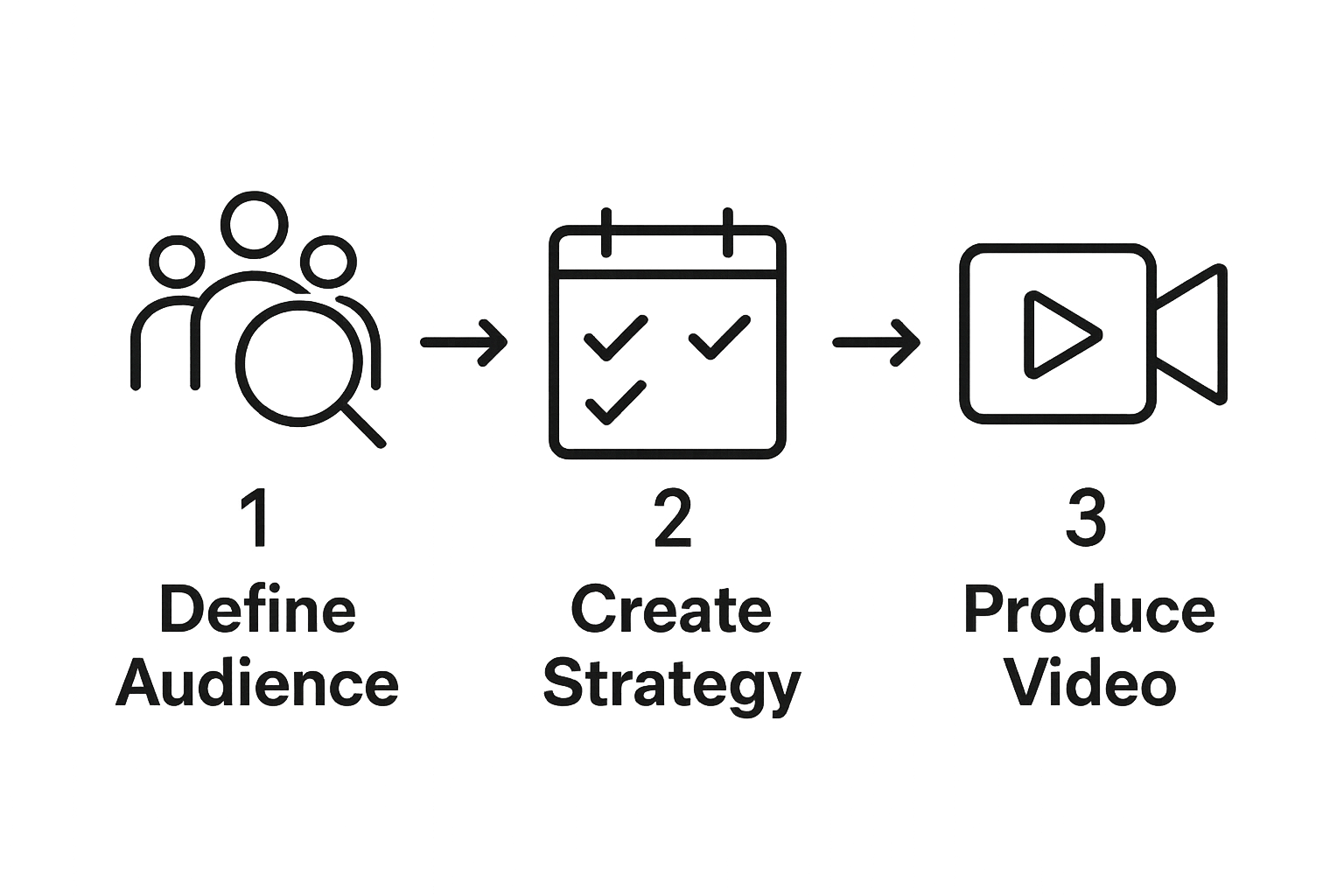
Successful real estate video marketing is not about sporadic viral attempts but sustained, strategic storytelling that builds your professional brand over time.
Step 3: Produce High-Quality Video Content
Producing high-quality video content is where your strategic planning transforms into visual storytelling that captivates potential real estate clients. Quality is not just about expensive equipment but about creating meaningful, authentic content that resonates with your target audience. Real estate video production requires a blend of technical skill, creative storytelling, and strategic communication.
Start by investing in fundamental equipment that elevates your production value. While professional cameras are ideal, modern smartphones with 4K capabilities can produce exceptional results when used skillfully. Key equipment recommendations include a stabilizing gimbal, quality microphone for clear audio, and soft lighting equipment. Natural lighting works wonderfully for property tours, but supplemental LED panels can help balance challenging interior lighting conditions.
Explore professional video production techniques that transform ordinary property showcases into compelling narratives. Your videos should tell a story beyond square footage and amenities. Walk viewers through properties with smooth, intentional movements. Highlight unique architectural details, capture the surrounding neighborhood atmosphere, and create an emotional connection that goes beyond physical specifications.
Audio quality is often overlooked but critically important. Potential clients will quickly disengage from videos with poor sound. Use lavalier microphones during interviews or voiceovers, and consider background music that subtly enhances the emotional tone of your content. Soft, ambient tracks can make property tours feel more inviting and professional.
Develop a consistent visual style that reflects your personal brand. This means maintaining similar color grading, transitions, and graphic overlays across your video content. Choose a color palette that complements your real estate agency’s branding and use text graphics sparingly to provide key information about properties or market insights.
Post production is where good footage becomes great content. Learn basic editing skills or partner with a professional editor who understands real estate marketing. Trim unnecessary footage, add smooth transitions, include strategic text overlays with property details, and ensure each video maintains a tight, engaging pace. Most successful real estate videos range between two to four minutes, providing enough detail without losing viewer attention.
Remember that authenticity trumps perfection. Viewers appreciate genuine, transparent content that showcases your expertise and personality. Your videos should make potential clients feel like they are getting an insider’s perspective on properties and local real estate markets.
The table below summarizes essential video production equipment for real estate agents and their primary purposes, helping you select the right tools for engaging, high-quality content.
Equipment | Purpose | Notes |
Smartphone with 4K camera | Capture high-quality video footage | Modern smartphones work when used skillfully |
Stabilizing gimbal | Ensure smooth camera movements | Especially useful for property walkthroughs |
Quality microphone | Deliver clear and professional audio | Lavalier mics great for interviews/voiceovers |
Soft lighting equipment | Improve lighting, create inviting atmosphere | Natural light ideal; LED panels for interiors |
Editing software or editor | Enhance, trim, and polish raw video | Consistent branding and professional polish |
Background music library | Add subtle emotional tone | Use ambient tracks for welcoming effect |
Step 4: Optimize Videos for SEO and Social Media
Optimizing your real estate videos for search engines and social media platforms is crucial for expanding your digital reach and attracting potential clients. Your video content can only generate leads if people can actually find and engage with it. This step transforms your high-quality videos from static content into dynamic marketing tools that actively attract and convert prospects.
Keyword research forms the foundation of video SEO. Identify search terms potential clients use when looking for real estate services in your area. These might include phrases like “homes for sale in [city]” or “first time homebuyer guide.” Incorporate these keywords strategically in your video titles, descriptions, and tags. YouTube and Google use these elements to understand and rank your content, making them critical for visibility.
Discover advanced video marketing strategies that help you stand out in a crowded digital landscape. Create compelling, keyword rich titles that balance searchability with emotional appeal. Instead of a generic “Property Tour,” use something more specific like “Luxury Downtown Loft with Stunning City Views - $750k.” This approach simultaneously targets search algorithms and potential buyer interests.
Thumbnails are your first visual opportunity to capture audience attention. Design custom thumbnails that are visually striking, professionally branded, and provide a clear preview of the video content. Use high contrast colors, include text overlays with key property details, and ensure images are clear and professionally edited. A well designed thumbnail can dramatically improve click through rates across platforms.
Understand the unique requirements of different social media platforms. Each platform has specific video specifications and audience behaviors. LinkedIn might prefer more professional, market analysis style content, while Instagram allows for more creative, visually dynamic property showcases. Adapt your video formats to suit each platform technical requirements and audience expectations.
Engage with your audience through strategic video metadata and descriptions. Write descriptions that not only include keywords but also provide genuine value. Include specific property details, contact information, and clear calls to action. Encourage viewers to comment, share, and reach out for more information. Social media algorithms reward content that generates meaningful interactions.
Track your video performance using analytics tools provided by platforms like YouTube, Facebook, and Google. Monitor metrics such as view duration, engagement rates, and click through rates. These insights will help you continuously refine your video marketing strategy, understanding what content resonates most with your target audience.
Step 5: Track Performance and Adjust Your Approach
Tracking video marketing performance is not just about collecting numbers it is about understanding the story behind those metrics and continuously evolving your real estate content strategy. Performance tracking transforms raw data into actionable insights that drive more effective marketing decisions. Successful real estate agents view analytics as a dynamic roadmap rather than a static report.
Implement comprehensive tracking across multiple platforms. Google Analytics, YouTube Studio, and social media native analytics provide rich data about your video performance. Focus on key metrics that directly reflect audience engagement and potential lead generation. Critical performance indicators include view duration, click through rates, audience retention, geographic viewer distribution, and direct inquiry rates generated from specific videos.
Learn more about streamlining your video marketing workflow to make performance tracking more efficient. Create a systematic approach to reviewing your analytics. Schedule monthly review sessions where you deeply analyze your video content performance. Look beyond surface level metrics to understand viewer behavior patterns. Which property showcase videos generate the most engagement? What type of content prompts potential clients to request more information?
Segment your performance data to gain nuanced insights. Analyze how different video types perform across various platforms. A neighborhood tour might excel on Facebook, while a market trend analysis could attract more professional viewers on LinkedIn. Understanding these platform specific performance variations allows you to tailor content strategically.
Be prepared to experiment and pivot quickly. If a particular video style or topic consistently underperforms, modify your approach. Perhaps your property walkthrough videos are too long, or your market analysis lacks compelling storytelling. Treat each video as a learning opportunity. Successful real estate video marketing is an iterative process of continuous improvement.
Consider qualitative feedback alongside quantitative metrics. Client comments, direct messages, and informal feedback provide context that raw numbers cannot capture. A video with moderate view count might generate high quality leads if it resonates deeply with your target audience. Engage with viewers who comment on your videos, asking what content they find most valuable.

Establish a feedback loop that connects performance tracking with content creation. Use your analytics insights to inform future video strategies. If first time homebuyer content generates significant engagement, create a series expanding on that theme. If drone property tours attract more luxury market clients, invest in advanced aerial videography techniques.
Remember that consistency and patience are key. Video marketing performance improves over time as you refine your approach, understand your audience more deeply, and develop a more sophisticated content strategy.
Turn Insight Into Action: Elevate Your Real Estate Video Marketing Today
After absorbing the steps and secrets shared in “Master Video Marketing for Agents: A Complete Guide,” you may feel excited but also overwhelmed by the pressure to deliver exceptional, consistent video content. Maybe you worry about standing out in a crowded property market, or about building trust with buyers through video storytelling. You want to avoid the pain of scattered strategy, lackluster visuals, or wasted time stuck in a DIY editing cycle. Success demands more than just knowing the process—it requires professional execution and a personal touch that truly connects with your audience.

Let Tulip Films](www.tulipfilms.ch) be your partner in transforming your vision into real results. Our team specializes in producing high-quality real estate videos that capture emotion and drive engagement. We combine our understanding of detailed target audience strategies, both creative and technical production, and advanced [video marketing workflows to help Swiss agents like you shine online. Take the next step and plan your free video consultation today. Bring your marketing to the next level and connect with the right clients now.
Frequently Asked Questions
How can I define my target audience for real estate video marketing?
Start by breaking down your ideal client demographics, considering not just age and income but also psychographic elements such as life stage, professional aspirations, and specific housing needs. Create detailed client personas to refine your targeting further.
What types of videos should I include in my real estate video strategy?
Your video strategy should cover multiple stages of the client journey. Include neighborhood tours for early-stage content, property walkthroughs for middle-stage content, and client testimonials for late-stage content to build trust and connection.
What are some essential equipment recommendations for producing high-quality real estate videos?
Invest in equipment that enhances production quality, such as a stabilizing gimbal, quality microphone, and soft lighting. Modern smartphones with 4K capabilities can also deliver excellent results when used effectively.
How can I optimize my real estate videos for SEO?
Conduct keyword research to identify relevant search terms and incorporate them into your video titles, descriptions, and tags. Create compelling, keyword-rich titles and design engaging thumbnails to improve visibility and click-through rates.
Recommended
