Video Production Explained: Impact for Swiss Brands


Over 80 percent of global brands now rely on professional video production to capture audience attention more effectively than traditional channels. For Swiss marketing managers, staying competitive means adopting storytelling techniques proven by American agencies while customizing every frame for local impact. This guide breaks down the essentials of video production, helping you understand how strategic planning, creative artistry, and technical precision come together to boost brand engagement and transform communication within your organization.
Table of Contents
Key Takeaways
Point | Details |
Video Production Stages | The video production process includes pre-production, production, and post-production, each requiring detailed planning and technical skills. |
Types of Projects | Swiss brands utilize diverse video project types, such as corporate videos, promotional advertisements, and brand storytelling, to effectively engage target audiences. |
Client Collaboration | Clear communication and defined expectations between clients and production teams are crucial for achieving impactful video narratives. |
Risk Management | Strategic planning for costs and legal aspects, including intellectual property rights, is essential to minimize risks and ensure project success. |
Defining Video Production and Key Concepts
Video production is a comprehensive process that transforms creative concepts into compelling visual narratives. At its core, this discipline involves strategically designing and executing audiovisual content that communicates messages effectively across multiple platforms. Marketing managers in Swiss corporations increasingly recognize video as a powerful communication tool that goes beyond traditional advertising.
The video production workflow typically encompasses three critical stages: pre-production, production, and post-production. Comprehensive workflow integration requires meticulous planning and technical expertise. Pre-production involves conceptualizing the project, scripting, and storyboarding. The production phase focuses on actual filming, capturing high-quality visual and audio content. Post-production includes editing, adding visual effects, color grading, and preparing the final deliverable for distribution.
For Swiss brands, video production represents more than technical execution - it’s a strategic communication method. Effective video content requires understanding audience targeting, technical standards, and storytelling techniques that resonate with specific market segments. Professional video production integrates creative artistry with technological precision, ensuring that each frame communicates the brand’s core message with clarity and impact.
Pro tip: When planning a video production project, always develop a detailed creative brief that outlines your communication objectives, target audience, and key performance indicators to guide the entire production process.
Major Types of Video Production Projects
Video production encompasses a diverse range of project types, each tailored to specific communication objectives and audience engagement strategies. Cultural and creative video projects demonstrate the expansive landscape of audiovisual content, spanning from short promotional clips to comprehensive documentary narratives that serve multiple strategic purposes.
The primary categories of video production projects for Swiss brands include corporate videos, promotional advertisements, training and educational videos, event documentation, and brand storytelling content. Each category serves a unique purpose in communicating organizational messages. Corporate videos, for instance, provide insider perspectives on company culture and operations, while promotional advertisements focus on creating compelling narratives that drive customer engagement and brand recognition.
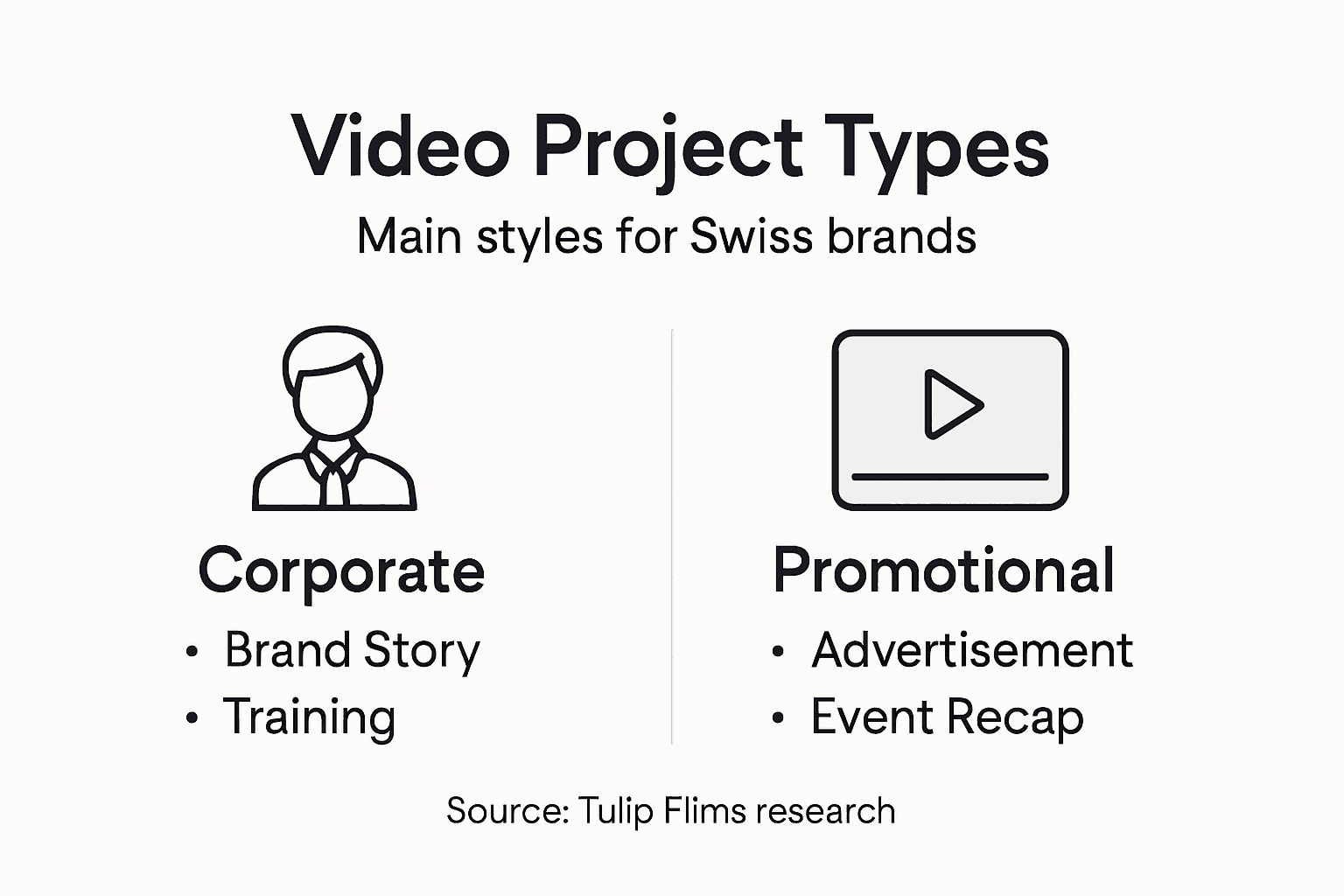
Humanities-based storytelling projects highlight the importance of narrative depth in video production. For Swiss organizations, this means moving beyond surface-level marketing to create meaningful content that connects with audiences emotionally. Documentaries, testimonial series, and behind-the-scenes narratives can effectively humanize brands, transforming traditional communication approaches into immersive storytelling experiences that resonate with viewers.
Pro tip: Before initiating any video production project, conduct a comprehensive audience analysis to ensure your content strategy aligns precisely with your target demographic’s preferences and communication expectations.
Here’s a comparison of major video production project types and their strategic benefits for Swiss brands:
Project Type | Main Goal | Brand Benefit |
Corporate Video | Showcase company culture | Build trust with stakeholders |
Promotional Advertisement | Drive product or service awareness | Increase sales and recognition |
Training/Educational | Educate staff or customers | Enhance skills and compliance |
Event Documentation | Capture live events | Preserve and share memories |
Brand Storytelling | Connect emotionally with audience | Create long-lasting brand loyalty |
Core Stages and Techniques in Production
Video production involves a complex, strategic process that demands precision and creativity across multiple stages. Technical production workflows require meticulous planning and execution to transform creative concepts into compelling visual narratives. The core production stages are fundamentally structured around pre-production, active filming, and post-production, each demanding specialized skills and technological expertise.
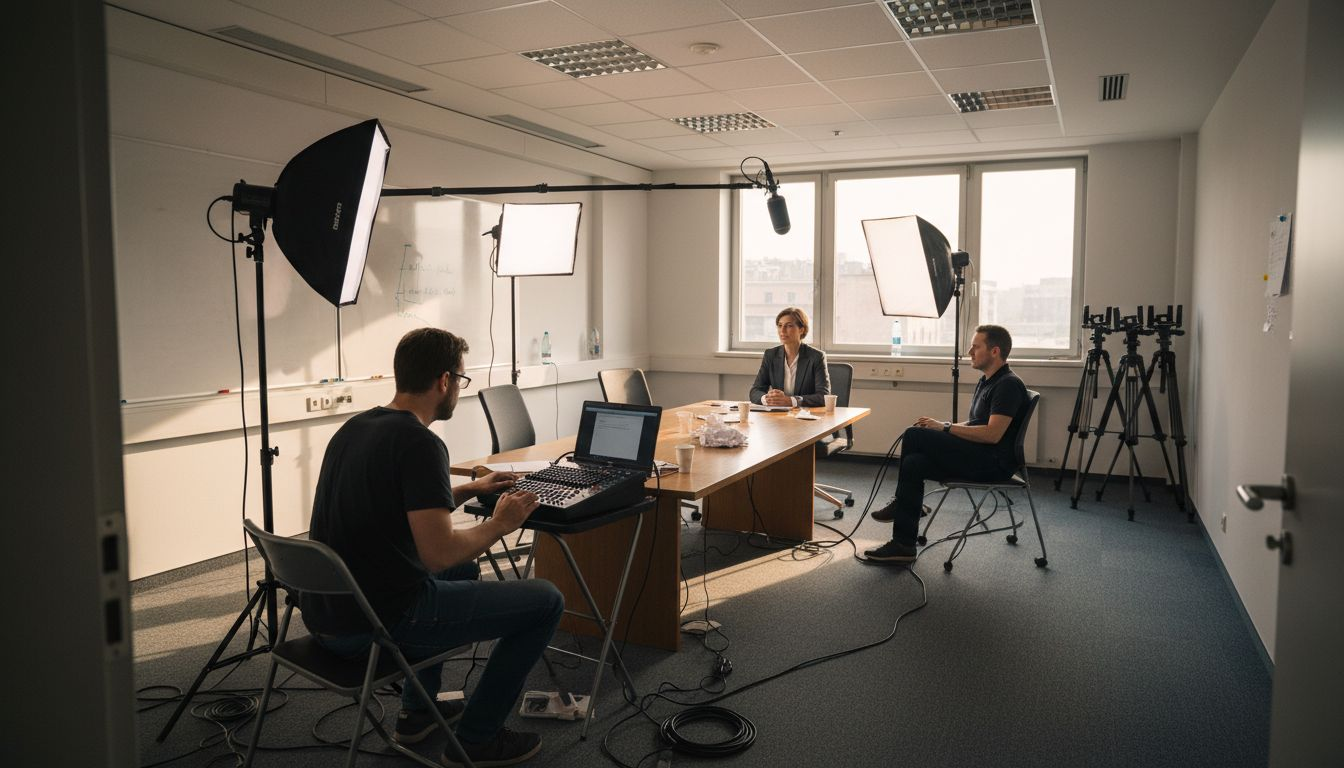
During pre-production, Swiss brands focus on critical elements like scripting, location scouting, equipment selection, and talent casting. The active production stage involves complex technical choreography, including multi-camera setups, professional lighting design, and precise shot composition. Cinematographers and directors collaborate closely to capture footage that authentically represents the brand’s messaging and aesthetic vision. Collaborative production techniques emphasize iterative review cycles and strategic communication to maintain project quality and alignment with original creative objectives.
Advanced video production for Swiss brands goes beyond simple recording, integrating sophisticated technical elements like dynamic camera movements, advanced color grading, and sophisticated sound design. These techniques transform standard corporate communication into immersive storytelling experiences. Professionals utilize state-of-the-art digital editing technologies, professional-grade camera equipment, and refined post-production strategies to create visually stunning and emotionally resonant content that captures audience attention and drives meaningful engagement.
Pro tip: Develop a comprehensive pre-production checklist that includes detailed equipment specifications, backup plans for potential technical challenges, and clear communication protocols to streamline your video production workflow.
Client Roles and Collaboration Essentials
Successful video production demands a sophisticated partnership between production teams and clients, where clear communication and well-defined expectations become the foundation of extraordinary visual storytelling. Effective collaboration practices require a strategic approach that transcends traditional client-vendor relationships, positioning brands as active creative partners throughout the production process.
The client’s role extends far beyond initial project briefing, involving continuous engagement and strategic input. Key responsibilities include providing comprehensive brand guidelines, participating in creative reviews, offering nuanced feedback, and ensuring alignment with organizational messaging objectives. Collaborative research principles emphasize establishing transparent communication protocols that define decision-making processes, ownership boundaries, and mechanisms for resolving potential creative differences. This collaborative framework helps Swiss brands maintain creative control while leveraging the production team’s technical expertise and storytelling capabilities.
Understanding mutual expectations becomes crucial in video production collaborations. Clients must articulate their strategic goals, target audience insights, and brand personality, while production teams translate these requirements into compelling visual narratives. This dynamic interaction requires mutual respect, active listening, and a willingness to iterate collaboratively. Advanced collaboration techniques include regular status meetings, comprehensive feedback cycles, and structured review processes that ensure the final video product authentically represents the brand’s vision and communication objectives.
Pro tip: Create a comprehensive collaboration roadmap that outlines communication frequencies, feedback mechanisms, and specific checkpoints to ensure seamless alignment between your brand’s vision and the production team’s creative execution.
Costs, Legal Risks, and Avoidable Mistakes
Navigating the financial and legal landscape of video production requires strategic planning and comprehensive risk management. Complex cost management strategies encompass both direct and indirect expenses that can significantly impact a project’s overall budget and success. Direct costs include equipment rental, personnel wages, location fees, and post-production expenses, while indirect costs involve permits, insurance, and potential legal compliance requirements.
Intellectual property represents a critical legal consideration for Swiss brands engaging in video production. Trademark and rights management demands meticulous attention to prevent potential legal disputes and ensure comprehensive protection of creative assets. Common avoidable mistakes include inadequate contract drafting, unclear ownership agreements, and insufficient documentation of creative rights. Brands must implement robust legal frameworks that clearly define intellectual property boundaries, usage rights, and potential revenue sharing mechanisms for all creative content.
Financial transparency and proactive risk mitigation are fundamental to successful video production projects. Swiss organizations should develop comprehensive budgeting strategies that account for potential contingencies, including equipment failures, scheduling challenges, and unexpected creative revisions. Effective cost management involves detailed project scoping, regular financial reviews, and maintaining flexible budget allocations that can adapt to the dynamic nature of video production. By anticipating potential financial and legal challenges, brands can minimize risks and create a more predictable production environment.
Pro tip: Develop a comprehensive risk management checklist that includes detailed contract provisions, intellectual property protections, and clear financial contingency plans before initiating any video production project.
The following table summarizes key legal and financial risks, with preventive actions to strengthen video production outcomes:
Risk Type | Example Issue | Preventive Action |
Intellectual Property | Unclear content ownership | Draft detailed contract provisions |
Budget Overruns | Unexpected production costs | Set flexible budget allocations |
Permit Issues | Missing location permits | Secure necessary legal documentation |
Creative Rights | Disputes over usage rights | Outline clear usage and sharing terms |
Elevate Your Swiss Brand With Expert Video Production
Understanding the complexities of video production—from pre-production planning to post-production finesse—is essential for any Swiss brand aiming to stand out. Challenges like clear communication, strategic storytelling, and legal safeguards can feel overwhelming. At Tulip Films, we specialize in transforming these challenges into opportunities by crafting bespoke audiovisual content that captures your brand’s unique message with clarity and emotional impact.
Our professional team focuses on your goals by delivering customized corporate videos, promotional ads, and immersive storytelling experiences tailored specifically for Swiss audiences. With a commitment to quality, efficiency, and a collaborative process, we help you avoid costly pitfalls and legal hurdles while ensuring your vision is realized through a smooth production workflow.
Ready to make your brand unforgettable? Discover how Tulip Films can bring your video project to life with precision and creativity.

Take the next step toward captivating your audience by planning your free consultation today. Visit Tulip Films to explore our portfolio and see how our expertise aligns with your brand’s ambitions. Don’t wait to transform your communication strategy—connect with us now and start creating powerful videos that drive real engagement! Learn more about our approach to corporate videos and promotional ads.
Frequently Asked Questions
What are the main stages of video production?
The video production process typically involves three critical stages: pre-production, which includes planning, scripting, and storyboarding; production, where the actual filming occurs; and post-production, involving editing, visual effects, and final delivery preparation.
How can video production benefit Swiss brands?
Video production can help Swiss brands communicate messages effectively, engage audiences emotionally, build brand loyalty, and enhance trust through compelling storytelling and high-quality audiovisual content.
What types of video production projects are common for brands?
Common types of video production projects include corporate videos, promotional advertisements, training and educational videos, event documentation, and brand storytelling content, each serving a unique strategic purpose.
What should be included in a video production creative brief?
A detailed creative brief should outline communication objectives, target audience, brand messaging, key performance indicators, and any specific content requirements to guide the entire production process.
Recommended
