Master Visual Storytelling for Business Success


Did you know that brands using visual storytelling enjoy up to 22 times more engagement from their audiences compared to those that do not? Businesses cannot afford to overlook the impact of clear messaging and emotional connection when shaping how people see their brand. By identifying your goals and understanding who you are speaking to, you lay the groundwork for powerful visual content that stands out and drives results.
Table of Contents
Quick Summary
Key Point | Explanation |
1. Define Business Goals Clearly | Establish specific objectives like brand awareness or lead generation to direct visual storytelling efforts. |
2. Create Detailed Audience Personas | Develop in-depth profiles that include motivations and challenges for better-targeted visual narratives. |
3. Craft an Emotional Brand Narrative | Focus on the core values and mission of your brand to create an engaging story that resonates with audiences. |
4. Plan Visual Storyboards Effectively | Develop detailed storyboards to connect scenes emotionally, enhancing the overall narrative experience. |
5. Utilize Feedback for Optimization | Analyze audience metrics and gather feedback to refine content, improving engagement and storytelling impact. |
Step 1: Identify business goals and target audience
Defining clear business goals and understanding your target audience are foundational steps in crafting a powerful visual storytelling strategy. According to stanmoreuk, storytelling plays a pivotal role in contemporary marketing and brand building, directly impacting consumer engagement and perception.
Start by conducting a comprehensive analysis of your specific business objectives. These might include increasing brand awareness, generating leads, showcasing product features, or building customer trust. Each goal requires a distinct visual narrative approach. For instance, a lead generation video will look dramatically different from a brand reputation enhancement piece.
To identify your target audience, go beyond basic demographics. Develop detailed audience personas that capture not just age and location, but deeper psychological insights like motivations, challenges, and communication preferences. stanmoreuk emphasizes understanding narrative structure and audience engagement techniques as crucial for effective storytelling.
Pro Tip: Create audience personas that feel like real people with genuine needs and aspirations.
Research your potential viewers thoroughly. Use tools like customer surveys, social media insights, website analytics, and direct customer feedback. The more precisely you can map your audience’s journey and pain points, the more resonant your visual storytelling will become.
By aligning your business goals with a nuanced understanding of your target audience, you set the stage for creating visual content that truly connects and converts. In the next step, we will explore how to transform these insights into compelling visual narratives.
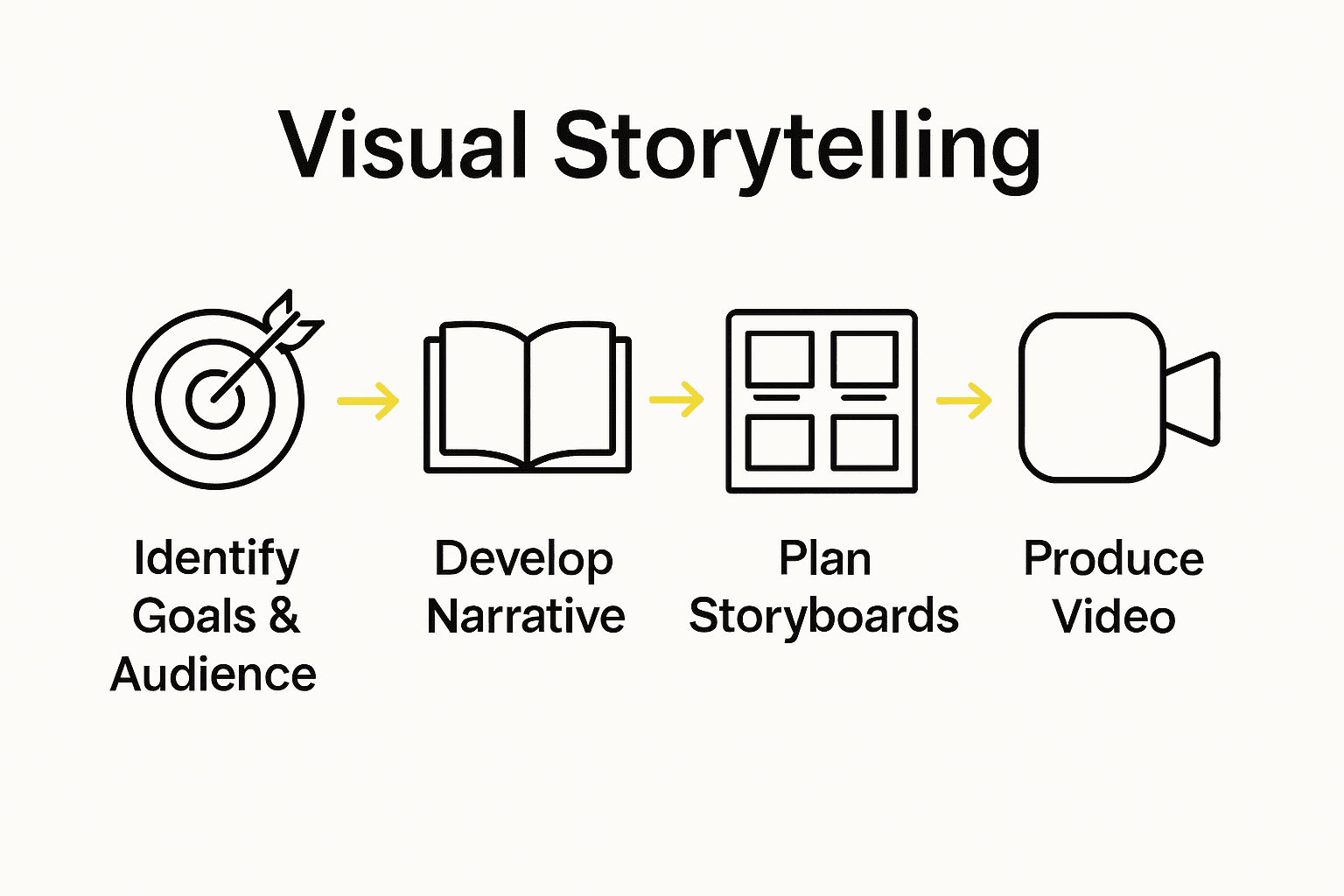
Here’s a summary of each step in the visual storytelling process:
Step | Main Focus | Key Activities |
1. Identify Goals & Audience | Define business objectives Understand audience personas | Analyze goals Develop personas Research audience |
2. Develop Brand Narrative | Craft an emotional brand story | Define core values Write authentic narrative Engage audience |
3. Plan Visual Concepts & Storyboards | Design visual blueprint for content | Brainstorm ideas Create storyboards Select visual styles |
4. Produce Video Content | Turn storyboard into compelling video | Assemble team Film and edit Enhance visuals and audio |
5. Review & Optimize | Refine for maximum audience impact | Gather feedback Analyze metrics Make improvements |
Learn more about optimizing your video marketing strategy for deeper insights into creating impactful visual content.
Step 2: Develop a compelling brand narrative
Creating a compelling brand narrative transforms your business from a simple service provider into a memorable storytelling experience. ecornell emphasizes the critical importance of honing storytelling strategies that build an engaging brand narrative for both personal and professional contexts.
Start by identifying the core values and unique mission that distinguish your brand. Your narrative should go beyond product features and dive deep into the emotional core of why your business exists. What problem are you solving? What impact do you want to create in your customers lives?
According to stanmoreuk, mastering brand voice and audience engagement is crucial for building lasting connections. This means crafting a narrative that feels authentic, consistent, and resonates with your target audience’s aspirations and challenges.
Pro Tip: Your brand narrative should feel like a conversation, not a sales pitch.
Consider the emotional journey you want to take your audience through. Use storytelling techniques that reveal your brands personality authentic characters, real challenges, and meaningful resolutions. Incorporate personal experiences, customer testimonials, and behind the scenes moments that humanize your brand.
Visual storytelling allows you to communicate these narratives powerfully.
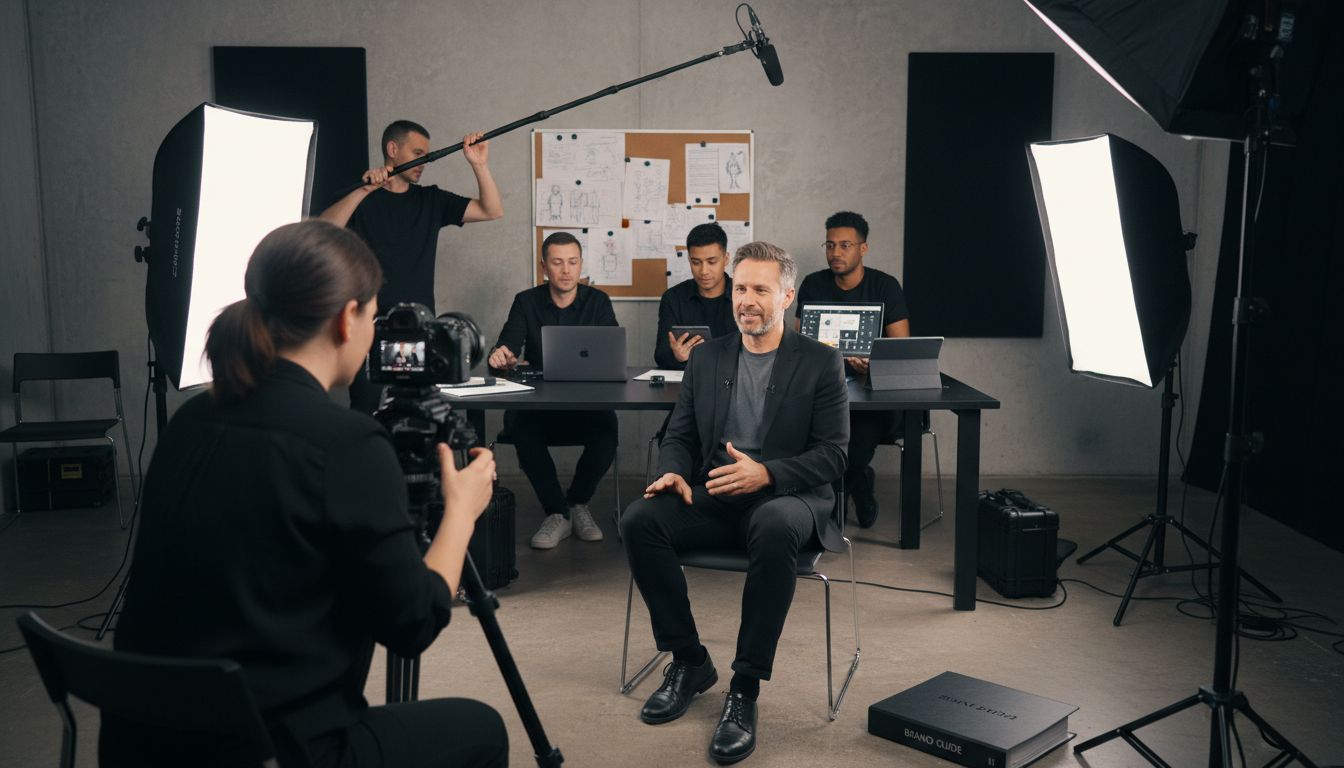
Whether through video, photography, or graphic design, choose visual elements that reinforce your core message and create an emotional connection.
Explore our guide on the role of storytelling in branding to deepen your understanding of creating impactful brand narratives that truly engage your audience.
Step 3: Plan engaging visual concepts and storyboards
Planning compelling visual concepts and storyboards is the blueprint for transforming your brand narrative into a powerful visual experience. stanmoreuk emphasizes the critical importance of mastering brand photography, video production, and graphic design techniques to create impactful visual communication.
Begin by brainstorming visual metaphors and storytelling techniques that align with your brand narrative. Sketch out key scenes and emotional moments that will capture your audiences imagination. Each visual concept should connect directly to the core message and values you established in your brand narrative.
According to stanmoreuk, modern branding relies heavily on creating compelling visual narratives that resonate deeply with audiences. This means moving beyond literal representations and developing visual stories that evoke genuine emotional responses.
Pro Tip: Your storyboard should tell a complete emotional journey in just a few key frames.
Create a detailed storyboard that breaks down each scene. Include specific visual elements camera angles, lighting, color palettes, and transitions that will enhance your storytelling. Consider the rhythm and flow of your visual narrative how each scene connects and builds emotional momentum.
Think about the practical elements of production. What locations will you use? What talent or actors best represent your brand? How can you leverage visual techniques to create a memorable and authentic storytelling experience?
Learn more about the essential visual storytelling strategies for brands to refine your approach and create truly engaging visual concepts.
Step 4: Produce dynamic and high-quality video content
Transforming your carefully planned storyboard into compelling video content requires technical skill and creative vision. ecornell emphasizes the importance of researching your theme thoroughly to craft a message that makes your brand video stand out from the competition.
Begin by assembling a talented production team that understands your brand vision. This includes professionals who can translate your storyboard into visual magic camera operators, lighting experts, sound technicians, and post production specialists who can enhance the emotional impact of your narrative.
According to stanmoreuk, mastering video production techniques involves understanding visual communication principles and social media strategies. This means paying attention to every technical detail that can elevate your storytelling.
Pro Tip: Quality audio is just as important as visual elements in creating an immersive brand experience.
Focus on capturing authentic moments that reflect your brands personality. Use dynamic camera movements, thoughtful lighting, and carefully selected locations that reinforce your narrative. Ensure that each shot contributes to the emotional journey you want your audience to experience.
During post production, refine your footage with precision. Color grading, sound design, and seamless editing can transform good footage into an extraordinary visual story that resonates with your target audience.
Discover how to produce a high quality business video to take your visual storytelling to the next level.
Step 5: Review, refine, and optimize for audience impact
The final stage of visual storytelling transforms your raw content into a polished narrative that resonates deeply with your target audience. stanmoreuk emphasizes the critical importance of understanding narrative structure and audience engagement techniques for marketing professionals.
Begin by conducting a comprehensive review of your video content. Watch it from your audiences perspective critically examining how each scene contributes to the overall emotional journey. Look for moments that might feel disconnected or lose the audiences attention.
According to stanmoreuk, mastering brand voice and audience engagement requires a nuanced approach to content marketing and social media strategies. This means analyzing not just the technical quality of your video but its ability to create genuine connections.
Pro Tip: Your audience retention metrics are the true measure of your videos storytelling success.
Utilize analytics tools to gather precise data about viewer engagement. Track metrics like watch time, drop off points, and emotional response indicators. These insights will help you understand exactly where your visual story resonates and where it might need refinement.
Consider gathering feedback from a diverse test audience. Their fresh perspectives can reveal narrative gaps or emotional nuances you might have missed during production. Be open to making strategic edits that enhance the overall storytelling experience.
Explore our guide to streamlining your video marketing workflow to continue optimizing your visual storytelling approach.
Elevate Your Brand with Powerful Visual Storytelling
Struggling to turn your brand story into memorable video content that truly connects and drives results? The article reveals how mastering narrative structure and audience engagement are key to business success. At Tulip Films, we understand the challenge of capturing your brand’s emotional core while delivering high-quality, authentic visuals fast and efficiently. From planning engaging storyboards to producing dynamic videos that resonate, our personalized approach ensures your message reaches your audience with impact.
Experience the difference that expert video production can make for your brand identity and marketing goals. Whether you need corporate videos, promotional ads, or event highlights, discover how we bring your visual storytelling to life with precision and creativity.
Ready to transform your brand’s story into captivating video content today?
Explore our portfolio and services at Tulip Films to see successful examples of brand narratives turned into compelling videos. Take the first step by scheduling a free consultation to align your business goals with tailored audiovisual solutions. Visit our landing page now and start your journey to impactful storytelling.
Frequently Asked Questions
What are the first steps to master visual storytelling for business success?
To master visual storytelling, start by identifying your business goals and understanding your target audience. Clearly define your objectives and create detailed audience personas to craft content that resonates with them.
How do I create an engaging brand narrative?
Creating an engaging brand narrative involves identifying your core values and unique mission. Focus on addressing the problems your audience faces and weaving emotional storytelling that reflects your brand’s personality.
What elements should I include in a visual storyboard?
A visual storyboard should include detailed descriptions of each scene, key visual elements, camera angles, and emotional moments that enhance storytelling. Aim to convey a complete emotional journey in just a few key frames to ensure clarity and impact.
How can I produce high-quality video content that aligns with my narrative?
To produce high-quality video content, assemble a talented production team that understands your brand vision. Prioritize authentic moments and focus on capturing dynamic visuals that contribute to the emotional journey of your narrative.
What metrics should I track to optimize my visual storytelling?
Track audience engagement metrics such as watch time, drop-off points, and emotional response indicators. Utilize this data to make strategic edits that enhance the overall storytelling experience and improve audience retention.
How long does it take to see results from visual storytelling efforts?
While results can vary, many businesses begin to see improvements in audience engagement and brand perception within 30–60 days of implementing a well-crafted visual storytelling strategy. Monitor feedback and analytics regularly to make necessary adjustments.
Recommended
