What Is Post Production? Complete Guide for 2024

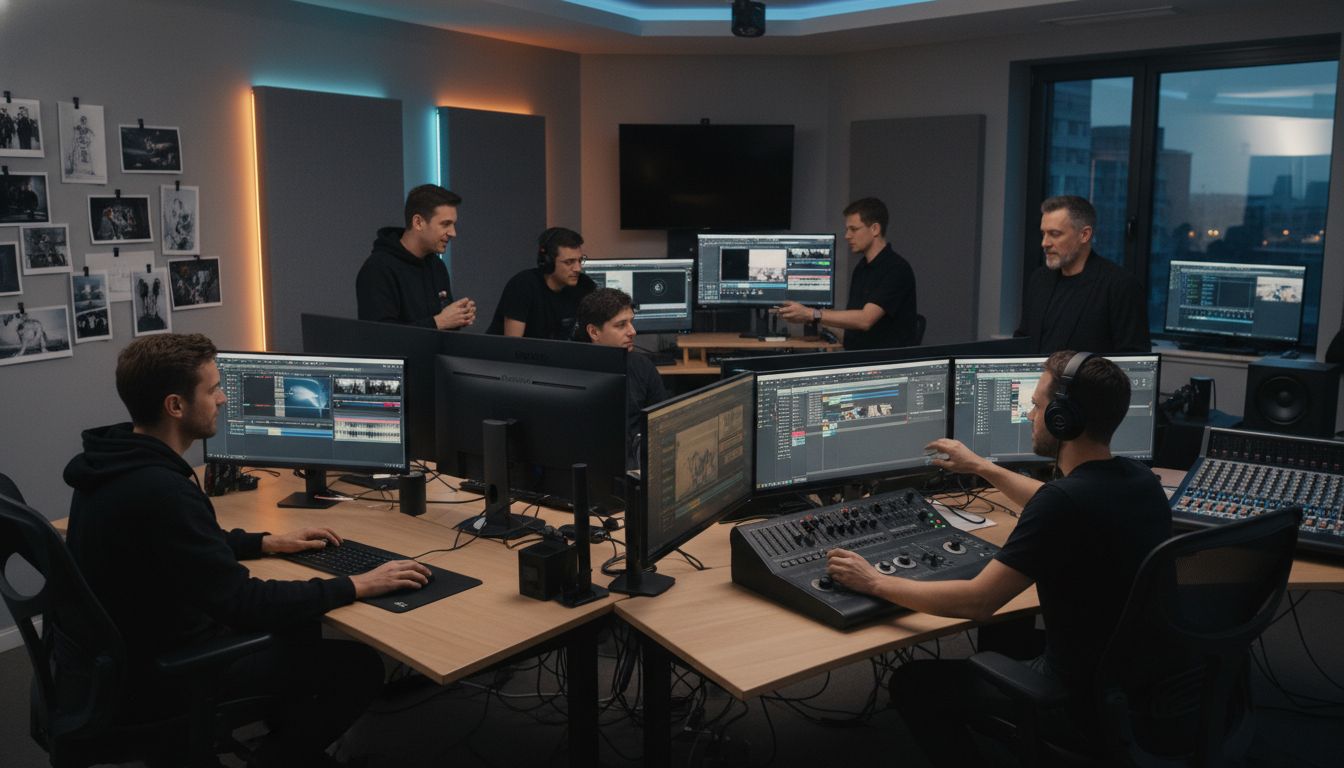
Every great film or video begins as a collection of unpolished clips, but it is the post-production stage that brings these pieces together into a story worth watching. Over 80 percent of a project’s final impact hinges on the quality of its post-production work. Whether you are creating marketing content or cinematic art, understanding post-production means uncovering the secrets behind sharp visuals, seamless sound, and emotional storytelling that truly connect with your audience.
Table of Contents
Key Takeaways
Point | Details |
Importance of Post-Production | Post-production is essential for refining raw footage into a cohesive and engaging visual narrative, combining technical skills with creative vision. |
Major Stages in the Process | Key stages include picture editing, sound design, and visual effects, each crucial for achieving a polished final product. |
Critical Team Roles | Effective communication and collaboration among diverse roles like editors and sound designers are vital for successful post-production outcomes. |
Common Challenges | Teams must address issues such as misaligned expectations and workflow inefficiencies to maintain quality and effectiveness in post-production projects. |
Defining Post Production and Its Importance
Post-production represents the critical final stage in video and film creation where raw footage transforms into a polished, professional visual narrative. According to Adobe, this phase involves editing raw footage, adding visual effects, sound design, and color correction to create the final product.
The importance of post-production cannot be overstated. Post-production is where storytellers truly craft their visual message, turning disparate shots into a cohesive experience. As NFI explains, this process encompasses tasks like editing, sound mixing, visual effects, and color grading that refine the narrative and correct potential errors captured during initial filming.
Key elements of post-production include:
Video editing to create narrative flow
Sound mixing and audio enhancement
Visual effects integration
Color grading and correction
Final quality control and refinement
For businesses and content creators, understanding post-production is crucial. It’s the stage where technical skills meet creative vision, transforming basic recordings into compelling visual stories that engage audiences. Learn more about our post-production workflow to see how professional teams bring stories to life.
Major Stages of the Post Production Process
Post-production is a complex, multifaceted process that transforms raw footage into a polished final product. According to Adobe, the post-production workflow typically involves five critical stages that require technical skill and creative vision.
Picture Editing
The first stage involves picture editing, where raw footage is carefully assembled and refined. Editors meticulously review all recorded material, selecting the best shots and arranging them to create a compelling narrative flow. This process requires not just technical expertise, but a deep understanding of storytelling and emotional pacing.
Sound Design and Audio Editing
Sound editing follows picture editing, focusing on enhancing the audio landscape. This stage includes:
Dialogue cleaning and synchronization
Adding sound effects
Music composition and integration
Balancing audio levels
Creating immersive soundscapes
Visual Effects and Color Grading
Visual effects and color grading represent the transformative stages where technical precision meets artistic expression. Professionals use advanced software to:

Integrate computer-generated imagery (CGI)
Correct color inconsistencies
Establish visual tone and mood
Enhance visual storytelling
As NFI explains, these stages are crucial for achieving the desired visual and emotional impact of the final product. Explore our professional film and video production insights to understand how these intricate processes come together.
Here’s a summary of the major post-production stages and their main tasks:
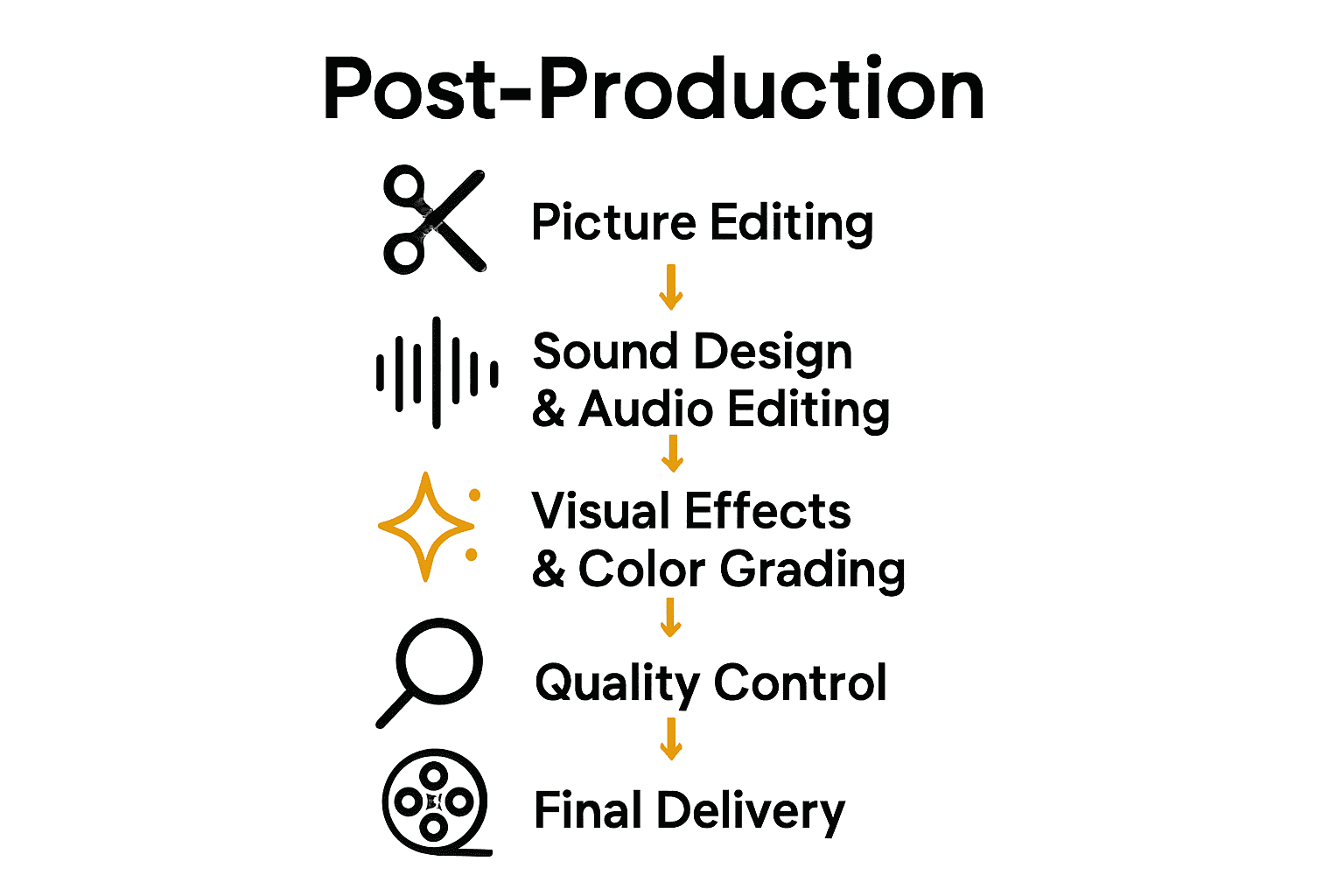
Stage | Main Tasks | Key Tools/Techniques |
Picture Editing | Select footage Arrange shots Narrative flow | Non-linear editors Cutting |
Sound Design & Audio Editing | Sync dialogue Add effects Mix audio | DAWs Sound libraries |
Visual Effects & Color Grading | Add CGI Correct color Set visual mood | VFX software Grading tools |
Key Techniques and Tools Used Today
Post-production technology has evolved dramatically, transforming how visual stories are crafted and refined. According to Comm, modern post-production leverages sophisticated software and advanced techniques that enable unprecedented creative control and precision.
Editing Software
Non-linear editing systems have revolutionized video production, allowing editors unprecedented flexibility. Professional-grade tools like Adobe Premiere Pro and Final Cut Pro enable seamless multi-camera editing, complex transitions, and intricate narrative construction. These platforms provide robust features that allow creators to manipulate footage with incredible detail and creativity.
Color Grading and Visual Effects
Color grading represents a critical technique in contemporary post-production. Professionals use advanced software like DaVinci Resolve to:
Establish consistent visual aesthetics
Correct color inconsistencies
Create emotional tone through color manipulation
Enhance visual storytelling
Audio Production Tools
Sound design requires specialized digital audio workstations. As NFI explains, tools like Pro Tools enable sophisticated audio mixing, allowing creators to:
Clean and synchronize dialogue
Add complex sound effects
Balance audio levels
Create immersive soundscapes
Learn more about our professional film and video production techniques to understand how these cutting-edge tools transform raw footage into compelling visual narratives.
Applications in Corporate and Event Videos
Post-production transforms corporate and event videos from simple recordings into powerful communication tools. According to Comm, these techniques are essential for crafting compelling narratives that effectively engage target audiences and ensure brand consistency.
Strategic Video Enhancement
Corporate videos require meticulous post-production to communicate complex messages professionally. Editors strategically use multi-camera editing to capture multiple perspectives, creating dynamic visual narratives that maintain viewer interest. Graphics, text overlays, and precise sound design help clarify key messages and reinforce brand identity.
Key Post-Production Applications
Post-production techniques specifically beneficial for corporate and event videos include:
Highlighting critical event moments
Creating seamless narrative flow
Ensuring consistent visual branding
Enhancing audio clarity
Adding professional graphics and transitions
Branding and Messaging
As NFI explains, sound mixing and visual refinement are crucial for conveying an event’s atmosphere and a company’s professional image. These techniques transform raw footage into polished, impactful visual stories that resonate with target audiences.
Explore our guide to filming corporate events for maximum impact to understand how professional post-production elevates corporate video storytelling.
Critical Roles and Communication in Teams
Post-production teams are complex ecosystems of creative professionals, each bringing unique skills and perspectives to the final product. According to ArXiv, effective communication is the critical foundation that transforms individual talents into a cohesive collaborative effort.
Key Team Roles
A typical post-production team includes several essential roles:
Video Editor: Crafts narrative structure
Sound Designer: Creates audio landscape
Color Grader: Establishes visual tone
Visual Effects Specialist: Integrates digital enhancements
Project Manager: Coordinates workflow and timelines
Communication Strategies
Successful teams develop shared mental models that transcend individual technical expertise. Research suggests that open dialogue about challenges, experiences, and potential solutions drives continuous improvement. ArXiv emphasizes that teams who discuss mistakes transparently create environments of trust and collaborative learning.
Overcoming Interdisciplinary Challenges
Multidisciplinary teams face unique communication barriers. Technical experts from different domains must develop common languages and understanding. This requires:
Active listening
Patience with technical differences
Willingness to explain complex concepts
Mutual respect for diverse skill sets
Discover how professional teams collaborate effectively in our comprehensive guide to video production to understand the intricate dynamics of successful post-production teamwork.
Common Challenges and Mistakes to Avoid
Post-production workflows are intricate processes fraught with potential pitfalls that can derail even the most well-planned projects. According to ArXiv, understanding and addressing common challenges is crucial for maintaining project quality and team effectiveness.
Communication and Workflow Challenges
One of the most significant obstacles in post-production is ineffective communication. Teams often struggle with:
Misaligned project expectations
Unclear feedback mechanisms
Siloed working practices
Inconsistent version control
Lack of transparent problem-solving approaches
Technical and Creative Pitfalls
Professional post-production teams must navigate complex technical and creative challenges. Research suggests that continuous integration and delivery practices can help mitigate potential issues. As ArXiv highlights, implementing robust testing and awareness protocols is essential for maintaining high-quality outputs.
Proactive Problem Prevention
Successful post-production teams focus on preventative strategies:
Establish clear communication channels
Create comprehensive project documentation
Implement regular review and feedback sessions
Develop standardized workflow protocols
Encourage open discussions about potential challenges
Explore our comprehensive guide to professional film and video production to gain deeper insights into avoiding common post-production mistakes and optimizing your creative workflow.
Elevate Your Vision with Expert Post-Production Support
The comprehensive guide on post production highlights the complexities and challenges of turning raw footage into a compelling visual story. From mastering picture editing and sound design to color grading and team communication, the process demands both creative skill and precise coordination. If you find yourself overwhelmed by these major stages or seeking flawless execution that captures your unique narrative, you are not alone. Effective post production is the key to transforming your videos into captivating experiences that resonate with audiences.
At Tulip Films, we specialize in relieving these pressure points with a personalized approach that combines technical expertise and artistic vision. Our professional team ensures seamless editing, immersive soundscapes, and polished color grading to meet your exact needs. Whether you require corporate videos, event coverage, or promotional content, we bring strategic post production workflows that highlight your message with clarity and style. Discover how our professional film and video production services can turn your footage into impactful stories.

Ready to overcome post-production challenges and deliver videos that truly connect with your audience? Visit www.tulipfilms.ch today to start a free consultation. Learn more about how to film corporate events for maximum impact and explore the full post-production workflow that ensures quality and efficiency tailored to your goals.
Frequently Asked Questions
What is post-production in filmmaking?
Post-production is the final stage of video and film creation where raw footage is transformed into a polished, professional visual narrative. This process includes editing, sound design, visual effects, and color correction.
Why is post-production important for video projects?
Post-production is crucial because it is where the raw footage is refined into a cohesive story. It enhances storytelling through editing, sound mixing, and visual enhancements, making the final product engaging for the audience.
What are the major stages of the post-production process?
The major stages of post-production include picture editing, sound design and audio editing, visual effects integration, and color grading. Each stage is essential for crafting the final visual narrative and ensuring quality.
What tools are commonly used in post-production?
Common tools used in post-production include editing software like Adobe Premiere Pro and Final Cut Pro, color grading tools like DaVinci Resolve, and digital audio workstations such as Pro Tools. These tools allow for detailed manipulation and enhancement of video and audio elements.
Recommended
