What Is Visual Branding? Complete Guide for 2025


Did you know that people form their first impression of a brand’s visual identity in under 50 milliseconds? This snap judgment reveals how quickly design elements can shape trust and spark recognition. Visual branding is more than just color or a logo. It shapes the story your business tells and helps you stand out when attention is scarce. A strong visual identity turns brands into memorable experiences that stick in the minds of customers.
Table of Contents
Key Takeaways
Point | Details |
Visual Branding is Strategic | Visual branding enhances organizational identity by transforming abstract concepts into memorable visual narratives. It connects brands with their target audiences on a deeper emotional level. |
Key Elements Matter | Essential components such as logos, color palettes, typography, and consistent visual language create a cohesive brand experience across all media and touchpoints. |
Benefits of Strong Visual Branding | A strong visual identity fosters instant recognition, builds customer trust, and differentiates a brand from competitors, enhancing overall market positioning. |
Avoid Common Mistakes | Inconsistencies, complicated designs, and ignoring audience preferences can undermine brand identity; maintaining disciplined design practices is crucial for effective communication. |
Defining Visual Branding and Core Concepts
Visual branding transforms abstract business identities into tangible, memorable experiences through strategic design elements. At its core, visual branding represents the visual storytelling mechanism that communicates a company’s personality, values, and unique market positioning without saying a word.
According to Cambridge University, visual language leverages abstracted design elements to create contemporary representations of organizational heritage. These visual components serve as powerful communication tools that instantly convey complex narratives about an organization’s identity and purpose.
The fundamental components of visual branding typically include:
Here’s a comparison of the core visual branding elements, their purposes, and best practices:
Element | Main Purpose | Best Practice Example |
Logo Design | Brand recognition | Simple, scalable, versatile design |
Color Palette | Emotional impact, brand association | 2-4 core colors, accessible combinations |
Typography | Personality, readability | Consistent, legible font families |
Imagery & Graphics | Visual storytelling | Authentic, high-quality visuals |
Consistent Visual Language | Cohesive brand experience | Uniform application across all media |
Logo design: Your graphic centerpiece
Color palette: Emotional and psychological triggers
Typography: Communication style and personality
Imagery and graphics: Visual storytelling elements
Consistent visual language: Cohesive brand representation across all platforms
Understanding visual branding goes beyond mere aesthetics. Craft Your Visual Branding Guide 2025 for Local Success demonstrates that effective visual identity is a strategic asset connecting businesses directly with their target audience. By carefully selecting and implementing design elements, organizations can create memorable, authentic visual experiences that resonate emotionally and differentiate themselves in competitive markets.
Successful visual branding isn’t about looking good—it’s about creating meaningful visual connections that communicate your brand’s essence instantaneously and memorably.
Key Elements of Visual Brand Identity
A visual brand identity is the visual representation of a company’s core personality, values, and unique market positioning. It serves as the foundational framework that transforms abstract business concepts into tangible, memorable visual experiences.
According to Warwick University, key elements of visual brand identity include a balanced color palette, typography, and design elements that create a unique brand aesthetic. These components work together to craft a distinctive visual language that communicates complex organizational narratives without words.
The core elements of a comprehensive visual brand identity include:
Color palette: Strategic color selection that evokes specific emotional responses
Typography: Fonts and text styles that reflect brand personality
Logo design: Iconic visual representation of brand essence
Imagery and graphics: Visual storytelling components
Design consistency: Uniform application across all brand touchpoints
Understanding the Role of Visuals in Corporate Identity highlights that modern visual branding requires more than static design elements. As noted by Open University, a flexible design system allows brands to engage varied audiences across different communication touchpoints, adapting visual identity to suit functional, expressive, and attention-grabbing needs.
Effective visual brand identity is not about creating a beautiful design—it’s about crafting a strategic visual language that communicates your brand’s unique story, resonates emotionally with your audience, and differentiates you in a crowded marketplace.

Major Types and Formats of Visual Branding
Visual branding encompasses a diverse array of formats and strategies designed to communicate a brand’s unique identity through visual elements. These formats range from traditional graphic design to modern digital platforms, each offering unique opportunities for storytelling and audience engagement.
According to Warwick University, visual branding formats can include sophisticated elements like coats of arms and wordmarks, which can be strategically positioned in various layouts—such as corners, top, or bottom—to suit specific design and production requirements.
The major types of visual branding formats include:
Logo Design: Primary visual representation
Digital Graphics: Website and social media visuals
Print Materials: Brochures, business cards, letterheads
Video Branding: Corporate videos, advertisements
Photography: Brand imagery and visual storytelling
Infographics: Data visualization and complex information representation
What is Video Branding? Understanding Its Impact and Importance reveals that modern visual branding extends beyond static imagery, emphasizing dynamic and interactive formats that create immersive brand experiences. Each format serves a unique purpose, from establishing immediate visual recognition to conveying complex brand narratives across multiple communication channels.
Effective visual branding isn’t about using every possible format—it’s about selecting and executing formats that authentically represent your brand’s essence and resonate deeply with your target audience.
Benefits of Strong Visual Branding for Businesses
Visual branding is far more than a superficial design exercise—it’s a strategic business tool that directly impacts organizational success, market positioning, and customer perception. By creating a cohesive and memorable visual identity, businesses can transform their market presence and drive meaningful engagement.
According to Core Academic Research, a strong visual identity enhances brand recognition and customer loyalty by creating a distinctive and cohesive brand image. This strategic approach not only supports brand equity but also enables businesses to potentially command premium pricing and defend against competitive challenges.
The key benefits of robust visual branding include:
Instant Recognition: Immediate visual identification in crowded markets
Emotional Connection: Creating deeper psychological bonds with customers
Professionalism: Demonstrating organizational credibility and competence
Competitive Differentiation: Standing out from industry competitors
Customer Trust: Building perceived reliability and consistency
Understanding Why Visual Branding Matters for Success highlights that research from London School of Economics confirms that a well-aligned brand identity—encompassing vision, culture, and image—is crucial for effective stakeholder communication.
Successful visual branding transforms abstract business values into tangible experiences, creating a powerful narrative that resonates far beyond mere visual aesthetics.
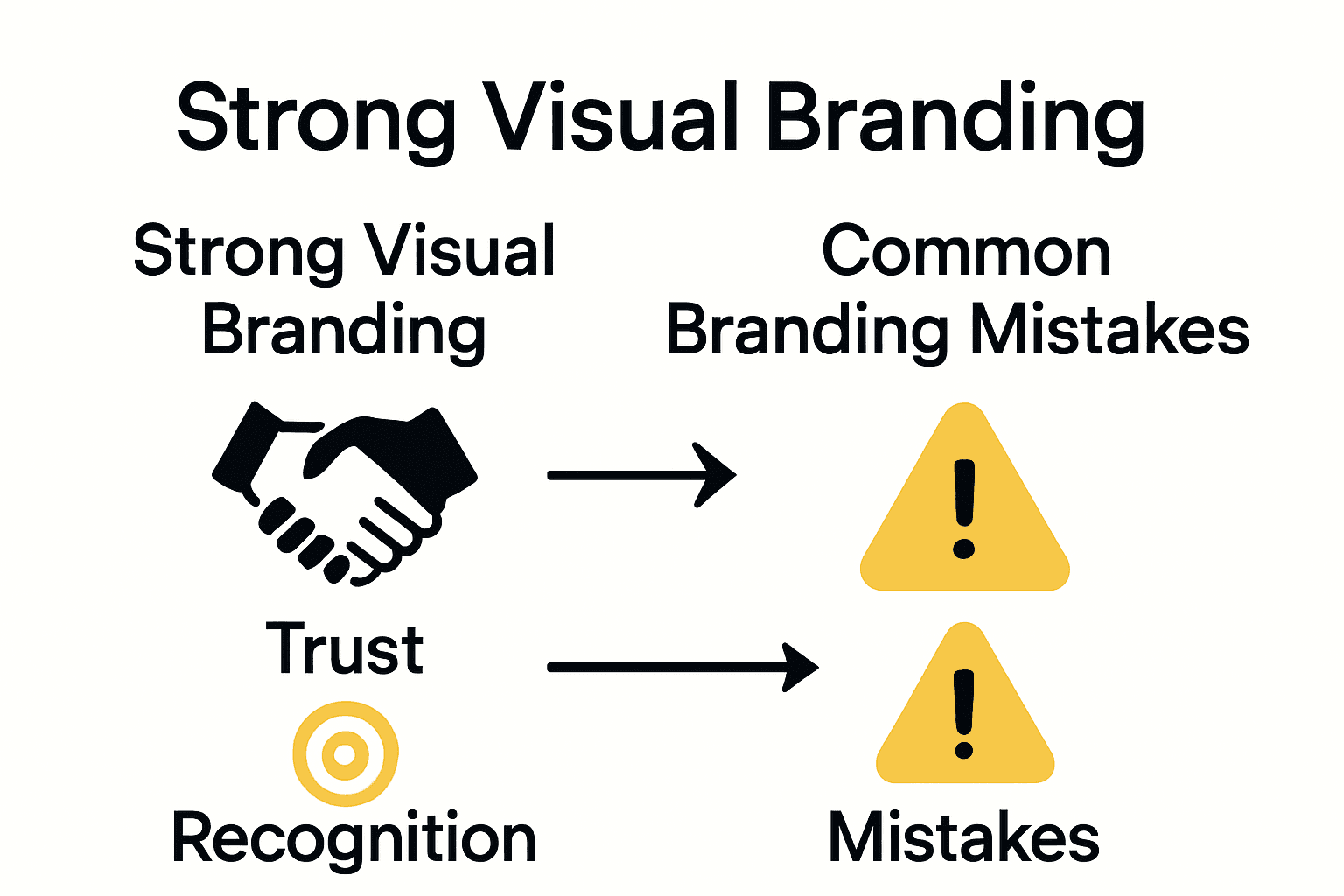
Common Visual Branding Mistakes to Avoid
Visual branding requires strategic precision. Even seemingly minor missteps can significantly undermine a brand’s ability to communicate its core identity and connect with target audiences effectively.
According to Warwick University, inconsistent use of brand assets and deviation from established guidelines can dilute a brand’s identity and confuse audiences. This critical insight underscores the importance of maintaining a disciplined approach to visual representation.
The most prevalent visual branding mistakes include:
Inconsistent Design: Varying visual styles across platforms
Overcomplicated Logos: Designs that are difficult to reproduce or recognize
Ignoring Target Audience: Creating visuals that don’t resonate with core demographics
Copying Competitor Aesthetics: Losing unique brand differentiation
Poor Color and Typography Choices: Selections that diminish readability and emotional impact
Why Consistency in Branding: Complete Guide for 2024 reinforces the critical nature of brand governance, highlighting that protecting a brand’s reputation requires meticulous attention to visual communication standards. Each design decision should strategically support the organization’s broader narrative and market positioning.
Successful visual branding demands more than aesthetic appeal—it requires a thoughtful, consistent approach that transforms design into a powerful communication tool.
Elevate Your Visual Branding with Expert Video Solutions
Visual branding is about creating powerful emotional connections that speak louder than words. Your logo, color palette, and imagery form the foundation, but dynamic video content brings your story to life in ways static visuals cannot. If you’re struggling with inconsistent design or seeking to make your brand instantly recognizable, personalized video productions can bridge that gap and deepen audience engagement.
At Tulip Films, we specialize in crafting high-quality videos that align perfectly with your unique brand identity. Our professional method focuses on understanding your core brand values and translating them into compelling audiovisual experiences. Discover how tailored corporate videos, promotional ads, or event coverage can reinforce your visual language and differentiate your business in a competitive market.
Boost your brand impact today with expert video branding that resonates. Explore our portfolio and begin crafting your visual story with Tulip Films.

Ready to transform your visual branding and connect emotionally with your audience? Plan your free consultation now at Tulip Films and start creating unforgettable brand experiences.
Learn more about the strategic power of video branding in our detailed guide What is Video Branding? Understanding Its Impact and Importance and see why consistency matters in Why Consistency in Branding.
Frequently Asked Questions
What is visual branding?
Visual branding is the process of creating a visual identity that transforms a business’s abstract concepts into tangible, memorable experiences using strategic design elements such as logos, color palettes, and typography.
Why is a strong visual brand identity important for businesses?
A strong visual brand identity enhances brand recognition and loyalty, creates emotional connections with customers, conveys professionalism, differentiates a business from competitors, and builds customer trust.
What are the core components of visual branding?
The core components of visual branding include logo design, color palette, typography, imagery and graphics, and consistent visual language, all working together to create a cohesive brand experience.
What common mistakes should be avoided in visual branding?
Common mistakes in visual branding include inconsistent design across platforms, overcomplicated logos, neglecting the target audience, copying competitors’ aesthetics, and making poor color and typography choices.
Recommended
