Why Consistency in Branding: Complete Guide for 2024


Did you know that brands with consistent messaging see an average sales increase of 23 percent? This remarkable figure highlights just how much unified branding can shape customer trust and loyalty. When every part of your business looks, feels, and sounds the same, it becomes easier for audiences to recognize and rely on you. Understanding brand consistency helps set your business apart and turns everyday interactions into long-lasting relationships.
Key Takeaways
Point | Details |
Brand Consistency is Essential | It is crucial for creating a unified narrative that builds audience trust and loyalty across all communication channels. |
Core Elements of Identity | Businesses should focus on visual identity, tone of voice, messaging, and customer experience to maintain brand consistency. |
Psychological Benefits | Consistent branding enhances recognition and reduces marketing costs, ultimately improving customer decision-making and loyalty. |
Avoid Common Pitfalls | To prevent branding inconsistency, businesses must develop and regularly update comprehensive brand guidelines that reflect their core identity. |
Table of Contents
Defining Consistency in Branding for Businesses
Brand consistency is more than just a marketing buzzword - it’s the strategic backbone that transforms scattered communication into a powerful, unified narrative. According to research from digital marketing studies, consistency means expressing a brand’s core values and identity uniformly across all communication channels, creating a cohesive audience perception.
At its core, brand consistency involves creating a systematic approach to how your business presents itself. This means developing comprehensive brand style guides that outline precise visual, verbal, and emotional guidelines. Our guide on visual branding can help you understand how these visual elements play a crucial role in maintaining a strong brand identity.
Research indicates that consistent messaging and tone significantly impact customer trust and retention. A fascinating academic study analyzing over 300,000 web pages demonstrated how uniform content can build stronger connections with audiences. Key elements of brand consistency include:
Uniform visual design across platforms
Consistent brand voice and messaging
Aligned communication strategies
Regular brand audits and refinements
By implementing these strategies, businesses can create a memorable and trustworthy brand experience that resonates with their target audience, transforming casual interactions into lasting relationships.
Core Elements of Consistent Brand Identity
Building a consistent brand identity requires a strategic approach that integrates multiple critical components. According to digital marketing research, brand implementation is a continuous process involving systematic application of brand image across various communication platforms and touchpoints.
The foundational elements of a robust brand identity encompass several key dimensions. Explore our insights on visual branding to understand how visual components play a crucial role. These core elements include:
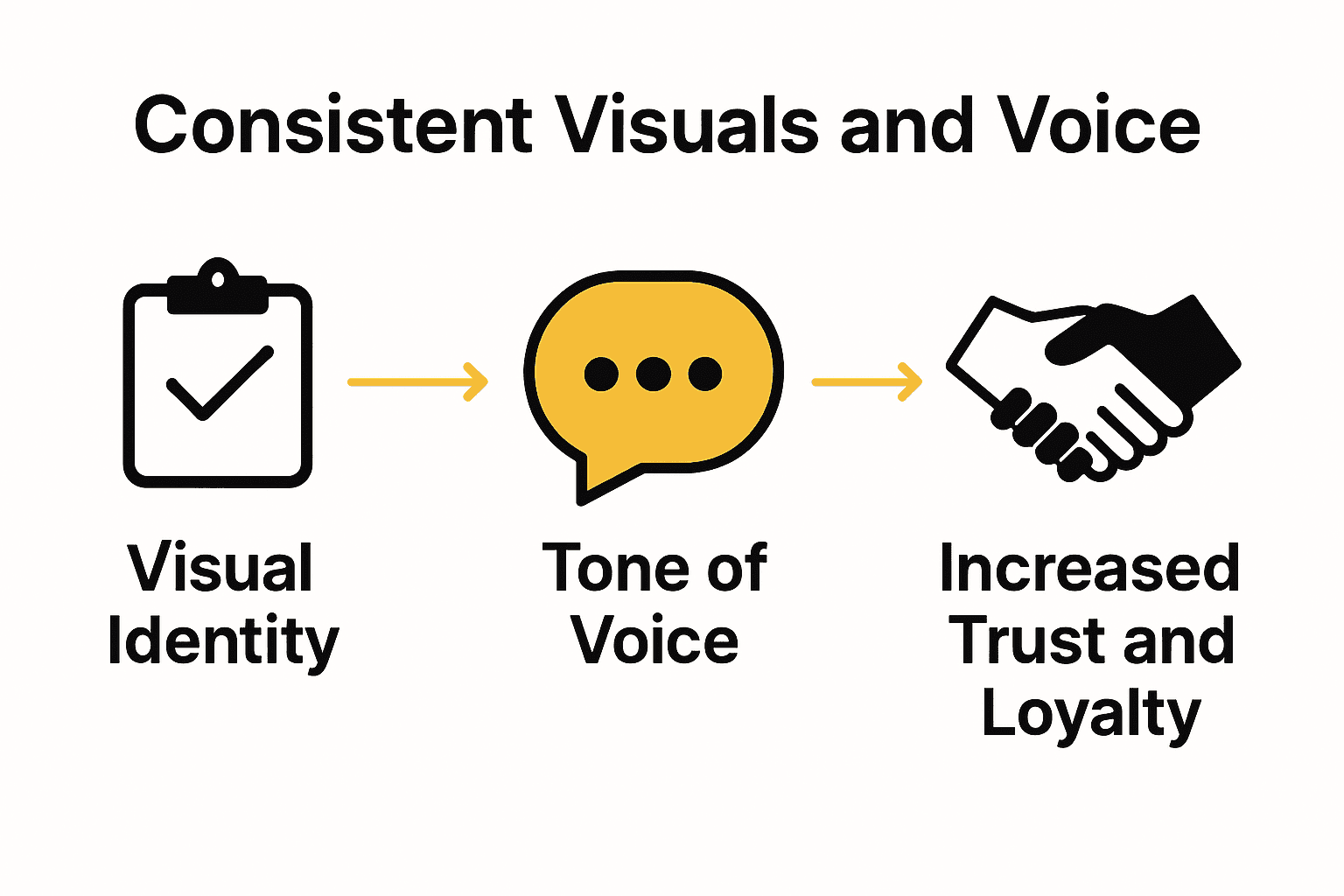
Visual Identity: Consistent logo usage, color schemes, typography, and design elements
Tone of Voice: Uniform communication style across all channels
Messaging: Aligned narrative and brand story
Customer Experience: Consistent interaction quality
Research emphasizes that brand implementation isn’t a one-time event but a continuous process. From signage and packaging to digital platforms and customer service interactions, every touchpoint must reflect the same core brand personality. By meticulously maintaining these elements, businesses create a memorable and trustworthy brand presence that resonates deeply with their target audience, transforming casual interactions into meaningful connections.

Here’s a summary of the core elements of consistent brand identity:
Element | Key Focus | Description |
Visual Identity | Logo Colors Typography | Consistent use across platforms |
Tone of Voice | Communication style | Uniform messaging in all channels |
Messaging | Brand story Narrative | Aligned and cohesive storytelling |
Customer Experience | Interaction quality | Predictable, reliable interactions |
Benefits of Consistent Branding on Audience Trust
Consistent branding is a powerful psychological tool that transforms how audiences perceive and interact with businesses. Research reveals that brand consistency does far more than create visual recognition - it fundamentally shapes customer trust and loyalty. According to marketing studies, brands maintaining consistent messaging can increase sales by an average of 23 percent.
Learn more about video branding strategies to understand how visual storytelling reinforces these trust-building principles. The psychological benefits of consistent branding are profound, creating what experts call cognitive ease - a mental state where familiar experiences feel more truthful and appealing.
Key benefits of consistent branding include:
Enhanced brand recognition
Increased customer loyalty
Reduced marketing costs
Improved perception of reliability
Simplified customer decision-making
Consistent brands create a sense of predictability that consumers subconsciously crave. When a brand repeatedly meets expectations across different touchpoints, it builds a deeper emotional connection. This continuous alignment transforms casual interactions into trusted relationships, demonstrating that consistency isn’t just a marketing strategy - it’s a fundamental method of building genuine audience connections.
Real-World Examples from Swiss Organizations
Swiss organizations exemplify brand consistency through innovative and strategic approaches that celebrate national identity and heritage. Learn more about corporate storytelling techniques that can inspire your branding strategy. Take Chocolat Villars, a prime example of consistent branding that leverages its Swiss roots by using 100% Swiss ingredients and prominently displaying the Swiss cross, creating an authentic and recognizable brand narrative.
Another remarkable case is Toblerone, whose iconic triangular shape and Matterhorn-inspired design have become synonymous with Swiss precision and quality. In 2025, the company reinforced its brand consistency by investing CHF 65 million in its Bern facility and ensuring packaging clearly marks products made in Switzerland, demonstrating a commitment to preserving brand heritage and consumer trust.
Key strategies these Swiss organizations employ include:
Emphasizing national origin and local ingredients
Maintaining consistent visual design elements
Using iconic symbols that represent Swiss culture
Investing in facilities that reinforce brand narrative
Transparent communication about product origins
These examples illustrate how consistent branding goes beyond mere visual aesthetics. It’s about creating a holistic narrative that resonates with audiences, builds trust, and transforms a brand from a simple product or service into a meaningful cultural experience.
Common Mistakes and How to Avoid Them
Branding inconsistency can dramatically undermine a company’s marketing efforts. Research indicates that disregarding brand guidelines can reduce brand recognition by up to 33%, creating fragmented and confusing audience perceptions. Brand mistakes often stem from a lack of strategic planning and comprehensive guidelines.
Explore our visual storytelling best practices to understand how to maintain a cohesive brand narrative. According to startup branding research, common pitfalls include neglecting visual identity, misunderstanding ideal customer profiles, and thoughtlessly copying competitors’ strategies.
Key mistakes businesses frequently make include:
Inconsistent visual design across platforms
Neglecting detailed brand guidelines
Failing to understand target audience
Copying competitors instead of defining unique identity
Underestimating the importance of tone of voice
To avoid these pitfalls, businesses must develop comprehensive brand guidelines that outline precise visual, verbal, and communication standards. These guidelines should be living documents, regularly reviewed and updated to ensure they continue to reflect the brand’s evolving identity while maintaining core consistency. By proactively managing your brand’s image, you transform potential weaknesses into strategic opportunities for meaningful audience connection.
Transform Your Brand Consistency Into Memorable Visual Impact
Is your brand struggling to deliver the same message and emotional connection across every platform? In the article, we explored how lack of brand consistency causes confusion, loss of trust, and missed opportunities to create loyal audiences. If you want your customers to recognize and remember your business, your visual identity and messaging need to work together at every touchpoint. This is where your journey from strategy to real results begins.

Bring your brand story to life with high-quality videos that capture your values, voice, and visuals in perfect harmony. See how visual storytelling can help you avoid inconsistent messaging and build trust with your audience. Ready for a brand refresh that connects with your customers on every screen? Connect with Tulip Films today and plan your free consultation. Start now and make your brand stand out with professional video solutions tailored to your unique identity.
Frequently Asked Questions
What is brand consistency?
Brand consistency refers to the strategic alignment of a brand’s core values and identity across all communication channels, leading to a cohesive audience perception.
Why is consistent branding important for businesses?
Consistent branding enhances brand recognition, builds customer loyalty, reduces marketing costs, and improves the perception of reliability among consumers.
What are the key elements of a consistent brand identity?
Key elements include visual identity (logo, colors, typography), tone of voice (uniform communication style), messaging (aligned brand story), and customer experience (consistent interaction quality).
How can businesses avoid branding inconsistency?
To avoid branding inconsistency, businesses should develop comprehensive brand guidelines that encompass visual, verbal, and communication standards, regularly review and update these guidelines, and ensure all team members understand the brand’s identity.
Recommended
