Why Invest in Video Content: Understanding Its Impact


Video is taking over marketing and changing the way brands connect with people. Short videos can sway purchasing decisions, especially for younger viewers, far more than traditional ads ever could. Think text and images are enough to stand out. Numbers show viewers remember and react to videos at rates that other formats just cannot match. People are not just watching, they are interacting, sharing, and even buying because of video. The real surprise is how deep that connection goes—and how much brands risk missing out if they ignore this powerful shift.
Table of Contents
Quick Summary
Takeaway | Explanation |
Video drives higher audience engagement. | Videos generate more interactions compared to other content formats, capturing attention more effectively. |
Visual storytelling improves brand trust. | By conveying complex narratives, videos foster deeper emotional connections and enhance credibility with audiences. |
Video enhances information retention. | Viewers remember visual content better than text, making videos a superior medium for conveying key messages. |
Measuring video metrics is essential. | Analyzing engagement and conversion metrics helps refine strategies and demonstrate the business value of video content. |
Videos simplify complex ideas. | By using visuals and audio together, videos make intricate concepts more approachable and easier to understand. |
The Growing Importance of Video in Marketing
Marketing strategies have dramatically transformed with the rise of digital media, and video content stands at the forefront of this evolution. Video has become a powerful communication tool that connects brands with audiences in ways traditional marketing channels cannot match.
Why Video Matters in Modern Marketing
Video content provides an immersive experience that captures audience attention more effectively than static text or images. Research analyzing consumer behavior reveals that short video content significantly influences purchasing decisions, particularly among younger demographics.
Key advantages of video marketing include:
Increased Engagement: Videos generate higher interaction rates compared to other content formats
Enhanced Information Retention: Viewers remember visual content more vividly than written text
Emotional Connection: Videos can communicate brand personality and values quickly
The Strategic Value of Video Marketing
Businesses are increasingly recognizing video’s potential to drive marketing objectives. Videos enable brands to:
Explain complex products or services visually
Build trust through authentic storytelling
Improve search engine optimization (SEO) performance
For deeper insights into leveraging video for your business, read our comprehensive guide on why use video marketing.
By integrating compelling video content into marketing strategies, companies can create more meaningful connections with their target audiences, ultimately driving brand awareness, engagement, and conversion rates.
To clarify how video marketing compares to traditional marketing formats, the following table summarizes key differences in audience engagement, information retention, and effectiveness based on the article’s discussion.
Aspect | Video Content | Static Text/Images |
Audience Engagement | High (active interactions, shares, comments) | Lower (passive viewing, less sharing) |
Information Retention | Superior (visuals aid memory) | Weaker (less memorable) |
Emotional Connection | Strong (storytelling, sensory impact) | Limited |
Influence on Decisions | Greater (especially for younger viewers) | Lower impact |
Message Delivery Speed | Fast, immersive experience | Slower, requires more effort |
Understanding Audience Engagement through Video
Audience engagement represents the complex interaction between viewers and video content, transforming passive watching into active participation. More than mere view counts, engagement measures how deeply audiences connect with and respond to visual storytelling.
Defining Video Engagement Metrics
Research on digital media platforms reveals that audience engagement encompasses multiple dimensions beyond traditional marketing metrics. Modern video engagement includes:
Interaction Rates: Likes, comments, shares, and subscriptions
Viewing Behavior: Watch time, completion rates, replay frequency
Emotional Response: Sentiment analysis and viewer reactions
These metrics provide insights into how effectively video content resonates with target audiences, helping brands refine their communication strategies.
This table outlines the key video engagement metrics described in the article, offering concise definitions and examples to help distinguish between types of engagement measured in video marketing.
Metric | Definition | Example |
Interaction Rates | Viewer actions such as likes, comments, shares, and subscriptions | “Likes” on a YouTube video |
Viewing Behavior | How viewers watch content, including watch time and completion rates | Watching 90% of a video |
Emotional Response | Sentiment, reactions, and emotional feedback from viewers | Positive comments or emoji reactions |
The Psychology of Video Engagement
Video content uniquely captures audience attention by leveraging multiple sensory channels simultaneously. Visual and auditory stimulation creates a more immersive experience compared to static media. Viewers process video information faster and retain emotional connections longer.
For businesses seeking to optimize their video marketing approach, our guide on boosting engagement in brand videos offers strategic insights into creating compelling visual narratives.
Successful video engagement requires understanding viewer psychology, crafting authentic storytelling, and delivering content that speaks directly to audience interests and emotional triggers. By prioritizing meaningful connections over pure information transmission, brands can transform viewers from passive observers into active participants and potential brand advocates.
Why Video Content Enhances Brand Visibility
Brand visibility goes beyond simple recognition. It represents the depth and quality of audience perception, with video content serving as a powerful catalyst for transforming how consumers understand and connect with brands.
The Visual Storytelling Advantage
Research examining consumer behavior demonstrates that video content significantly strengthens brand trust and purchase intention. Visual storytelling enables brands to communicate complex narratives more effectively than traditional text-based marketing approaches.
Key advantages of enhanced brand visibility through video include:
Emotional Resonance: Videos create deeper emotional connections
Memorable Messaging: Visual content improves information retention
Increased Shareability: Compelling videos encourage organic social sharing
Strategic Brand Communication through Video
Video content allows brands to showcase personality, values, and unique characteristics in ways static media cannot replicate. By crafting authentic visual narratives, companies transform from abstract entities into relatable, human experiences.
Discover more about video branding strategies that can help your organization stand out in a crowded marketplace.
Effective video content transcends traditional advertising, becoming a strategic communication tool that builds trust, communicates brand identity, and creates meaningful audience connections. The most successful brands understand that visibility is not about being seen, but about being truly understood.

The Role of Video in Communicating Complex Ideas
Video has emerged as a powerful medium for breaking down intricate concepts, transforming complicated information into digestible, engaging narratives that enhance understanding across diverse fields and audiences.
Visual Learning and Cognitive Processing
Research examining educational video interactions reveals that visual complexity plays a critical role in how viewers comprehend complex information. By strategically presenting visual elements, video can simplify abstract concepts and facilitate faster cognitive processing.
Key advantages of video in communicating complex ideas include:
Multi-Sensory Engagement: Combines auditory and visual learning mechanisms
Dynamic Information Representation: Allows step-by-step visualization of processes
Contextual Understanding: Provides real-world examples and practical demonstrations
Breaking Down Sophisticated Concepts
Video transcends traditional text-based communication by offering dynamic, interactive methods of explaining challenging subjects. Whether in scientific research, technical training, or educational contexts, video enables presenters to deconstruct sophisticated ideas into more accessible formats.
Explore our guide on audiovisual storytelling techniques to understand how visual narratives can transform complex communication.
Successful complex idea communication through video requires thoughtful design, clear narrative structure, and an understanding of how visual elements can enhance viewer comprehension.
The following table summarizes the advantages of using video to communicate complex ideas, highlighting how each characteristic contributes to viewer understanding as discussed in the article.
Advantage | How It Helps |
Multi-Sensory Engagement | Combines sight and sound for better learning |
Dynamic Information Representation | Shows processes step-by-step for easier comprehension |
Contextual Understanding | Uses real-world examples and demonstrations for clarity |
By leveraging the inherent strengths of video, organizations can transform complicated information into compelling, easily understood content. |
Measuring the Success of Video Content Strategies
Successful video content strategies demand more than creative production. They require systematic measurement and analysis to understand audience engagement, optimize performance, and demonstrate tangible business value.
Key Performance Indicators for Video Content
Research analyzing digital consumer behavior highlights the importance of comprehensive metrics in evaluating video strategy effectiveness. Understanding these indicators helps businesses make data-driven decisions.
Critical metrics for assessing video content performance include:
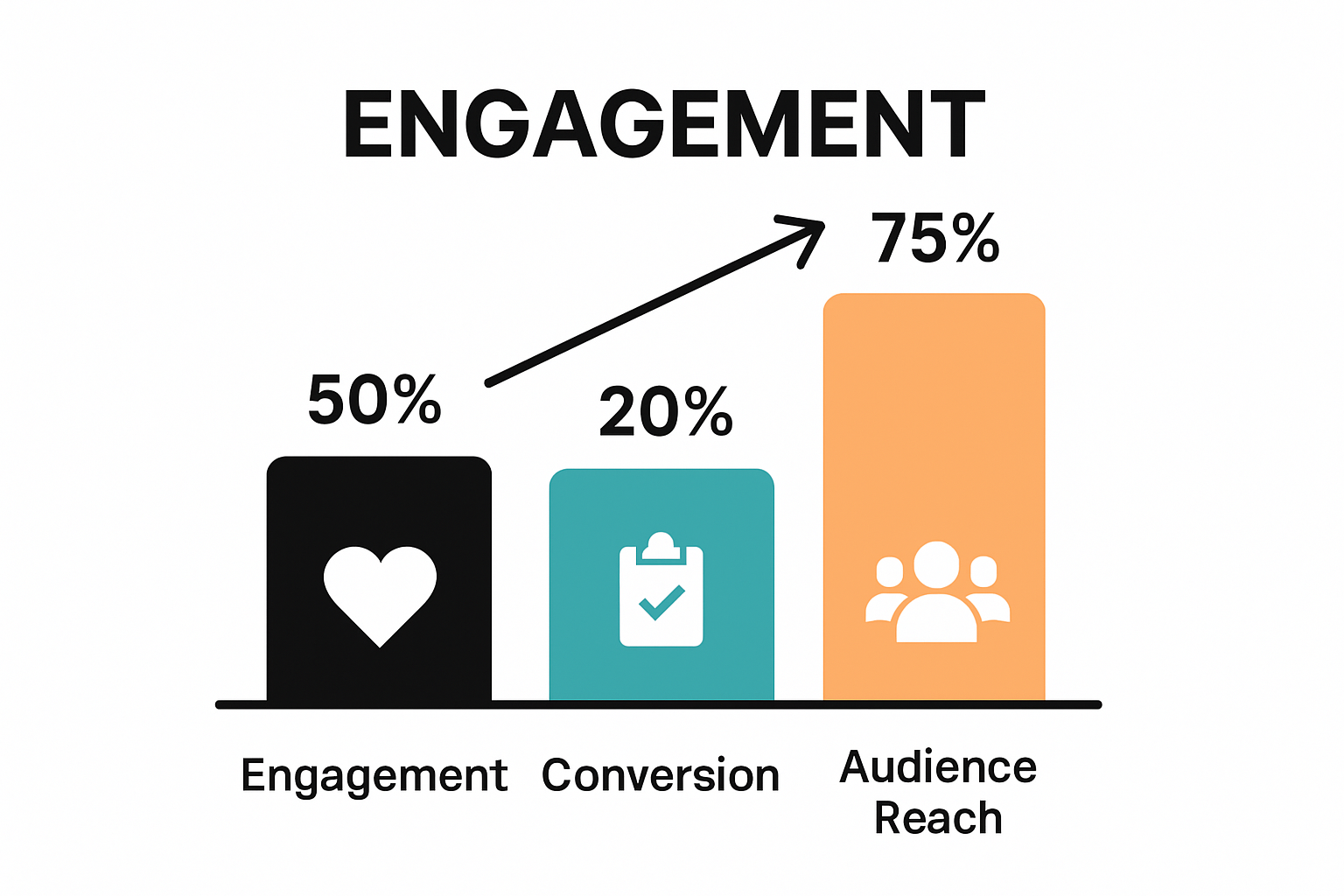
Engagement Metrics: Views, watch time, likes, comments, shares
Conversion Metrics: Click-through rates, lead generation, sales attribution
Audience Insights: Demographic reach, viewer retention, audience growth
Advanced Analytics and Strategic Insights
Modern video analytics go beyond surface-level statistics. Sophisticated tracking enables businesses to understand viewer behavior, preferences, and content effectiveness at granular levels. By analyzing these insights, organizations can refine their video strategies continuously.
Learn more about optimizing your video marketing workflow to enhance measurement and performance tracking.
Effective video content measurement is an iterative process. Successful brands continuously adapt their strategies based on data-driven insights, ensuring their video content remains relevant, engaging, and aligned with business objectives.
Bring Your Brand to Life With High-Impact Video Content
Are you struggling to capture real audience engagement and build trust with your brand? This article explained how video content increases emotional connection, improves retention, and helps deliver even the most complex ideas. But knowing why video matters is only the first step—putting it into action is where real results happen.

Let Tulip Films help you move from strategy to impact. We transform your message into high-quality video that not only elevates brand visibility but also drives measurable engagement. Discover how our personalized audiovisual solutions support your unique business challenges and deliver rapid, professional results. If you’re ready to create videos that resonate and convert, start planning your free consultation now so you can leave a lasting impression while your competitors are still catching up.
Frequently Asked Questions
Why is video content important for marketing?
Video content is important for marketing because it provides an immersive experience, capturing audience attention more effectively than static text or images. It enhances information retention and fosters emotional connections with the brand.
How does video content influence purchasing decisions?
Research indicates that video content significantly impacts purchasing decisions, particularly among younger demographics. Short videos can effectively communicate product benefits and engage potential customers.
What are key metrics for measuring video engagement?
Key metrics for measuring video engagement include interaction rates (likes, comments, shares), viewing behavior (watch time, completion rates), and emotional responses (sentiment analysis and viewer reactions).
How can businesses optimize their video content strategies?
Businesses can optimize their video content strategies by analyzing key performance indicators, such as engagement metrics and conversion rates. Continuous adaptation based on data insights helps ensure content relevance and effectiveness.
Recommended
