Video Storytelling Explained: Boost Brand Engagement


Nearly 80 percent of consumers say that video stories influence their buying decisions. In an era filled with endless content, what sets one brand apart is often a story told through visuals that spark emotion and trust. Video storytelling goes far beyond scripted ads, turning messages into memorable experiences that keep audiences watching, sharing, and remembering long after the screen goes dark.
Table of Contents
Key Takeaways
Point | Details |
Harness Emotional Connections | Video storytelling creates powerful emotional resonance, fostering genuine connections between brands and their audiences. |
Leverage Diverse Techniques | Utilize various storytelling approaches, such as narrative documentaries and participatory videos, to engage viewers effectively. |
Avoid Common Pitfalls | Focus on clear objectives, audience relevance, and strong narrative structures to enhance viewer engagement and retention. |
Drive Brand Differentiation | Use video narratives to establish unique brand identities while improving communication efficacy in competitive landscapes. |
Defining Video Storytelling and Its Core Purpose
Video storytelling is a sophisticated visual communication technique that transforms complex narratives into compelling audiovisual experiences. Unlike traditional storytelling methods, this approach leverages imagery, composition, and cinematic techniques to convey messages that resonate deeply with audiences.
According to vaia, video storytelling utilizes sophisticated visual language through cinematography, color theory, symbols, and framing to communicate stories that transcend traditional dialogue. This means brands can create powerful emotional connections by strategically using visual elements that speak directly to viewers’ emotions and experiences.
At its core, video storytelling serves multiple critical purposes for businesses and communicators. videoeducationjournal highlights that this approach combines documentary techniques and ethnographic storytelling to effectively disseminate complex information. Key objectives include:
Transforming abstract concepts into accessible visual narratives
Creating emotional engagement beyond traditional communication methods
Simplifying complex information through strategic visual representation
Connecting with audiences on a more intuitive, sensory level
For businesses and brands, video storytelling represents a powerful tool to cut through communication noise.

It allows organizations to share their unique value propositions, brand identity, and core messages in ways that are memorable, shareable, and authentically human. By crafting narratives that feel genuine and emotionally resonant, companies can build stronger connections with their target audiences, transcending traditional marketing approaches.
Major Types of Video Storytelling Approaches
Video storytelling encompasses diverse approaches that enable brands and creators to craft compelling narratives through visual mediums. Each type offers unique strategies for engaging audiences and communicating complex messages effectively.
Narrative Documentary Style represents one of the most powerful storytelling techniques, focusing on real-world experiences and authentic human stories. This approach allows organizations to showcase genuine experiences, creating emotional connections that resonate with viewers.
Wikipedia highlights transmedia storytelling as an innovative approach that expands narrative possibilities across multiple platforms and digital technologies. This method involves strategically distributing story elements across different media channels, creating a rich, immersive experience that encourages audience interaction and deeper engagement.
Another compelling approach is participatory video, as explained by Wikipedia. This technique empowers communities and organizations to create their own narratives, giving voice to diverse perspectives and transforming storytelling from a passive to an active experience. Key types of video storytelling approaches include:
Brand Story Videos: Showcasing company history, values, and mission
Customer Testimonial Videos: Sharing authentic experiences and success stories
Educational Narrative Videos: Explaining complex concepts through visual storytelling
Social Impact Videos: Highlighting important social issues and community initiatives
For businesses seeking to connect with audiences, understanding these diverse storytelling approaches provides a strategic advantage. By selecting the right narrative style, organizations can create memorable, impactful visual content that not only communicates information but also builds genuine emotional connections with their target audiences.
When exploring video storytelling strategies, our guide to effective video storytelling for brands offers deeper insights into crafting compelling visual narratives that truly resonate with viewers.
How Video Storytelling Drives Audience Engagement
Audience engagement is the holy grail of modern communication, and video storytelling has emerged as the most powerful tool to capture and maintain viewer attention. By transforming passive viewers into active participants, video storytelling creates profound connections that transcend traditional marketing approaches.
Vaia reveals that effective video storytelling leverages sophisticated techniques like engaging dialogue, internal character monologues, compelling character arcs, and nuanced visual cues to immerse viewers deeply in the narrative. These elements work synergistically to create an emotional landscape that draws audiences into the story, making them feel like active participants rather than mere observers.
arXiv highlights how data-driven storytelling can transform complex information into accessible narratives through various media formats. This approach dramatically enhances audience comprehension and retention by presenting information through familiar storytelling mechanisms like videos, slideshows, and interactive content.
Key mechanisms through which video storytelling drives audience engagement include:
Emotional Resonance: Creating narratives that trigger genuine emotional responses
Narrative Complexity: Developing multi-layered stories that invite repeated viewing
Visual Intrigue: Using cinematography and visual design to maintain viewer interest
Personal Connection: Crafting stories that feel authentic and relatable
For brands and organizations looking to deepen audience connections, video storytelling offers an unparalleled opportunity to communicate beyond traditional informational boundaries. By prioritizing human experience and emotional authenticity, companies can transform their communication from transactional to truly transformative.
Want to explore more about creating compelling visual narratives? Check out our guide on understanding the role of storytelling in videos for deeper insights into crafting engaging visual experiences.
Key Business Benefits for Swiss Organizations
Video storytelling represents a transformative communication strategy for Swiss businesses, offering unprecedented opportunities to connect with audiences, differentiate brands, and drive meaningful engagement. In a competitive market like Switzerland, where precision and quality are paramount, sophisticated visual narratives can provide significant competitive advantages.
arXiv highlights an innovative approach to content creation, demonstrating how organizations can efficiently produce engaging videos by synthesizing existing video clips into coherent storytelling. This method not only streamlines production processes but also dramatically reduces both time and cost investments for businesses seeking high-quality visual communication.
For Swiss organizations across various sectors, video storytelling delivers multiple strategic benefits:
Brand Differentiation: Creating unique, memorable visual identities
Enhanced Communication: Transforming complex messages into accessible narratives
Increased Customer Trust: Showcasing authenticity and transparency
Emotional Connection: Building deeper relationships with target audiences
Performance Optimization: Improving marketing and communication effectiveness
Specifically for Swiss businesses, video storytelling offers a powerful mechanism to showcase the country’s renowned values of precision, innovation, and quality. By crafting narratives that highlight technical expertise, commitment to excellence, and human-centric approaches, organizations can effectively communicate their unique value propositions.
Interested in mastering video marketing strategies tailored for Swiss brands? Our guide on video marketing best practices for Swiss brands provides comprehensive insights into creating impactful visual narratives that resonate with local and international audiences.
Common Mistakes in Video Storytelling to Avoid
Video storytelling is a nuanced art that requires careful planning, strategic execution, and deep understanding of audience psychology. Even experienced professionals can fall into common traps that undermine the effectiveness of their visual narratives, potentially diminishing brand impact and viewer engagement.
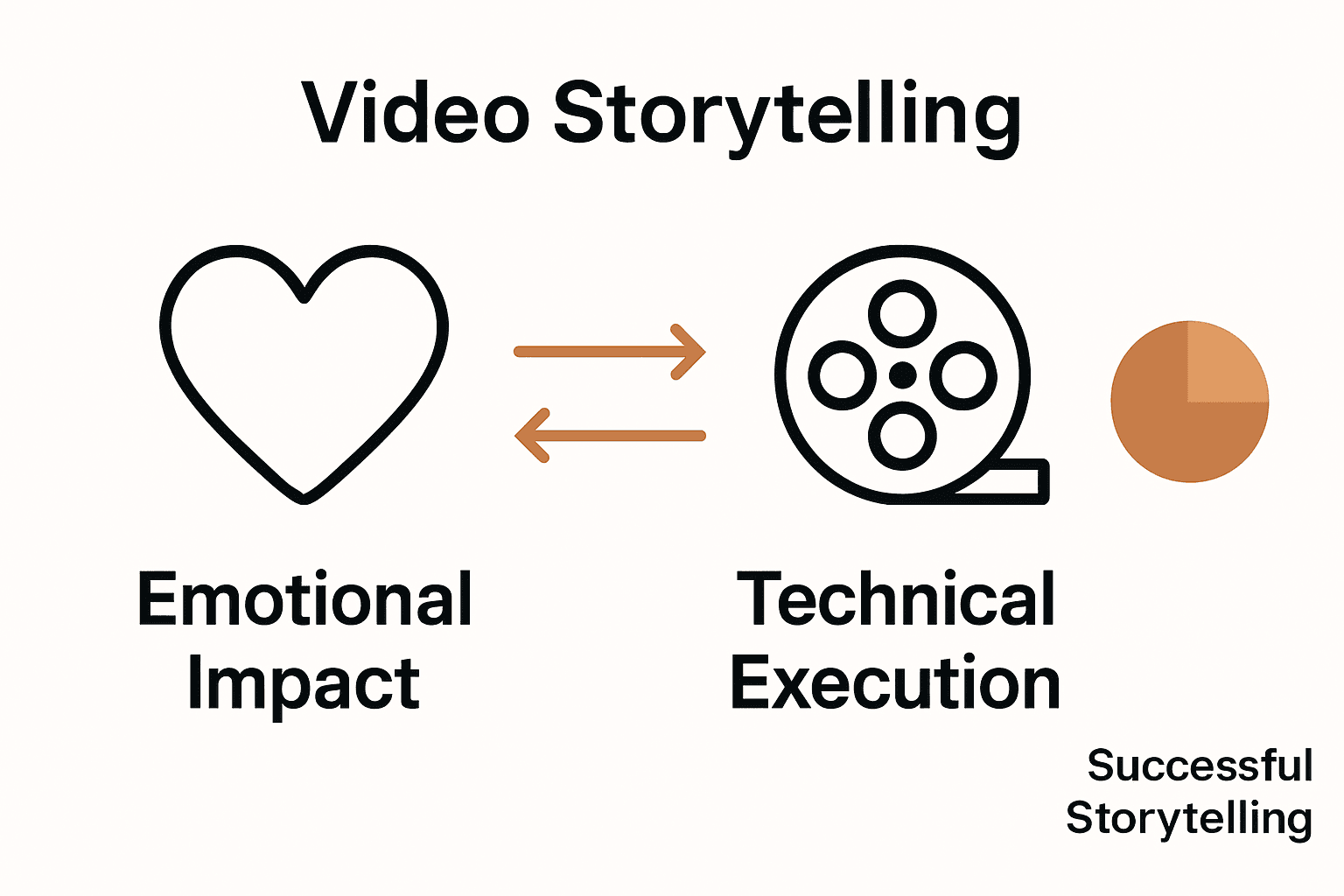
Blog VideoRock highlights critical errors that can derail storytelling efforts. These include neglecting character development, which leaves audiences emotionally disconnected, and overcomplicating narratives that confuse rather than clarify the core message. The most damaging mistake is failing to create an emotional connection that resonates with viewers on a fundamental level.
Vaia emphasizes the importance of technical execution, pointing out that ineffective editing techniques can critically disrupt narrative flow. Poor continuity, inconsistent pacing, and abrupt transitions can quickly disengage audiences, transforming potentially compelling stories into forgettable content.
Common video storytelling mistakes to avoid include:
Lack of Clear Purpose: Creating videos without a defined objective
Ignoring Target Audience: Failing to tailor narrative to specific viewer expectations
Weak Narrative Structure: Presenting information without compelling story arc
Technical Inconsistencies: Uneven audio, lighting, or visual quality
Excessive Length: Losing viewer attention through unnecessarily prolonged content
Successful video storytelling demands a delicate balance between creativity, technical precision, and strategic communication. By understanding and avoiding these common pitfalls, organizations can craft narratives that truly connect and inspire.
Want to dive deeper into creating compelling visual stories? Check out our guide on video storytelling techniques for Swiss brands to refine your approach and elevate your storytelling strategy.
Elevate Your Brand with Expert Video Storytelling
Struggling to create video content that truly connects and engages your audience? This article highlights key challenges like building emotional resonance, simplifying complex information, and avoiding common storytelling pitfalls—all essential for standing out in today’s crowded digital landscape. At Tulip Films, we specialize in turning these concepts into reality through personalized, high-quality video production designed specifically for Swiss businesses seeking authentic brand differentiation and deeper audience trust.
Discover how our professional approach leverages cinematic storytelling, precise editing, and compelling narratives to transform your messages into memorable visual experiences that capture hearts and minds. Start with our guide on video storytelling techniques for Swiss brands to understand the fundamentals, then explore our portfolio and services to see the impact firsthand at www.tulipfilms.ch.
Ready to boost your brand engagement now? Plan your free consultation today and let us craft a tailored video strategy that speaks directly to your audience’s emotions and values.

Take the first step toward unforgettable storytelling with Tulip Films and transform the way your brand communicates.
Frequently Asked Questions
What is video storytelling?
Video storytelling is a visual communication technique that uses imagery, composition, and cinematic techniques to create compelling narratives that resonate with audiences, transforming complex information into engaging audiovisual experiences.
How does video storytelling enhance audience engagement?
Video storytelling enhances audience engagement by creating emotional connections through narratives that resonate with viewers. It utilizes techniques like character arcs, engaging dialogue, and visual design to draw audiences into the story, making them feel more like participants than spectators.
What are the key benefits of video storytelling for businesses?
The key benefits of video storytelling for businesses include brand differentiation, enhanced communication of complex messages, increased customer trust, emotional connection with audiences, and improved marketing performance.
What common mistakes should be avoided in video storytelling?
Common mistakes to avoid in video storytelling include lack of a clear purpose, ignoring the target audience, weak narrative structure, technical inconsistencies, and creating content that is excessively long and loses viewer attention.
Recommended
